


Page 2862 - Flipbook_SolidDesignSoutheast2020
P. 2862
AUTOMATION


                                                                     NBE doesn’t just sell integration. We live it. Consideration
                                                                     of the unit’s function within the larger process is built into
                                                                     everything we make. And we think beyond the simple
             At NBE we believe intelligent automation makes
                                                                     stuff like ensuring container fit within the discharger
             all production processes safe, user friendly and        or considering discharge height, available floor space
                                                                     and ceiling height. We ask the deeper questions. How
             just plain more efficient.  Current advances in PLC     will material be introduced to the unit? What material
                                                                     characteristics might alter the method of discharge? What
             control technology makes automating processes more      is the best method of transferring the material from the
                                                                     discharger to the process? What is the optimal processing
             economical than ever before and directly reduces
                                                                     rate, plant sanitary requirements, opportunities for
             manual labor costs.  That’s why, at NBE we offer        automation and other considerations necessary for
                                                                     successful integration of the sealed container discharging
             our products with everything from simple automated      equipment into the process? Regarding the
                                                                     transfer of your material
             tasks to fully automated systems. The real result of    from the discharger
                                                                     to your process, NBE
             intelligent automation from NBE is a drastic reduction

             in long term operating costs while increasing
             throughput due to the speed and timeliness of

             repetitive tasks.


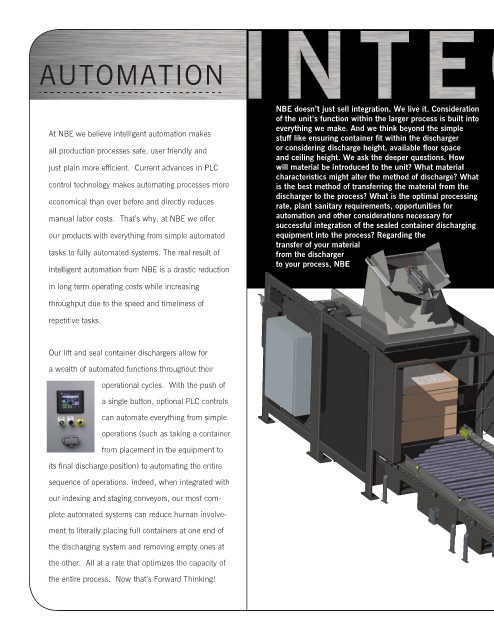
             Our lift and seal container dischargers allow for
             a wealth of automated functions throughout their

                          operational cycles.  With the push of
                          a single button, optional PLC controls

                          can automate everything from simple
                          operations (such as taking a container

                          from placement in the equipment to
             its final discharge position) to automating the entire

             sequence of operations. Indeed, when integrated with
             our indexing and staging conveyors, our most com-

             plete automated systems can reduce human involve-
             ment to literally placing full containers at one end of

             the discharging system and removing empty ones at
             the other.  All at a rate that optimizes the capacity of

             the entire process.  Now that’s Forward Thinking!

