


Page 31 - Banking Finance November 2025
P. 31
R
ARTICLE
T
A
E
L
IC
environmental risks in their loan portfolios to avoid being associated with borrowers.
exposed to potentially harmful industries. Similarly,
governance issues, such as corruption or lack of Environmental Factors in Lending:
transparency, are seen as red flags for long-term risk in One key area of ESG in lending is the consideration of
lending decisions. environmental risks. Banks now evaluate how a companys
activities impact the environment before approving loans.
On the investment side, the rise of ESG-focused funds is an For example, businesses operating in industries that
indication of how seriously the market is taking this trend. contribute heavily to carbon emissions, deforestation, or
Various research and studies have shown that investments pollution may be seen as higher-risk borrowers due to
focusing on ESG parameters often perform as well, if not potential regulatory changes, fines, or damage to their
better, than traditional investments. For example, a 2020 reputation. Banks are also increasingly hesitant to lend to
report by MSCI (Morgan Stanley Capital International) found industries involved in fossil fuels or unsustainable practices,
that companies with higher ESG ratings tend to have lower as these sectors face growing environmental pressure.
costs of capital and fewer legal or regulatory issues.
State Bank of India (SBI), the largest lender in the country,
However, there are gaps when it comes to understanding has actively worked to integrate environmental risk
the challenges of implementing ESG criteria. While the assessments into its lending decisions. In 2021, SBI issued
benefits of ESG integration are widely acknowledged, the its first green bond worth USD 650 million, aimed at
practical difficultiessuch as a lack of standardization in ESG financing renewable energy projects. This demonstrates
reporting or difficulty in assessing ESG performance how Indian banks are channeling funds into sectors that
remain underexplored. This article will discuss some of these support sustainable development.
gaps by discussing both the advantages and the challenges
financial institutions face when trying to integrate ESG into A 2022 report from the Reserve Bank of India (RBI)
their lending and investment strategies. highlighted that Indian banks exposure to climate-sensitive
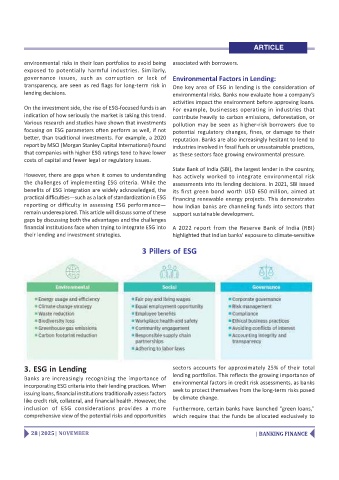
3 Pillers of ESG
3. ESG in Lending sectors accounts for approximately 25% of their total
lending portfolios. This reflects the growing importance of
Banks are increasingly recognizing the importance of
incorporating ESG criteria into their lending practices. When environmental factors in credit risk assessments, as banks
issuing loans, financial institutions traditionally assess factors seek to protect themselves from the long-term risks posed
by climate change.
like credit risk, collateral, and financial health. However, the
inclusion of ESG considerations provides a more Furthermore, certain banks have launched "green loans,"
comprehensive view of the potential risks and opportunities which require that the funds be allocated exclusively to
28 | 2025 | NOVEMBER | BANKING FINANCE

