


Page 20 - Caribbean Reef Life Demo
P. 20
SPONGES
Sponges reproduce just once a year in a process called  broadcast spawning.  Millions of eggs or larvae are released into the water on the same day. This overwhelms potential predators and the chances for survival are higher. Most sponges are hermaphrodites, capable of producing both sperm and eggs.  Male  sponges appear to smoke as they release concentrated sperm, which is taken into the  female  sponge for fertilization. Some species release the fertilized eggs, but most allow them to hatch inside the  female  and develop into larvae before release. Distributed by ocean currents, they may eventually settle on a reef hundreds of miles away. While still in this early stage, they will be able to move about using tiny whip-like appendages called  agellae. Once they land, the larvae can even crawl across the reef for short distances until they can  nd the most advantageous spot to take root and grow into mature sponges themselves.
Sponges are also able to reproduce asexually and can heal themselves  uickly if broken. A small fragment of sponge can grow into a whole new colony. The unusual cellular structure of a sponge creates no tissues or organs as in other animals. In fact, if a sponge were to be cut up and pressed through a  ne sieve, the cells could still recognize each other and start to reassemble themselves on the other side, with the new shape being dependent on the new water conditions.
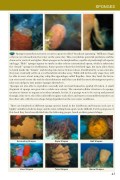
There are hundreds of different sponge species found in the Caribbean and because each one is highly variable in both its shape and its color, telling them apart can be dif cult. For the purposes of this book they have been divided into the following groups, based on their general shape:
Encrusting Shapes Rope Shapes Ball Shapes
Vase Shapes Tube Shapes Barrel Shapes
43


