


Page 35 - Caribbean Reef Life Demo
P. 35
80
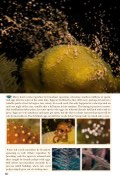
Many hard corals reproduce by broadcast spawning, releasing countless millions of sperm and eggs into the water at the same time. Eggs are fertilized as they drift away, perhaps to land on a suitable patch of reef to begin a new colony. For each coral, this only happens for a short period on only one night of the year, usually after a full moon in late summer. The timing is precise to ensure that fertilization takes place. In some species the eggs are released already fertilized and ready to grow. Eggs are very nutritious and many get eaten, but the sheer volume ensures that most will be safe from predators. The fertilized eggs can drift for weeks before being ready to attach onto a reef.
Some soft corals reproduce by broadcast spawning as well. Others reproduce by brooding: only the sperm is released and then caught by female polyps with eggs. Still others can reproduce asexually by a process called budding, where new coral polyps simply grow out of existing ones.


