


Page 7 - Caribbean Reef Life Demo
P. 7
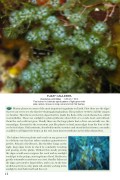
FUZZY CAULERPA
(Caulerpa verticillata) < 25 cm / 10 in
 in  lea es in a delicate s iral  attern of li ht  reen  ith  ale centers.  ro s on lon  runners to form  at  ushes.
Marine plants are some of the most important organisms on Earth. First there are the algae that we can’t even see: the tiny free- oating phytoplankton. They produce 70-80  of all the oxygen we breathe. Then there are the tiny algae that live inside the  esh of the corals themselves, called zooxanthellae. These use sunlight to photosynthesize about 80  of a coral’s food, and without them the reef could not grow. Finally there are the large plants that a diver can actually see: the macroalgae. Essential to the ecosystem, just like plants on land, macroalgae form the base of the reef’s food chain.  ital nutrients, absorbed from the seawater and stored in their tissues, are made available to all higher life-forms on the reef, from tiny invertebrates to the  shes themselves.
The balance between plants and corals on any given reef is a delicate one that has taken countless generations to perfect. Schools of herbivores, like the Blue Tangs on the right, keep algae levels in check by constantly traveling and grazing on the plants. Without this steady pruning the algae would soon overgrow the coral and no sunlight would get to the polyps, starving them of food.  erbivores greatly outnumber carnivores on a reef. Smaller  shes eat the algae, get eaten by larger  shes, and so on. At the base of all this activity is a tiny plant cell, silently working in the sunlight to feed both itself and the reef.
12


