


Page 18 - Alaska A & P Primer
P. 18
3.6 Cellular Differentiation
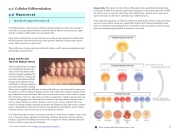
Cell differentiation is the process of cells becoming specialized as they body develops. A stem cell is an unspecialized cell that can divide without limit as needed and can, under specific conditions, differentiate into specialized cells.
Stem cells are divided into several categories according to their potential to differentiate. While all somatic cells contain the exact same genome, different cell types only express some of those genes at any given time.
These differences in gene expression ultimately dictate a cell’s unique morphological and physiological characteristics
Aging and the Cell:
The Free Radical Theory
The free radical theory on aging
was originally proposed in the
1950s, and still remains under
debate. Generally speaking, the
free radical theory of aging sug-
gests that accumulated cellular
damage from oxidative stress
contributes to the physiological
and anatomical effects of aging.
There are two significantly different versions of this theory: one states that the aging proc- ess itself is a result of oxidative damage, and the other states that oxidative damage causes age related disease and disorders. The latter version of the theory is more widely accepted than the former. However, many lines of evidence suggest that oxidative damage does con- tribute to the aging process. Research has shown that reducing oxidative damage can re- sult in a longer lifespan in certain organisms such as yeast, worms, and fruit flies. Con- versely, increasing oxidative damage can shorten the lifespan of mice and worms. Interest- ingly, a manipulation called calorie restriction (moderately restricting the caloric intake) has been shown to increase life span in some laboratory animals.
It is believed that this increase is at least in part due to a reduction of oxidative stress. How- ever, a long-term study of primates with calorie-restriction showed no increase in their lifespan. A great deal of additional research will be required to better understand the link between reactive oxygen species and aging.
Stem Cells The capacity of stem cells to differentiate into specialized cells make them potentially valuable in therapeutic applications designed to replace damaged cells of differ- ent body tissues. In contrast, adult stem cells isolated from a patient are not seen as for- eign by the body, but they have a limited range of differentiation.
Some individuals bank the cord blood or deciduous teeth of their child, storing away those sources of stem cells for future use, should their child need it. Induced pluripotent stem cells are considered a promising advance in the field because using them avoids the legal, ethical, and immunological pitfalls of embryonic stem cells.
3.6 OBJECTIVES
1. Describe the stages of the stem cell
This content is available for free at https://cnx.org/content/col11496/1.7
State of Alaska EMS Education Primer - 2016
17


