


Page 108 - Demo
P. 108
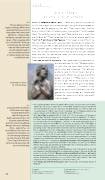
8:29 The true identity of Jesus begins to emerge. While some speculate that Jesus is one of the prophets who have come before him—Elijah or John the Baptist, returned from the dead—Peter recognizes that he is “the Messiah” (8:29), the anointed one. But only with time will Peter understand who the Messiah really is: not a triumphant political or military leader, but Jesus, cruci ed and risen.
Listening to Jesus by Ulrich Henn
8:31 Only after Peter’s profession of faith does Jesus begin to speak directly of his approaching passion, death, and resurrection. The disciples, especially Peter, resist this vision of a su ering Messiah. But Jesus challenges them—and all of us—to think like God. The cross is not an option for Christians. It is not one among many ways we may choose in following Christ. Every Christian must carry his or her own cross: the cross is the only way.
96
MARK
III. THE MYSTERY BEGINS TO BE REVEALED
Peter’s Confession About Jesus.* 27Now Jesus and his disciples set out for the villages of Caesarea Philippi.h Along the way he asked his disciples, “Who do people say that I am?” 28They said in reply, “John the Baptist, others Elijah, still others one of the prophets.” 29And he asked them, “But who do you say that I am?” Peter said to him in reply, “You are the Messiah.” 30Then he warned them not to tell anyone about him. The First Prediction of the Passion. 31i He began to teach them that the Son of Man* must suffer greatly and be rejected by the elders, the chief priests, and the scribes, and be killed, and rise after three days. 32He spoke this openly. Then Peter took him aside and began to rebuke him. 33At this he turned around and, looking at his disciples, rebuked Peter and said, “Get behind me, Satan. You are thinking not as God does, but as human beings do.”
The Conditions of Discipleship. 34He summoned the crowd with his disciples and said* to them, “Whoever wishes to come after me must deny himself, take up his cross, and follow me.j 35For whoever wishes to save his life will lose it, but who- ever loses his life for my sake and that of the gospel* will save it.k 36What profit is there for one to gain the whole world and forfeit his life? 37What could one give in exchange for his life? 38Whoever is ashamed of me and of my words in this faithless and sinful generation, the Son of Man will be ashamed of when he comes in his Father’s glory with
the holy angels.”l
* [8:27–30] This episode is the turning point in Mark’s account of Jesus in his public ministry. Popular opinions concur in regarding him as a prophet. The disciples by contrast believe him to be the Messiah. Jesus acknowledges this identi cation but prohibits them from making his messianic o ce known to avoid confusing it with ambiguous contemporary ideas on the nature of that o ce. See further the notes on Mt 16:13–20.
* [8:31] Son of Man: an enigmatic title. It is used in Dn 7:13–14 as a symbol of “the saints of the Most High,” the faithful Israelites who receive the everlasting kingdom from the Ancient One (God). They are represented by a human gure that contrasts with the various beasts who represent the previous kingdoms of the earth. In the Jewish apocryphal books of 1 Enoch and 4 Ezra the “Son of Man” is not, as in Daniel, a group, but a unique gure of extraordinary spiritual endowments, who will be revealed as the one through whom the everlasting kingdom decreed by God will be established. It is possible though doubtful that this individualization of the Son of Man gure had been made in Jesus’ time, and therefore his use of the title in that sense is questionable. Of itself, this expression means simply a human being, or, inde nitely, someone, and there are evidences of this use in pre-Christian times. Its use in the New Testament is probably due to Jesus’ speaking of himself in that way, “a human being,” and the later church’s taking this in the sense of the Jewish apocrypha and applying it to him with that meaning. Rejected by the elders, the chief priests, and the scribes: the supreme council called the Sanhedrin was made up of seventy-one members of these three groups and presided over by the high priest. It exercised authority over the Jews in religious matters. See note on Mt 8:20.
* [8:34–35] This utterance of Jesus challenges all believers to authentic discipleship and total commitment to himself through self-renunciation and acceptance of the cross of su ering, even to the sacri ce of life itself. Whoever wishes to save his life will lose it... will save it: an expression of the ambivalence of life and its contrasting destiny. Life seen as mere self- centered earthly existence and lived in denial of Christ ends in destruction, but when lived in loyalty to Christ, despite earthly death, it arrives at fullness of life.
* [8:35] For my sake and that of the gospel: Mark here, as at Mk 10:29 equates Jesus with the gospel.
Chapter 8
h. [8:27–30] Mt 16:13–20; Lk 9:18–21. i. [8:31–38] Mt 16:21–27; Lk 9:22–26.
j. [8:34] Mt 10:38–39; 16:24–27; Lk 14:26–27. k. [8:35] Jn 12:25.
l. [8:38] Mt 10:33; Lk 12:8.


