


Page 106 - Demo
P. 106
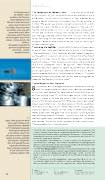
At the beginning of
the chapter 7, Jesus condemns the Pharisees, whose adherence to the Mosaic Law has become an empty ritual. At the end of the chapter, Jesus encounters an outsider, a non-Jew, with extraordinary faith. When the woman asks for healing for her daughter, Jesus at rst refuses—he has come for the “children,” the people of Israel. But he grants her prayer because of her faith—and her wonderful answer.
7:34 Again, Mark quotes the words Jesus used in healing in the original Aramaic (see Mark 5:41): Ephphetha, be opened. When adults are baptized in the Catholic Church, this passage is echoed in a prayer spoken over them just before their baptism: “Ephphetha: that is, be opened, that you may profess the faith you hear, to the praise and glory of God” (Rite of Christian Initiation of Adults, 199).
94
* [7:24–37] The withdrawal of Jesus to the district of Tyre may have been for a respite (Mk 7:24), but he soon moved onward to Sidon and, by way of the Sea of Galilee, to the Decapolis. These districts provided a Gentile setting for the extension of his ministry of healing because the people there acknowledged his power (Mk 7:29, 37). The actions attributed to Jesus (Mk 7:33– 35) were also used by healers of the time.
* [7:27–28] The gure of a household in which children at table are fed rst and then their leftover food is given to the dogs under the table is used e ectively to acknowledge the prior claim of the Jews to the ministry of Jesus; however, Jesus accedes to the Gentile woman’s plea for the cure of her a icted daughter because of her faith.
* [7:36] The more they proclaimed it: the same verb proclaim attributed here to the crowd in relation to the miracles of Jesus is elsewhere used in Mark for the preaching of the gospel on the part of Jesus, of his disciples, and of the Christian community (Mk 1:14; 13:10; 14:9). Implied in the action of the crowd is a recognition of the salvi c mission of Jesus; see note on Mt 11:5–6.
*[8:1–10] The two accounts of the multiplication of loaves and shes (Mk 8:1–10; 6:31–44) have eucharistic signi cance. Their similarity of structure and themes but dissimilarity of detail are considered by many to refer to a single event that, however, developed in two
Chapter 7
h. [7:24–30] Mt 15:21–28. i. [7:26] Mt 8:29.
j. [7:31–37] Mt 15:29–31. k. [7:37] Mt 15:31.
Chapter 8
a. [8:1–10] 6:34–44; Mt 15:32–39. b. [8:11–13] Mt 12:38–39; 16:1–4.
MARK .
The Syrophoenician Woman’s Faith. 24h From that place he went off to the district of Tyre.* He entered a house and wanted no one to know about it, but he could not escape notice. 25Soon a woman whose daughter had an unclean spirit heard about him. She came and fell at his feet. 26The woman was a Greek, a Syrophoenician by birth, and she begged him to drive the demon out of her daughter.i 27He said to her, “Let the children be fed first.* For it is not right to take the food of the children and throw it to the dogs.” 28She replied and said to him, “Lord, even the dogs under the table eat the children’s scraps.” 29Then he said to her, “For saying this, you may go. The demon has gone out of your daughter.” 30When the woman went home, she found the child lying in bed and the demon gone.
The Healing of a Deaf Man. 31j Again he left the district of Tyre and went by way of Sidon to the Sea of Galilee, into the district of the Decapolis. 32And people brought to him a deaf man who had a speech impediment and begged him to lay his hand on him. 33He took him off by himself away from the crowd. He put his finger into the man’s ears and, spitting, touched his tongue; 34then he looked up to heaven and groaned, and said to him, “Ephphatha!” (that is, “Be opened!”) 35And [immediately] the man’s ears were opened, his speech impediment was removed, and he spoke plainly. 36* He ordered them not to tell anyone. But the more he ordered them not to, the more they proclaimed it. 37They were exceedingly astonished and they said, “He has done all things well. He makes the deaf hear and [the] mute speak.”k
8The Feeding of the Four Thousand.*
1 In those days when there again was a great crowd without anything to eat,a he summoned the disciples and said, 2“My heart is moved with pity for the crowd, because they have been with me now for three days and have nothing to eat. 3If I send them away hungry to their homes, they will collapse on the way, and some of them have come a great distance.” 4His disciples answered him, “Where can anyone get enough bread to satisfy them here in this deserted place?” 5Still he asked them, “How many loaves do you have?”“Seven,” they replied. 6* He ordered the crowd to sit down on the ground. Then, taking the seven loaves he gave thanks, broke them, and gave them to his disciples to distribute, and they distributed them to the crowd. 7They also had a few fish. He said the blessing over them and ordered them distributed also. 8They ate and were satisfied. They picked up the fragments left over—seven baskets. 9There were about four thousand people.


