


Page 105 - Demo
P. 105
MARK
7The Tradition of the Elders.*
1Now when the Pharisees with some scribes who had come from
a2
Jerusalem gathered around him, they observed that some of his
disciples ate their meals with unclean, that is, unwashed, hands. 3(For the Pharisees and, in fact, all Jews, do not eat without carefully washing their hands,* keeping the tradition of the elders. 4And on coming from the marketplace they do not eat without purifying themselves. And there are many other things that they have traditionally observed, the purification of cups and jugs and kettles [and beds].) 5So the Pharisees and scribes questioned him, “Why do your disciples not follow the tradition of the elders* but instead eat a meal with unclean hands?” 6He responded, “Well did Isaiah prophesy about you hypocrites, as it is written:b
‘This people honors me with their lips,
but their hearts are far from me;
7In vain do they worship me,
teaching as doctrines human precepts.’
8You disregard God’s commandment but cling to human tradition.” 9He went on to say, “How well you have set aside the commandment of God in order to uphold your tradition! 10For Moses said, ‘Honor your father and your mother,’ and ‘Whoever curses father or mother shall die.’c 11Yet you say, ‘If a person says to father or mother, “Any support you might have had from me is qorban”’* (meaning, dedicated to God), 12you allow him to do nothing more for his father or mother. 13You nullify the word of God in favor of your tradition that you have handed on. And you do many such things.” 14d He summoned the crowd again and said to them, “Hear me, all of you, and understand. 15Nothing that enters one from outside can defile that person; but the things that come out from within are what defile.” [16]*
17* e When he got home away from the crowd his disciples questioned him about the parable. 18He said to them, “Are even you likewise without understanding? Do you not realize that everything that goes into a person from outside cannot defile, 19* f since it enters not the heart but the stomach and passes out into the latrine?” (Thus he declared all foods clean.) 20“But what comes out of a person, that is
what defiles. 21g From within people, from their hearts, come evil thoughts, unchastity, theft, murder, 22adultery, greed, malice, deceit, licentiousness, envy, blasphemy, arrogance, folly. 23All these evils come from within and they defile.”
7:1
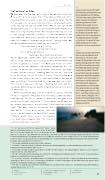
Jesus comes into con ict with the Pharisees and teachers over the interpretation of tradition. The Pharisees take a literal view when it comes to tradition, observing the letter of the
law. But Jesus urges a more sensitive, humane approach.
It is good to dedicate things to the Temple, to declare them qorban, but not as a pretext for not helping those who need
us the most. It is good to have clean hands, but it is more important to have a pure heart.
7:15
Dietary laws are an important part of Jewish tradition and observance. The most well- known of these laws is the rule against eating pork, but there are others as well, particularly the elaborate washing rituals mentioned by Mark. Should any of these laws be violated, the person would be rendered “unclean” and not be able to participate in public worship until restored to cleanness. Jesus explains to the disciples that what renders us unclean is not what goes into us—our food—but what comes out of us: our words, thoughts, and desires. We must beware of too much focus on the externals of religious practice.
* [7:1–23] See note on Mt 15:1–20. Against the Pharisees’ narrow,
legalistic, and external practices of piety in matters of puri cation
(Mk 7:2–5), external worship (Mk 7:6–7), and observance of com-
mandments, Jesus sets in opposition the true moral intent of the divine law (Mk 7:8–13). But he goes beyond contrasting the law and Pharisaic interpretation of it. The parable of Mk 7:14–15 in e ect sets aside the law itself in respect to clean and unclean food. He thereby opens the way for unity between Jew and Gentile in the kingdom of God, intimated by Jesus’ departure for pagan territory beyond Galilee. For similar contrast see Mk 2:1–3:6; 3:20–35; 6:1–6.
* [7:3] Carefully washing their hands: refers to ritual puri cation.
* [7:5] Tradition of the elders: the body of detailed, unwritten, human laws regarded by the scribes and Pharisees to have the same
binding force as that of the Mosaic law; cf. Gal 1:14.
* [7:11] Qorban: a formula for a gift to God, dedicating the o ering to the temple, so that the giver might continue to use it for himself but not give it to others, even needy parents.
* [7:16] Mk 7:16, “Anyone who has ears to hear ought to hear,” is omitted because it is lacking in some of the best Greek manuscripts and was probably transferred here by scribes from Mk 4:9, 23.
* [7:17] Away from the crowd. . .the parable: in this context of privacy the term parable refers to something hidden, about to be revealed to the disciples; cf. Mk 4:10–11, 34. Jesus sets the Mosaic food laws in the context of the kingdom of God where they are abrogated, and he declares moral de lement the only cause of uncleanness.
* [7:19] (Thus he declared all foods clean): if this bold declaration goes back to Jesus, its force was not realized among Jewish Christians in the early church; cf. Acts 10:1–11:18.
Chapter 7
a. [7:1–23] Mt 15:1–20. b. [7:6] Is 29:13.
c. [7:10] Ex 21:17; Lv 20:9; Dt 5:16; Eph 6:2. d. [7:14–23] Mt 15:10–20.
e. [7:17] 4:10, 13.
f. [7:19] Acts 10:15. g. [7:21] Jer 17:9.
93


