


Page 103 - Demo
P. 103
MARK
The Death of John the Baptist.* 17Herod was the one who had John arrested and bound in prison on account of Herodias, the wife of his
i 18
brother Philip, whom he had married. John had said to Herod, “It is
not lawful for you to have your brother’s wife.”j 19Herodias* harbored a grudge against him and wanted to kill him but was unable to do so. 20Herod feared John, knowing him to be a righteous and holy man, and kept him in custody. When he heard him speak he was very much perplexed, yet he liked to listen to him. 21She had an opportunity one day when Herod, on his birthday, gave a banquet for his courtiers, his military officers, and the leading men of Galilee. 22Herodias’s own daughter came in and performed a dance that delighted Herod and his guests. The king said to the girl, “Ask of me whatever you wish and I will grant it to you.” 23He even swore [many things] to her, “I will grant you whatever you ask of me, even to half of my kingdom.”k 24She went out and said to her mother, “What shall I ask for?” She replied, “The head of John the Baptist.” 25The girl hurried back to the
king’s presence and made her request, “I want you to give me at once on a platter the head of John the Baptist.” 26The king was deeply distressed, but because of his oaths and the guests he did not wish to break his word to her. 27l So he promptly dispatched an executioner with orders to bring back his head. He went off and beheaded him in the prison. 28He brought in the head on a platter and gave it to the girl. The girl in turn gave it to her mother. 29When his disciples heard about it, they came and took his body and laid it in a tomb.
The Return of the Twelve. 30The apostles* gathered together with Jesus and reported all they had done and taught.m 31* He said to them, “Come away by yourselves to a deserted place and rest a while.” People were coming and going in great numbers, and they had no opportunity even to eat.n 32So they went off in the boat by themselves to a deserted place.o 33People saw them leaving and many came to know about it. They hastened there on foot from all the towns and arrived at the place before them.
6:20
Herod is con icted about John the Baptist: “Herod feared John. When he heard him speak he was very much perplexed, yet he liked to listen to him” (6:20). Curiosity can be a starting place for a journey to faith. But that does not happen
in Herod’s case. Instead,
he allows fear to rule him,
a fear that leads to his imprisoning John and then having him beheaded,
thus silencing the voice that questioned his actions.
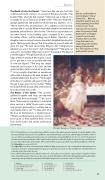
Herod’s Banquet, Filippo Lippi
* [6:17–29] Similarities are to be noted between Mark’s account of the imprisonment and death of John the Baptist in this pericope, and that of the passion of Jesus (Mk 15:1–47). Herod and Pilate, each in turn, acknowledges the holiness of life of one over whom he unjustly exercises the power of condemnation and death (Mk 6:26–27; 15:9–10, 14–15). The hatred of Herodias toward John parallels that of the Jewish leaders toward Jesus. After the deaths of John and of Jesus, well-disposed persons request the bodies of the victims of Herod and of Pilate in turn to give them respectful burial (Mk 6:29; 15:45–46).
* [6:19] Herodias: see note on Mt 14:3.
* [6:30] Apostles: here, and in some manuscripts at Mk 3:14, Mark calls apostles (i.e., those sent forth) the Twelve whom Jesus
sends as his emissaries, empowering them to preach, to expel demons, and to cure the sick (Mk 6:13). Only after Pentecost
is the title used in the technical sense.
* [6:31–34] The withdrawal of Jesus with his disciples to a desert place to rest attracts a great number of people to follow
them. Toward this people of the new exodus Jesus is moved with pity; he satisfies their spiritual hunger by teaching them many things, thus gradually showing himself the faithful shepherd of a new Israel; cf. Nm 27:17; Ez 34:15.
Chapter 6
a. [6:1–6] Mt 13:54–58; Lk 4:16–30.
b. [6:3] 15:40; Mt 12:46; Jn 6:42.
c. [6:4] Jn 4:44.
d. [6:7–11] Mt 10:1, 9–14; Lk 9:15; 10:4–11.
e. [6:13] Jas 5:14.
f. [6:14–29] Mt 14:1–12. g. [6:14–16] Lk 9:7–8. h. [6:15] Mt 16:14.
i. [6:17] Lk 3:19–20.
j. [6:18] Lv 18:16.
k. [6:23] Est 5:3.
l. [6:27–28] Lk 9:9.
m. [6:30] Lk 9:10.
n. [6:31] 3:20; Mt 14:13; Lk 9:10.
91


