


Page 137 - Demo
P. 137
* [2:7] Firstborn son: the description of Jesus as rstborn son does not necessarily mean that Mary had other sons. It is a legal description indicating that Jesus possessed the rights and privileges of the rstborn son (Gn 27; Ex 13:2; Nm 3:12–13; 18:15–16; Dt 21:15–17). See notes on Mt 1:25; Mk 6:3. Wrapped him in swaddling clothes: there may be an allusion here to the birth of another descendant of David, his son Solomon, who though a great king was wrapped in swaddling clothes like any other infant (Wis 7:4–6). Laid him in a manger: a feeding trough for animals. A possible allusion to Is 1:3 LXX.
* [2:8–20] The announcement of Jesus’ birth to the shepherds is in keeping with Luke’s theme that the lowly are singled out as the recipients of God’s favors and blessings (see also Lk 1:48, 52).
* [2:11] The basic message of the infancy narrative is contained in the angel’s announcement:
this child is savior, Messiah, and Lord. Luke is the only synoptic gospel writer to use the title savior for Jesus (Lk 2:11; Acts 5:31; 13:23; see also Lk 1:69; 19:9; Acts 4:12). As savior, Jesus is looked upon by Luke as the one who rescues humanity from sin and delivers humanity from the condition of alienation from God. The title christos, “Christ,” is the Greek equivalent of the Hebrew māšîah, “Messiah,” “anointed one.” Among certain groups in rst-century Palestinian Judaism, the title was applied to an expected royal leader from the line of David who would restore the kingdom to Israel (see Acts 1:6). The political overtones of the title are played down in Luke and instead the Messiah of the Lord (Lk 2:26) or the Lord’s anointed is the one who now brings salvation to all humanity, Jew and Gentile (Lk 2:29–32). Lord is the most frequently used title for Jesus in Luke and Acts. In the New Testament it is also applied to Yahweh, as it is in the Old Testament. When used of Jesus it points to his transcendence and dominion over humanity.
* [2:14] On earth peace to those on whom his favor rests: the peace that results from the Christ event is for those whom God has favored with his grace. This reading is found in the oldest representatives of the Western and Alexandrian text traditions and is the preferred one; the Byzantine text tradition, on the other hand, reads: “on earth peace, good will toward men.” The peace of which Luke’s gospel speaks (Lk 2:14; 7:50; 8:48; 10:5–6; 19:38, 42; 24:36) is more than the absence of war of the pax Augusta; it also includes the security and well-being characteristic of peace in the Old Testament.
a. [2:4] Mi 5:2; Mt 2:6. b. [2:5] 1:27; Mt 1:18. c. [2:7] Mt 1:25.
d. [2:9] 1:11, 26.
e. [2:11] Mt 1:21; 16:16; Jn 4:42; Acts 2:36; 5:31; Phil 2:11. f. [2:14] 19:38.
LUKE
to his own town. 4And Joseph too went up from Galilee from the town of Nazareth to Judea, to the city of David that is called Bethlehem, because he was of the house and family of David,a 5to be enrolled with Mary, his betrothed, who was with child.b 6While they were there, the time came for her to have her child, 7and she gave birth to her firstborn son.* She wrapped him in swaddling clothes and laid him in a manger, because there was no room for them in the inn.c
8* Now there were shepherds in that region
living in the fields and keeping the night watch
over their flock. 9The angel of the Lord appeared
to them and the glory of the Lord shone around
them, and they were struck with great fear.d
10The angel said to them, “Do not be afraid; for behold, I proclaim to you good news of great joy that will be for all the people. 11* e For today in the city of David a savior has been born for you who is Messiah and Lord. 12And this will be a sign for you: you will find an infant wrapped in swaddling clothes and lying in a manger.” 13And suddenly there was a multitude of the heavenly host with the angel, praising God and saying:
14* “Glory to God in the highestf
and on earth peace to those on whom his favor rests.”
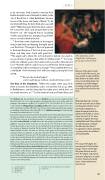
The Visit of the Shepherds. 15When the angels went away from them to heaven, the shepherds said to one another, “Let us go, then, to Bethlehem to see this thing that has taken place, which the Lord has made known to us.” 16So they went in haste and found Mary and
The adoration of the shepherds, by Georges de la Tour (1593-1652)
2:7
Because of the great crowds on the road for the census, the inns are full. Joseph and Mary take shelter in a stable, where Jesus is born. Mary places her newborn son in the manger, an eating trough for animals: Jesus will become food for the ock.
2:8
While Matthew tells of magi from the east who are in search of a king, here the rst visitors are humble shepherds, to whom the angel reveals the identity of the child: a “Savior. Christ, the Lord” (2:12). How will they recognize this long- awaited Messiah? They will nd an infant lying in a manger. The Messiah, the Christ, is recognized not by his grandeur or power, but by his weakness and vulnerability.
2:14
The song of the angels has become part of the Christian liturgy—these words begin the hymn Gloria in excelsis Deo. The angels sing of glory in heaven and peace on earth. In Christ, heaven and earth meet—divine and human become one.
125


