


Page 153 - Demo
P. 153
LUKE
6Some seed fell on rocky ground, and when it grew, it withered for lack of moisture. 7Some seed fell among thorns, and the thorns grew with it and choked it. 8And some seed fell on good soil, and when it grew, it produced fruit a hundredfold.” After saying this, he called out, “Whoever has ears to hear ought to hear.”d
The Purpose of the Parables.e 9Then his disciples asked him what the meaning of this parable might be. 10He answered, “Knowledge of the mysteries of the kingdom of God has been granted to you; but to the rest, they are made known through parables so that ‘they may look but not see, and hear but not understand.’f
The Parable of the Sower Explained.* 11g “This is the meaning of the parable. The seed is the word of God.h 12Those on the path are the ones who have heard, but the devil comes and takes away the word from their hearts that they may not believe and be saved. 13Those on rocky ground are the ones who, when they hear, receive the word with joy, but they have no root; they believe only for a time and fall away in time of trial. 14As for the seed that fell among thorns, they are the ones who have heard, but as they go along, they are choked by the anxieties and riches and pleasures of life, and they fail to produce mature fruit. 15But as for the seed that fell on rich soil, they are the ones who, when they have heard the word, embrace it with a generous and good heart, and bear fruit through perseverance.
The Parable of the Lamp.* 16i “No one who lights a lamp conceals it with a vessel or sets it under a bed; rather, he places it on a lampstand so that those who enter may see the light.j 17For there is nothing hidden that will not become visible, and nothing secret that will not be known and come to light.k 18Take care, then, how you hear. To anyone who has, more will be given, and from the one who has not, even what he seems to have will be taken away.”l
Jesus and His Family.m 19Then his mother and his brothers* came to him but were unable to join him because of the crowd. 20n He was told, “Your mother and your brothers are standing outside and they wish to see you.” 21He said to them in reply, “My mother and my brothers are those who hear the word of God and act on it.”*
The Calming of a Storm at Sea.o 22* One day he got into a boat with his disciples and said to them, “Let us cross to the other side of the lake.” So they set sail, 23and while they were sailing he fell asleep. A squall blew over the lake, and they were taking in water and were in danger. 24They came and woke him saying, “Master, master, we are perishing!” He awakened, rebuked the wind and the waves, and they subsided and there was a calm. 25Then he asked them, “Where is your
8:2
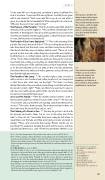
Among Jesus’ disciples are many women, who journey with him and the Apostles. They include wealthy women like Joanna—wife of a high- ranking o cial, steward to Herod—and women whom Jesus has healed, like Mary Magdalene.
8:26
Jesus teaches in parables. He does so not in order to confuse his hearers, but
to make them think. His meaning is not obvious at rst: it needs to be pondered, meditated on, teased out.
d. [8:8] 14:35; Mt 11:15; 13:43; Mk 4:23.
e. [8:9–10] Mt 13:10–13; Mk 4:10–12.
f. [8:10] Is 6:9.
g. [8:11–15] Mt 13:18–23; Mk 4:13–20.
h. [8:11] 1 Pt 1:23.
i. [8:16–18] Mk 4:21–25.
j. [8:16] 11:33; Mt 5:15.
k. [8:17] 12:2; Mt 10:26.
l. [8:18] 19:26; Mt 13:12; 25:29.
m. [8:19–21] Mt 12:46–50; Mk 3:31–35.
n. [8:20–21] 11:27–28.
o. [8:22–25] Mt 8:18, 23–27; Mk 4:35–41.
141
* [8:11–15] On the interpretation of the parable of the sower, see note on Mt 13:18–23.
* [8:16–18] These sayings continue the theme of responding to the word of God. Those who hear the word must become a light to others (Lk 8:16); even the mysteries of the kingdom that have been made known to the disciples (Lk 8:9–10) must come to light (Lk 8:17); a generous and persevering response to the word of God leads to a still more perfect response
to the word.
* [8:19] His brothers: see note on Mk 6:3.
* [8:21] The family of Jesus is not constituted by physical relationship with him but by
obedience to the word of God. In this, Luke agrees with the Marcan parallel (Mk 3:31–35), although by omitting Mk 3:33 and especially Mk 3:20–21 Luke has softened the Marcan picture of Jesus’ natural family. Probably he did this because Mary has already been presented in Lk 1:38 as the obedient handmaid of the Lord who ful lls the requirement for belonging to the eschatological family of Jesus; cf. also Lk 11:27–28.
* [8:22–56] This section records four miracles of Jesus that manifest his power and authority: (1) the calming of a storm on the lake (Lk 8:22–25); (2) the exorcism of a demoniac (Lk 8:26– 39); (3) the cure of a hemorrhaging woman (Lk 8:40–48); (4) the raising of Jairus’s daughter to life (Lk 8:49–56). They parallel the same sequence of stories at Mk 4:35–5:43.


