


Page 163 - Demo
P. 163
LUKE
judges. 20But if it is by the finger of God that [I] drive out demons, then the kingdom of God has come upon you.h
When a strong man fully armed guards his palace, his possessions are safe. 22But when one stronger* than he attacks and overcomes him, he takes away the armor on which he relied and distributes the spoils. 23Whoever is not with me is against me, and whoever does not gather with me scatters.i
The Return of the Unclean Spirit.j 24“When an unclean
spirit goes out of someone, it roams through arid regions searching for rest but, finding none, it says, ‘I shall return to my home from which I came.’ 25But upon returning, it finds it swept clean and put in order. 26Then it goes and brings back seven other spirits more wicked than itself who move in and dwell there, and the last condition of that person is worse than the first.”k
True Blessedness.* 27While he was speaking, a woman from the crowd called out and said to him, “Blessed is the womb that carried you and the breasts at which you nursed.”l 28He replied, “Rather, blessed are those who hear the word of God and observe it.”
The Demand for a Sign.* 29While still more people gathered in the crowd, he said to them,m “This generation is an evil generation; it seeks a sign, but no sign will be given it, except the sign of Jonah.n 30Just as Jonah became a sign to the Ninevites, so will the Son of Man be to this generation. 31At the judgment the queen of the south will rise with the men of this generation and she will condemn them, because she came from the ends of the earth to hear the wisdom of Solomon, and there is something greater than Solomon here.o 32At the judgment the men of Nineveh will arise with this generation and condemn it, because at the preaching of Jonah they repented, and there is something greater than Jonah here.p
The Simile of Light. 33“No one who lights a lamp hides it away or places it [under a bushel basket], but on a lampstand so that those who enter might see the light.q 34The lamp of the body is your eye.r When your eye is sound, then your whole body is filled with light, but when it is bad, then your body is in darkness. 35Take care, then, that the light in you not become darkness. 36If your whole body is full of light, and no part of it is in darkness, then it will be as full of light as a lamp illuminating you with its brightness.”
Denunciation of the Pharisees and Scholars of the Law.* 37s After he had spoken, a Pharisee invited him to dine at his home. He entered and reclined at table to eat.t 38The Pharisee was amazed to see that he did not observe the prescribed washing before the meal.u 39The Lord said to him, “Oh you Pharisees!v Although you cleanse the outside of the cup and the dish, inside you are filled with plunder and evil.
21
11:27
“Mary, who through
faith believed and conceived, was more a disciple of Christ than simply as the Mother of Christ.
She received more happiness as a disciple
than as a Mother.. Mary is blessed because she heard the word of God and kept it: she retained the
truth in her mind better than the esh in her womb” (Saint Augustine).1
11:29
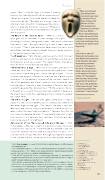
Jesus refers to two Old Testament stories about non- Jews. When Jonah preached to the Ninevites, they were immediately converted (Jonah 3). The “queen of
the south” is the queen of Sheba, who came to listen
to the wisdom of Solomon
(I Kings 10). These people were outsiders, and yet they recognized the wisdom of God. Jesus’ own generation is blind, even though “there is something greater than Jonah here”—Jesus himself.
1 St. Augustine, Sermo 72A.
h. [11:20] Ex 8:19.
i. [11:23] 9:50; Mk 9:40.
j. [11:24–26] Mt 12:43–45.
k. [11:26] Jn 5:14.
l. [11:27] 1:28, 42, 48.
m. [11:29–32] Mt 12:38–42; Mk 8:12.
n. [11:29] Mt 16:1, 4; Jn 6:30; 1 Cor 1:22.
o. [11:31] 1 Kgs 10:1–10; 2 Chr 9:1–12.
p. [11:32] Jon 3:8, 10.
q. [11:33] 8:16; Mt 5:15; Mk 4:21.
r. [11:34–36] Mt 6:22–23.
s. [11:37–54] 20:45–47; Mt 23:1–36;
Mk 12:38–40.
t. [11:37] 7:36; 14:1.
u. [11:38] Mt 15:2; Mk 7:2–5.
v. [11:39–41] Mt 23:25–26.
151
* [11:22] One stronger: i.e., Jesus. Cf. Lk 3:16 where John the Baptist identi es Jesus as “more powerful than I.”
* [11:27–28] The beatitude in Lk 11:28 should not be interpreted as a rebuke of the mother of Jesus; see note on Lk 8:21. Rather, it emphasizes (like Lk 2:35) that attentiveness to God’s word is more important than biological relationship to Jesus.
* [11:29–32] The “sign of Jonah” in Luke is the preaching of the need for repentance by a prophet who comes from afar. Cf. Mt 12:38–42 (and see notes there) where the “sign of Jonah” is interpreted by Jesus as his death and resurrection.
* [11:37–54] This denunciation of the Pharisees (Lk 11:39–44) and the scholars of the law (Lk 11:45–52) is set by Luke in the context of Jesus’ dining at the home of a Pharisee. Controversies with or reprimands of Pharisees are regularly set by Luke within the context of Jesus’ eating with Pharisees (see Lk 5:29–39; 7:36–50; 14:1–24). A di erent compilation of similar sayings is found in Mt 23 (see also notes there).


