


Page 162 - Demo
P. 162
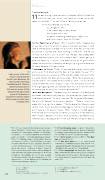
11:2 Luke’s version of the Lord’s Prayer is shorter and less familiar than Matthew’s, the version used in the liturgy (see Matthew 6:9). The basic elements are the same in both versions: praise of God; request for the day’s needs; prayer for forgiveness in proportion to how we forgive others; prayer for God’s mercy in the end times.
LUKE
The Lord’s Prayer.a 1*
11He was praying in a certain place, and when he had finished, one
of his disciples said to him, “Lord, teach us to pray just as John taught his disciples.”* 2* He said to them, “When you pray, say:
Father, hallowed be your name, your kingdom come.
3Give us each day our daily bread*
4and forgive us our sins
for we ourselves forgive everyone in debt to us, and do not subject us to the nal test.”
Further Teachings on Prayer.b 5And he said to them, “Suppose one of you has a friend to whom he goes at midnight and says, ‘Friend, lend me three loaves of bread, 6for a friend of mine has arrived at my house from a journey and I have nothing to offer him,’ 7and he says in reply from within, ‘Do not bother me; the door has already been locked and my children and I are already in bed. I cannot get up to give you anything.’ 8I tell you, if he does not get up to give him the loaves because of their friendship, he will get up to give him whatever he needs because of his persistence.
The Answer to Prayer.c 9“And I tell you, ask and you will receive; seek and you will find; knock and the door will be opened to you.d 10For everyone who asks, receives; and the one who seeks, finds; and to the one who knocks, the door will be opened. 11What father among you would hand his son a snake when he asks for a fish? 12Or hand him a scorpion when he asks for an egg? 13If you then, who are wicked, know how to give good gifts to your children, how much more will the Father in heaven give the holy Spirit* to those who ask him?”
Jesus and Beelzebul.e 14He was driving out a demon [that was] mute, and when the demon had gone out, the mute person spoke and the crowds were amazed. 15Some of them said, “By the power of Beelzebul, the prince of demons, he drives out demons.”f 16Others, to test him, asked him for a sign from heaven.g 17But he knew their thoughts and said to them, “Every kingdom divided against itself will be laid waste and house will fall against house. 18And if Satan is divided against himself, how will his kingdom stand? For you say that it is by Beelzebul that I drive out demons. 19If I, then, drive out demons by Beelzebul, by whom do your own people* drive them out? Therefore they will be your
..* [11:1–13] Luke presents three episodes concerned with prayer. The rst (Lk 11:1–4) recounts Jesus teaching his disciples the Christian communal prayer, the “Our Father”; the second (Lk 11:5–8), the importance of persistence in prayer; the third (Lk 11:9–13), the e ectiveness of prayer.
* [11:1–4] The Matthean form of the “Our Father” occurs in the “Sermon on the Mount” (Mt 6:9–15); the shorter Lucan version is presented while Jesus is at prayer (see note on Lk 3:21) and his disciples ask him to teach them to pray just as John taught his disciples to pray. In answer to their question, Jesus presents them with an example of a Christian communal prayer that stresses the fatherhood of God and acknowledges him as the one to whom the Christian disciple owes daily sustenance (Lk 11:3), forgiveness (Lk 11:4), and deliverance from the nal trial (Lk 11:4). See also notes on Mt 6:9–13.
a. [11:1–4] Mt 6:9–15.
b. [11:5–8] 18:1–5.
c. [11:9–13] Mt 7:7–11.
d. [11:9] Mt 21:22; Mk 11:24; Jn 14:13; 15:7; 1 Jn 5:14–15.
* [11:2] Your kingdom come: in place of this petition, some early church Fathers record: “May your holy Spirit come upon us and cleanse us,” a petition that may re ect the use of the “Our Father” in a baptismal liturgy.
* [11:3–4] Daily bread: see note on Mt 6:11. The nal test: see note on Mt 6:13.
* [11:13] The holy Spirit: this is a Lucan editorial alteration of a traditional saying of Jesus (see Mt 7:11). Luke presents the gift of the holy Spirit as the response of the Father to the prayer of the Christian disciple.
* [11:19] Your own people: the Greek reads “your sons.” Other Jewish exorcists (see Acts 19:13–20), who recognize that the power of God is active in the exorcism, would themselves convict the accusers of Jesus. See also note on Mt 12:27.
e. [11:14–23] Mt 12:22–30; Mk 3:20–27.
f. [11:15] Mt 9:34.
g. [11:16] Mt 12:38; 16:1; Mk 8:11; 1 Cor 1:22.
150


