


Page 160 - Demo
P. 160
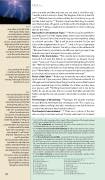
10:18 Jesus refers to the fall of the rebel angels, led by Satan or Lucifer, which is alluded to in the Old Testament and described in other ancient sources. Satan’s pride led him to wage war on God. Jesus seems to warn his disciples against spiritual pride. They should not rejoice in their power, but in God’s love for them: their names are written in heaven.
10:23 Jesus reminds the disciples how blessed they are, more fortunate than “prophets and kings” who longed for the coming of the reign of God but did not live to see it.
10:29 Jews and Samaritans shared common ancestors, but the Jewish people rejected the Samaritans because they had intermarried with non-Jews. The enmity went both ways: in Luke 9:51, a Samaritan town refuses to welcome Jesus because he is headed towards Jerusalem. This ancient hatred makes the parable of “the good Samaritan” even more powerful. When the Jewish man is beaten and left for dead, none of his own people—not even the priest—will stop to help him. They even cross the road to avoid him. But a Samaritan takes pity on him and not only helps him with his immediate needs, but leaves money to continue his care and promises to check on him when he returns. The point is clear: our neighbor is not simply whom we are related to, or who is like us. Our neighbor is everyone, stranger as well as friend.
148
LUKE
town you enter and they welcome you, eat what is set before you,g 9cure the sick in it and say to them, ‘The kingdom of God is at hand for you.’h 10Whatever town you enter and they do not receive you, go out into the streets and say,i 11‘The dust of your town that clings to our feet, even that we shake off against you.’ Yet know this: the kingdom of God is at hand.j 12I tell you, it will be more tolerable for Sodom on that day than for that town.k
Reproaches to Unrepentant Towns.* 13l “Woe to you, Chorazin! Woe to you, Bethsaida!m For if the mighty deeds done in your midst had been done in Tyre and Sidon, they would long ago have repented, sitting in sackcloth and ashes. 14But it will be more tolerable for Tyre and Sidon at the judgment than for you. 15* n And as for you, Capernaum, ‘Will you be exalted to heaven? You will go down to the netherworld.’ 16Whoever listens to you listens to me. Whoever rejects you rejects me. And whoever rejects me rejects the one who sent me.”o
Return of the Seventy-two. 17The seventy[-two] returned rejoicing, and said, “Lord, even the demons are subject to us because of your name.” 18Jesus said, “I have observed Satan fall like lightning* from the sky.p 19Behold, I have given you the power ‘to tread upon serpents’ and scorpions and upon the full force of the enemy and nothing will harm you.q 20Nevertheless, do not rejoice because the spirits are subject to you, but rejoice because your names are written in heaven.”r
Praise of the Father.s 21At that very moment he rejoiced [in] the holy Spirit and said, “I give you praise, Father, Lord of heaven and earth, for although you have hidden these things from the wise and the learned you have revealed them to the childlike.* Yes, Father, such has been your gracious will.t 22All things have been handed over to me by my Father. No one knows who the Son is except the Father, and who the Father is except the Son and anyone to whom the Son wishes to reveal him.”u
The Privileges of Discipleship.v 23Turning to the disciples in private he said, “Blessed are the eyes that see what you see. 24For I say to you, many prophets and kings desired to see what you see, but did not see it, and to hear what you hear, but did not hear it.”
The Greatest Commandment.w 25* There was a scholar of the law* who stood up to test him and said, “Teacher, what must I do to inherit
* [10:13–16] The call to repentance that is a part of the proclamation of the kingdom brings with it a severe judgment for those who hear it and reject it.
* [10:15] The netherworld: the underworld, the place of the dead (Acts 2:27, 31) here contrasted with heaven; see also note on Mt 11:23.
* [10:18] I have observed Satan fall like lightning: the e ect of the mission of the seventy- two is characterized by the Lucan Jesus as a symbolic fall of Satan. As the kingdom of God is gradually being established, evil in all its forms is being defeated; the dominion of Satan over humanity is at an end.
* [10:21] Revealed them to the childlike: a restatement of the theme announced in Lk 8:10: the mysteries of the kingdom are revealed to the disciples. See also note on Mt 11:25–27.
* [10:25–37] In response to a question from a Jewish legal expert about inheriting eternal
life, Jesus illustrates the superiority of love over legalism through the story of the good Samaritan. The law of love proclaimed in the “Sermon on the Plain” (Lk 6:27–36) is exempli ed by one whom the legal expert would have considered ritually impure (see Jn 4:9). Moreover, the identity of the “neighbor” requested by the legal expert (Lk 10:29) turns out to be a Samaritan, the enemy of the Jew (see note on Lk 9:52).
* [10:25] Scholar of the law: an expert in the Mosaic law, and probably a member of the group elsewhere identi ed as the scribes (Lk 5:21).
g. [10:8] 1 Cor 10:27.
h. [10:9] Mt 3:2; 4:17; Mk 1:15.
i. [10:10–11] 9:5.
j. [10:11] Acts 13:51; 18:6.
k. [10:12] Mt 10:15; 11:24.
l. [10:13–15] Mt 11:20–24.
m.[10:13–14] Is 23; Ez 26–28; Jl 3:4–8; Am 1:1–10; Zec 9:2–4. n. [10:15] Is 14:13–15.
o. [10:16] Mt 10:40; Jn 5:23; 13:20; 15:23.
p. [10:18] Is 14:12; Jn 12:31; Rev 12:7–12.
q. [10:19] Ps 91:13; Mk 16:18.
r. [10:20] Ex 32:32; Dn 12:1; Mt 7:22; Phil 4:3; Heb 12:23;
Rev 3:5; 21:27.
s. [10:21–22] Mt 11:25–27.
t. [10:21] 1 Cor 1:26–28.
u. [10:22] Jn 3:35; 10:15.
v. [10:23–24] Mt 13:16–17.
w. [10:25–28] Mt 22:34–40; Mk 12:28–34.


