


Page 171 - Demo
P. 171
LUKE -
orders have been carried out and still there is room.’ 23The master then ordered the servant, ‘Go out to the highways and hedgerows and make
people come in that my home may be filled. For, I tell you, none of those men who were invited will taste my dinner.’”
Sayings on Discipleship.* 25Great crowds were traveling with him, and he turned and addressed them, 26l “If any one comes to me without hating his father* and mother, wife and children, brothers and sisters, and even his own life, he cannot be my disciple.m 27Whoever does not carry his own cross and come after me cannot be my disciple.n 28Which of you wishing to construct a tower does not first sit down and calculate the cost to see if there is enough for its completion? 29Otherwise, after laying the foundation and finding himself unable to finish the work the onlookers should laugh at him 30and say, ‘This one began to build but did not have the resources to finish.’ 31Or what king marching into battle would not first sit down and decide whether with ten thousand troops he can successfully oppose another king advancing upon him with twenty thousand troops? 32But if not, while he is still far away, he will send a delegation to ask for peace terms. 33In the same way, everyone of you who does not renounce all his possessions cannot be my disciple.o
The Simile of Salt.* 34“Salt is good, but if salt itself loses its taste, with what can its flavor be restored?p 35It is fit neither for the soil nor for the manure pile; it is thrown out. Whoever has ears to hear ought to hear.”q
The Parable of the Lost Sheep.
15
a 1* The tax collectors and sinners were all drawing near to listen
to him, but the Pharisees and scribes began to complain, saying, “This man welcomes sinners and eats with them.”b 3So to them he addressed this parable. 4c “What man among you having a hundred sheep and losing one of them would not leave the ninety-nine in the desert and go after the lost oned until he finds it?e 5And when he does find it, he sets it on his shoulders with great joy 6and, upon his arrival home, he calls together his friends and neighbors and says to them, ‘Rejoice with me because I have found my lost sheep.’ 7I tell you, in just the same way there will be more joy in heaven over one sinner who repents than over ninety-nine righteous people who have no need of repentance.f
The Parable of the Lost Coin. 8“Or what woman having ten coins* and losing one would not light a lamp and sweep the house, searching carefully until she finds it? 9And when she does find it, she calls
2
24
15:1
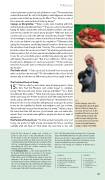
In this chapter, Jesus tells three parables about nding the lost: the lost sheep, the lost coin, the lost son. In the parable of the lost coin, God is like a thrifty woman who will not stop looking for her lost coin until it is found. This is one of several feminine images of God in the Bible.
* [14:25–33] This collection of sayings, most of which are peculiar to Luke, focuses on the total dedication necessary for the disciple of Jesus. No attachment to family (Lk 14:26) or possessions (Lk 14:33) can stand in the way of the total commitment demanded of the disciple. Also, acceptance of the call to be a disciple demands readiness to accept persecution and su ering (Lk 14:27) and a realistic assessment of the hardships and costs (Lk 14:28–32).
* [14:26] Hating his father. . .: cf. the similar saying in Mt 10:37. The disciple’s family must take second place to the absolute dedication involved in following Jesus (see also Lk 9:59–62).
* [14:34–35] The simile of salt follows the sayings of Jesus that demanded of the disciple total dedication and detachment from family and possessions and illustrates the condition of one who does not display this total commitment. The halfhearted disciple is like salt that cannot serve its intended purpose. See the simile of salt in Mt 5:13 and the note there.
* [15:1–32] To the parable of the lost sheep (Lk 15:1–7) that Luke shares with Matthew (Mt 18:12–14), Luke adds two parables (the lost coin, Lk 15:8–10; the prodigal son, Lk 15:11–32) from his own special tradition to illustrate Jesus’ particular concern for the lost and God’s love for the repentant sinner.
* [15:8] Ten coins: literally, “ten drachmas.” A drachma was a Greek silver coin.
CHAPTER 14
l. [14:26–27] Mt 10:37–38.
m. [14:26] 9:57–62; 18:29; Jn 12:25.
n. [14:27] 9:23; Mt 16:24; Mk 8:34.
o. [14:33] 5:11.
p. [14:34] Mt 5:13; Mk 9:50.
q. [14:35] 8:8; Mt 11:15; 13:9; Mk 4:9, 23.
CHAPTER 15
a. [15:1–7] Mt 9:10–13. b. [15:2] 5:30; 19:7.
c. [15:4–7] Mt 18:12–14. d. [15:4–6] 19:10.
e. [15:4] Ez 34:11–12, 16. f. [15:7] Ez 18:23.
159


