


Page 174 - Demo
P. 174
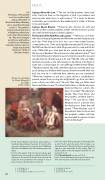
16:20 The Lazarus of this parable is not to be confused with Lazarus, the brother of Martha and Mary of Bethany, who is raised from the dead in John 11. This parable is echoed in the ancient chant In Paradisum, which forms part of the Catholic funeral rite: “May choirs of angels welcome you and lead you to the bosom of Abraham; and where Lazarus is poor no longer, may you nd eternal rest” (Order of Christian Funerals).
Detail of a painting by Pieter Brueghel the Elder (1525-1569)
LUKE
Sayings About the Law. 16“The law and the prophets lasted until John;* but from then on the kingdom of God is proclaimed, and everyone who enters does so with violence.f 17It is easier for heaven and earth to pass away than for the smallest part of a letter of the law to become invalid.g
Sayings About Divorce. 18“Everyone who divorces his wife and marries another commits adultery, and the one who marries a woman divorced from her husband commits adultery.h
The Parable of the Rich Man and Lazarus.* 19“There was a rich man* who dressed in purple garments and fine linen and dined sumptuously each day. 20And lying at his door was a poor man named Lazarus, covered with sores,i 21who would gladly have eaten his fill of the scraps that fell from the rich man’s table. Dogs even used to come and lick his sores. 22When the poor man died, he was carried away by angels to the bosom of Abraham. The rich man also died and was buried, 23and from the netherworld,* where he was in torment, he raised his eyes and saw Abraham far off and Lazarus at his side. 24And he cried out, ‘Father Abraham, have pity on me. Send Lazarus to dip the tip of his finger in water and cool my tongue, for I am suffering torment in these flames.’ 25Abraham replied, ‘My child, remember that you received what was good during your lifetime while Lazarus likewise received what was bad; but now he is comforted here, whereas you are tormented.j 26Moreover, between us and you a great chasm is established to prevent anyone from crossing who might wish to go from our side to yours or from your side to ours.’ 27He said, ‘Then I beg you, father, send him to my father’s house, 28for I have five brothers, so that he may warn
them, lest they too come to this place of torment.’ 29But Abraham replied, ‘They have Moses and the prophets. Let them listen to them.’ 30* He said, ‘Oh no, father Abraham, but if someone from the dead goes to them, they will repent.’ 31Then Abraham said, ‘If they will not listen to Moses and the prophets, neither will they be persuaded if someone should rise from the dead.’”k
* [16:16] John the Baptist is presented in Luke’s gospel as a transitional gure between the period of Israel, the time of promise, and the period of Jesus, the time of ful llment. With John, the ful llment of the Old Testament promises has begun.
* [16:19–31] The parable of the rich man and Lazarus again illustrates Luke’s concern with Jesus’ attitude toward the rich and the poor. The reversal of the fates of the rich man and Lazarus (Lk 16:22–23) illustrates the teachings of Jesus in Luke’s “Sermon on the Plain” (Lk 6:20–21, 24–25).
f. [16:16] Mt 11:12–13.
g. [16:17] Mt 5:18.
h. [16:18] Mt 5:32; 19:9; Mk 10:11–12; 1 Cor 7:10–11.
* [16:19] The oldest Greek manuscript of Luke dating from ca. A.D. 175–225 records the name of the rich man as an abbreviated form of “Nineveh,” but there is very little textual support in other manuscripts for this reading. “Dives” of popular tradition is the Latin Vulgate’s translation for “rich man” (Lk 16:19–31).
* [16:23] The netherworld: see note on Lk 10:15.
* [16:30–31] A foreshadowing in Luke’s gospel of the rejection
of the call to repentance even after Jesus’ resurrection.
i. [16:20] Mt 15:27; Mk 7:28.
j. [16:25] 6:24–25.
k. [16:31] Jn 5:46–47; 11:44–48.
162


