


Page 176 - Demo
P. 176
17:26 Jesus vividly evokes Noah’s time, when life proceeded just as usual for most people, even though their lives were about to be swept away in the ood. It must not be like that for Jesus’ followers. Christians must not run after everyone who says the end is nigh, but, at the same time, they are to live in readiness.
17:32 “Remember the wife of Lot” (17:32). In Genesis 19, God sends angels to Lot, who lives in Sodom. They warn him: “‘Flee for your life! Do not look back or stop anywhere on the Plain. Flee to the hills at once, or you will be swept away.’ .... the LORD rained down sulfur upon Sodom and Gomorrah, re from the LORD out of heaven. He overthrew those cities and the whole Plain, together with the inhabitants of the cities and the produce of the soil. But Lot’s wife looked back, and she was turned into a pillar of salt” (Genesis 19:17, 23-26).
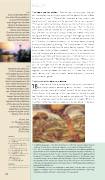
Noah’s Ark, by Theodore de Bry (1528-1598) and Jacques Lemoyne de Morgues (1530-1588)
CHAPTER 17
k. [17:23] 17:21; Mt 24:23, 26; Mk 13:21.
l. [17:24] Mt 24:27.
m. [17:25] 9:22; 18:32–33; Mt 16:21;
17:22–23; 20:18–19; Mk 8:31; 9:31;
10:33–34.
n. [17:26–27] Gn 6–8; Mt 24:37–39.
o. [17:28–29] Gn 18:20–21; 19:1–29.
p. [17:31–32] Gn 19:17, 26.
q. [17:31] Mt 24:17–18; Mk 13:15–16.
r. [17:33] 9:24; Mt 10:39; 16:25;
Mk 8:35; Jn 12:25.
s. [17:35] Mt 24:40–41.
t. [17:37] Jb 39:30; Mt 24:28.
CHAPTER 18
a. [18:1] Rom 12:12; Col 4:2; 1 Thes 5:17.
b. [18:5] 11:8.
164
LUKE -
The Day of the Son of Man. 22Then he said to his disciples, “The days will come when you will long to see one of the days of the Son of Man, but you will not see it. 23There will be those who will say to you, ‘Look, there he is,’ [or] ‘Look, here he is.’ Do not go off, do not run in pursuit.k 24For just as lightning flashes and lights up the sky from one side to the other, so will the Son of Man be [in his day].l 25But first he must suffer greatly and be rejected by this generation.m 26As it was in the days of Noah,n so it will be in the days of the Son of Man; 27they were eating and drinking, marrying and giving in marriage up to the day that Noah entered the ark, and the flood came and destroyed them all. 28o Similarly, as it was in the days of Lot: they were eating, drinking, buying, selling, planting, building; 29on the day when Lot left Sodom, fire and brimstone rained from the sky to destroy them all. 30So it will be on the day the Son of Man is revealed. 31p On that day, a person who is on the housetop and whose belongings are in the house must not go down to get them, and likewise a person in the field must not return to what was left behind.q 32Remember the wife of Lot. 33Whoever seeks to preserve his life will lose it, but whoever loses it will save it.r 34I tell you, on that night there will be two people in one bed; one will be taken, the other left. 35s And there will be two women grinding meal together; one will be taken, the other left.” 36* 37They said to him in reply, “Where, Lord?” He said to them, “Where the body is, there also the vultures will gather.”t
181* Then he told them a parable about the necessity for them to a2
The Parable of the Persistent Widow.
pray always without becoming weary. He said, “There was a judge in a certain town who neither feared God nor respected any human being. 3And a widow in that town used to come to him and say, ‘Render a just decision for me against my adversary.’ 4For a long time the judge was unwilling, but eventually he thought, ‘While it is true that I neither fear God nor respect any human being, 5* b because
* [17:36] The inclusion of Lk 17:36, “There will be two men in the eld; one will be taken, the other left behind,” in some Western manuscripts appears to be a scribal assimilation to Mt 24:40.
* [18:1–14] The particularly Lucan material in the travel narrative concludes with two parables on prayer. The rst (Lk 18:1–8) teaches the disciples the need of persistent prayer so that they not fall victims to apostasy (Lk 18:8). The second (Lk 18:9–14) condemns the self-righteous, critical attitude of the Pharisee and teaches that the fundamental attitude of the Christian disciple must be the recognition of sinfulness and complete dependence on God’s graciousness. The second parable recalls the story of the pardoning of the sinful woman (Lk 7:36–50) where a similar contrast is presented between the critical attitude of the Pharisee Simon and the love shown by the pardoned sinner.
* [18:5] Strike me: the Greek verb translated as strike means “to strike under the eye” and suggests the extreme situation to which the persistence of the widow might lead. It may, however, be used here in the much weaker sense of “to wear one out.”


