


Page 177 - Demo
P. 177
LUKE
this widow keeps bothering me I shall deliver a just decision for her lest she finally come and strike me.’” 6The Lord said, “Pay attention to what the dishonest judge says. 7Will not God then secure the rights of his chosen ones who call out to him day and night? Will he be slow to answer them? 8I tell you, he will see to it that justice is done for them speedily. But when the Son of Man comes, will he find faith on earth?” The Parable of the Pharisee and the Tax Collector. 9He then addressed this parable to those who were convinced of their own righteousness and despised everyone else.c 10“Two people went up to the temple area to pray; one was a Pharisee and the other was a
tax collector. 11The Pharisee took up his position and spoke this prayer to himself, ‘O God, I thank you that I am not like the rest
of humanity—greedy, dishonest, adulterous—or even like this
tax collector. 12I fast twice a week, and I pay tithes on my whole income.’d 13But the tax collector stood off at a distance and would
not even raise his eyes to heaven but beat his breast and prayed, ‘O God, be merciful to me a sinner.’e 14I tell you, the latter went home justified, not the former; for everyone who exalts himself will be humbled, and the one who humbles himself will be exalted.”f
Saying on Children and the Kingdom. 15* People were bringing even infants to him that he might touch them,* and when the disciples saw this, they rebuked them.g 16Jesus, however, called the children to himself and said, “Let the children come to me and do not prevent them; for the kingdom of God belongs to such as these. 17Amen, I say to you, whoever does not accept the kingdom of God like a child will not enter it.”h
he heard this he became quite sad, for he was very rich.
On Riches and Renunciation. 24Jesus looked at him [now sad] and said, “How hard it is for those who have wealth to enter the kingdom of God! 25For it is easier for a camel to pass through the eye of a needle than for a rich person to enter the kingdom of God.” 26Those who heard this said, “Then who can be saved?” 27And he said, “What is impossible for human beings is possible for God.”m 28Then Peter said, “We have given up our possessions and followed you.” 29n He said to them, “Amen, I say to you, there is no one who has given up house or wife or brothers or parents or children for the sake of the kingdom of God
The Rich Official.
An official asked him this question, “Good teacher, what must I do to inherit eternal life?”j 19Jesus answered him, “Why do you call me good? No one is good but God alone. 20You know the commandments, ‘You shall not commit adultery; you shall not kill; you shall not steal; you shall not bear false witness; honor your father and your mother.’”k 21And he replied, “All of these I have observed from my youth.” 22* l When Jesus heard this he said to him, “There is still one thing left for you: sell all that you have and distribute it to the poor, and you will have a treasure in heaven. Then come, follow me.” 23But when
18i
* [18:15–19:27] Luke here includes much of the material about the journey to Jerusalem found in his Marcan source (Lk 10:1–52) and adds to it the story of Zacchaeus (Lk 19:1–10) from his own particular tradition and the parable of the gold coins (minas) (Lk 19:11–27) from Q, the source common to Luke and Matthew.
* [18:15–17] The sayings on children furnish a contrast to the attitude of the Pharisee in the preceding episode (Lk 18:9–14) and that of the wealthy o cial in the following one (Lk 18:18– 23) who think that they can lay claim to God’s favor by their own merit. The attitude of the disciple should be marked by the receptivity and trustful dependence characteristic of the child.
* [18:22] Detachment from material possessions results in the total dependence on God demanded of one who would inherit eternal life. Sell all that you have: the original saying (cf. Mk 10:21) has characteristically been made more demanding by Luke’s addition of “all.”
18:2
God is not like the unjust judge: God is just and wants what is best for all his children. But in our prayer, we are to be like that widow, who kept at it, patiently, insistently, urgently, even doggedly, not being deterred even when the situation seems hopeless.
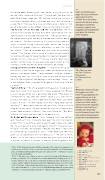
The Pharisee and the Tax Collector, illustration
by Gustave Doré (1866)
18:17
What does it mean to accept the kingdom as a little
child? This passage does not suggest that we are to be ignorant or childish when it comes to our faith. Rather,
we are to have the simplicity, directness, and humility of children, who know they cannot do everything on their own and who recognize and accept their own dependence.
c. [18:9] 16:5; Mt 23:25–28.
d. [18:12] Mt 23:23.
e. [18:13] Ps 51:3.
f. [18:14] 14:11; Mt 23:12.
g. [18:15–17] Mt 19:13–15; Mk 10:13–16.
h. [18:17] Mt 18:3.
i. [18:18–30] Mt 19:16–30; Mk 10:17–31.
j. [18:18] 10:25.
k. [18:20] Ex 20:12–16; Dt 5:16–20.
l. [18:22] 12:33; Sir 29:11; Mt 6:20.
m. [18:27] Mk 14:36.
n. [18:29–30] 14:26.
165


