


Page 179 - Demo
P. 179
LUKE
of Abraham. 10* d For the Son of Man has come to seek and to
save what was lost.”
The Parable of the Ten Gold Coins.* 11e While they were
listening to him speak, he proceeded to tell a parable
because he was near Jerusalem and they thought that the
kingdom of God would appear there immediately. 12So he
said, “A nobleman went off to a distant country to obtain the
kingship for himself and then to return.f 13He called ten of his
servants and gave them ten gold coins* and told them, ‘Engage in trade with these until I return.’ 14His fellow citizens, however, despised him and sent a delegation after him to announce, ‘We do not want this man to be our king.’ 15But when he returned after obtaining the kingship, he had the servants called, to whom he had given the money, to learn what they had gained by trading. 16The first came forward and said, ‘Sir, your gold coin has earned ten additional ones.’ 17He replied, ‘Well done, good servant! You have been faithful in this very small matter; take charge of ten cities.’g 18Then the second came and reported, ‘Your gold coin, sir, has earned five more.’ 19And to this servant too he said, ‘You, take charge of five cities.’ 20Then the other servant came and said, ‘Sir, here is your gold coin; I kept it stored away in a handkerchief, 21for I was afraid of you, because you are a demanding person; you take up what you did not lay down and you harvest what you did not plant.’ 22He said to him, ‘With your own words I shall condemn you, you wicked servant. You knew I was a demanding person, taking up what I did not lay down and harvesting what I did not plant; 23why did you not put my money in a bank? Then on my return I would have collected it with interest.’ 24And to those standing by he said, ‘Take the gold coin from him and give it to the servant who has ten.’ 25But they said to him, ‘Sir, he has ten gold coins.’ 26‘I tell you, to everyone who has, more will be given, but from the one who has not, even what he has will be taken away.h 27Now as for those enemies of mine who did not want me as their king, bring them here and slay them before me.’”
VI. THE TEACHING MINISTRY IN JERUSALEM*
The Entry into Jerusalem.i 28After he had said this, he proceeded on his journey up to Jerusalem. 29As he drew near to Bethphage and Bethany at the place called the Mount of Olives, he sent two of his disciples.j
19:1
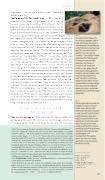
The story of Zacchaeus the tax collector appears only in Luke. Zacchaeus has grown very wealthy in his profession, and while we do not hear any speci cs, we sense that his wealth is not all honestly come by—tax collectors were notorious for cheating and bullying to increase their revenues. Zacchaeus is curious to see Jesus and climbs a tree, where he will have a good vantage point, but also, perhaps, keep a safe distance. Jesus spots him, calls him down, and invites himself to Zacchaeus’ house. Like the father of the prodigal son, Jesus runs to meet this repentant sinner, and draws him into the circle of love and fellowship.
19:11
The disciples feel sure that the kingdom of God is close at hand. Jesus does not tell them when the end times will come; instead, he tells them a parable about a king who expects a good return on his investment. God is the same way. If we spend our time simply waiting for his return, we will be like the lazy servant who kept the king’s precious coin wrapped in a handkerchief. We need to spend our time not simply waiting for God, but doing the works of God.
d. [19:10] 15:4–10; Ez 34:16.
e. [19:11–27] Mt 25:14–30.
f. [19:12] Mk 13:34.
g. [19:17] 16:10.
h. [19:26] 8:18; Mt 13:12; Mk 4:25.
i. [19:28–40] Mt 21:1–11; Mk 11:1–11;
Jn 12:12–19.
j. [19:29] Zec 14:4.
167
* [19:10] This verse sums up for Luke his depiction of the role of Jesus as savior in this gospel.
* [19:11–27] In this parable Luke has combined two originally distinct parables: (1) a parable about the conduct of faithful and productive servants (Lk 19:13, 15b–26) and (2) a parable about a rejected king (Lk 19:12, 14–15a, 27). The story about the conduct of servants occurs in another form in Mt 25:14–20. The story about the rejected king may have originated with a contemporary historical event. After the death of Herod the Great, his son Archelaus traveled to Rome to receive the title of king. A delegation of Jews appeared in Rome before Caesar Augustus to oppose the request of Archelaus. Although not given the title of king, Archelaus was made ruler over Judea and Samaria. As the story is used by Luke, however, it furnishes a correction to the expectation of the imminent end of the age and of the establishment of the kingdom in Jerusalem (Lk 19:11). Jesus is not on his way to Jerusalem to receive the kingly power; for that, he must go away and only after returning from the distant country (a reference
to the parousia) will reward and judgment take place.
* [19:13] Ten gold coins: literally, “ten minas.” A mina was a monetary unit that in ancient Greece
was the equivalent of one hundred drachmas.
* [19:28–21:38] With the royal entry of Jesus into Jerusalem, a new section of Luke’s gospel
begins, the ministry of Jesus in Jerusalem before his death and resurrection. Luke suggests that this was a lengthy ministry in Jerusalem (Lk 19:47; 20:1; 21:37–38; 22:53) and it is characterized by Jesus’ daily teaching in the temple (Lk 21:37–38). For the story of the entry of Jesus into Jerusalem, see also Mt 21:1–11; Mk 11:1–10; Jn 12:12–19 and the notes there.


