


Page 181 - Demo
P. 181
LUKE
The Authority of Jesus Questioned.
and proclaiming the good news, the chief priests and scribes, 20
together with the elders, approached him 2and said to him, “Tell us, by what authority are you doing these things? Or who is the one who gave you this authority?”b 3He said to them in reply, “I shall ask you a question. Tell me, 4was John’s baptism of heavenly or of human origin?”c 5They discussed this among themselves, and said, “If we say, ‘Of heavenly origin,’ he will say, ‘Why did you not believe him?’d 6But if we say, ‘Of human origin,’ then all the people will stone us, for they are convinced that John was a prophet.” 7So they answered that they did not know from where it came. 8Then Jesus said to them, “Neither shall I tell you by what authority I do these things.”
The Parable of the Tenant Farmers.* 9e Then he proceeded to tell the people this parable. “[A] man planted a vineyard, leased it to tenant farmers, and then went on a journey for a long time.f 10At harvest time he sent a servantg to the tenant farmers to receive some of the produce of the vineyard. But they beat the servant and sent him away empty- handed. 11So he proceeded to send another servant, but him also they beat and insulted and sent away empty-handed. 12Then he proceeded to send a third, but this one too they wounded and
threw out. 13The owner of the vineyard said, ‘What shall I do?
I shall send my beloved son; maybe they will respect him.’h 14But
when the tenant farmers saw him they said to one another, ‘This
is the heir. Let us kill him that the inheritance may become ours.’
15So they threw him out of the vineyard and killed him.* What
will the owner of the vineyard do to them? 16He will come and
put those tenant farmers to death and turn over the vineyard
to others.” When the people heard this, they exclaimed, “Let it not be so!” 17But he looked at them and asked, “What then does this scripture passage mean:
‘The stone which the builders rejected has become the cornerstone’?i
18Everyone who falls on that stone will be dashed to pieces; and it will crush anyone on whom it falls.” 19The scribes and chief priests sought to lay their hands on him at that very hour, but they feared the people, for they knew that he had addressed this parable to them.j
Paying Taxes to the Emperor.k 20* They watched him closely and sent agents pretending to be righteous who were to trap him in speech,l in order to hand him over to the authority and power of the governor. 21They posed this question to him, “Teacher, we know that what you say and teach is correct, and you show no partiality, but teach the way
a 1One day as he was teaching the people in the temple area
20:9
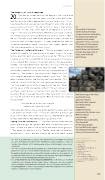
The parable of the tenant farmers echoes the sharp critiques Jesus has made about the way God’s prophets are treated by God’s people
(see Luke 11:47-51, 13:33-35). The servants of the vineyard owner are the prophets; the tenant farmers are the leaders of Israel, who reject each of them, and who nally
reject the son.
Now let me sing of my friend, my beloved’s song
about his vineyard.
My friend had a vineyard
on a fertile hillside;
He spaded it,
cleared it of stones,
and planted the choicest vines; Within it he built
a watchtower,
and hewed out a wine press. Then he waited
for the crop of grapes,
but it yielded rotten grapes.. The vineyard of the LORD
of hosts is the house of Israel,
a. [20:1–8] Mt 21:23–27; Mk 11:27–33.
b. [20:2] Acts 4:7.
c. [20:4] 3:3, 16.
d. [20:5] Mt 21:32.
e. [20:9–19] Mt 21:33–46; Mk 12:1–12.
f. [20:9] Is 5:1–7.
g. [20:10–12] 2 Chr 36:15–16.
h. [20:13] 3:22.
i. [20:17] Ps 118:22; Is 28:16.
j. [20:19] 19:47–48; 22:2; Mt 21:46;
Mk 11:18; 12:12; 14:1–2; Jn 5:18; 7:30.
k. [20:20–26] Mt 22:15–22; Mk 12:13–17.
l. [20:20] 11:54.
169
* [20:1–47] The Jerusalem religious leaders or their representatives, in an attempt to incriminate Jesus with the Romans and to discredit him with the people, pose a number of questions to him (about his authority, Lk 20:2; about payment of taxes, Lk 20:22; about the resurrection, Lk 20:28–33).
* [20:9–19] This parable about an absentee landlord and a tenant farmers’ revolt re ects the social and economic conditions of rural Palestine in the rst century. The synoptic gospel writers use the parable to describe how the rejection of the landlord’s son becomes the occasion for the vineyard to be taken away from those to whom it was entrusted (the religious leadership of Judaism that rejects the teaching and preaching of Jesus; Lk 20:19).
* [20:15] They threw him out of the vineyard and killed him: cf. Mk 12:8. Luke has altered his Marcan source and reports that the murder of the son takes place outside the vineyard to re ect the tradition of Jesus’ death outside the walls of the city of Jerusalem (see Heb 13:12).
* [20:20] The governor: i.e., Pontius Pilate, the Roman administrator responsible for the collection of taxes and maintenance of order in Palestine.


