


Page 180 - Demo
P. 180
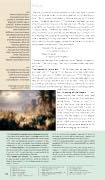
19:28 Much of Luke’s Gospel is structured around Jesus’ journey to Jerusalem, which began ten chapters ago, at Luke 9:51. As he now reaches Jerusalem, there is a powerful sense of destiny and ful llment. Jesus has foreseen every detail, even the animal on which he will ride, and what the disciples are to say to the owners. When the Pharisees object to the acclamations of the disciples, Jesus says that “if they keep silent, the stones will cry out” (19:40). These words, acknowledging Jesus as Messiah, must be given voice.
19:41 Jesus weeps for the Holy City: for the destruction that will come to it, for its failure to recognize his presence— God’s presence—in its midst.
Painting by Louis Félix Leullier (1811-1882)
LUKE
30He said, “Go into the village opposite you, and as you enter it you will find a colt tethered on which no one has ever sat. Untie it and bring it here.k 31And if anyone should ask you, ‘Why are you untying it?’ you will answer, ‘The Master has need of it.’” 32So those who had been sent went off and found everything just as he had told them.l 33And as they were untying the colt, its owners said to them, “Why are you untying this colt?” 34They answered, “The Master has need of it.” 35m So they brought it to Jesus, threw their cloaks over the colt, and helped Jesus to mount. 36As he rode along, the people were spreading their cloaks on the road; 37and now as he was approaching the slope of the Mount of Olives, the whole multitude of his disciples began to praise God aloud with joy for all the mighty deeds they had seen. 38They proclaimed:
“Blessed is the king who comes in the name of the Lord.*
Peace in heaven
and glory in the highest.”n
39Some of the Pharisees in the crowd said to him, “Teacher, rebuke your disciples.”* 40He said in reply, “I tell you, if they keep silent, the stones will cry out!”
The Lament for Jerusalem.* 41o As he drew near, he saw the city and wept over it,p 42saying, “If this day you only knew what makes for peace—but now it is hidden from your eyes.q 43* For the days are coming upon you when your enemies will raise a palisade against you; they will encircle you and hem you in on all sides.r 44They will smash you to the ground and your children within you, and they will not leave one stone upon another within you because you did not recognize the
time of your visitation.”s
The Cleansing of the Temple. 45t Then Jesus entered the temple area* and proceeded to drive out those who were selling things,u 46saying to them, “It is written, ‘My house shall be a house of prayer, but you have made it a den of thieves.’”v 47And every day he was teaching in the temple area.w The chief priests, the scribes, and the leaders of the people, meanwhile, were seeking to put him to death,x 48but they could find no way to accomplish their purpose because all the people were hanging on his words.
..* [19:38] Blessed is the king who comes in the name of the Lord: only in Luke is Jesus explicitly given the title king when he enters Jerusalem in triumph. Luke has inserted this title into the words of Ps 118:26 that heralded the arrival of the pilgrims coming to the holy city and to the temple. Jesus is thereby acclaimed as king (see Lk 1:32) and as the one who comes (see Mal 3:1; Lk 7:19). Peace in heaven...: the acclamation of the disciples of Jesus in Luke echoes the announcement of the angels at the birth of Jesus (Lk 2:14). The peace Jesus brings is associated with the salvation to be accomplished here in Jerusalem.
* [19:39] Rebuke your disciples: this command, found only in Luke, was given so that the Roman authorities would not interpret the acclamation of Jesus as king as an uprising against them; cf. Lk 23:2–3.
* [19:41–44] The lament for Jerusalem is found only in Luke. By not accepting Jesus (the one who mediates peace), Jerusalem will not nd peace but will become the victim of devastation.
* [19:43–44] Luke may be describing the actual disaster that befell Jerusalem in A.D. 70 when it was destroyed by the Romans during the First Revolt.
* [19:45–46] Immediately upon entering the holy city, Jesus in a display of his authority enters the temple (see Mal 3:1–3) and lays claim to it after cleansing it that it might become a proper place for his teaching ministry in Jerusalem (Lk 19:47; 20:1; 21:37; 22:53). See Mt 21:12–17; Mk 11:15–19; Jn 2:13–17 and the notes there.
k. [19:30] Nm 19:2; Dt 21:3; 1 Sm 6:7; Zec 9:9.
l. [19:32] 22:13.
m. [19:35–36] 2 Kgs 9:13.
n. [19:38] 2:14; Ps 118:26.
q. [19:42] 8:10; Is 6:9–10; Mt 13:14; Mk 4:12; Acts 28:26–27; Rom 11:8, 10.
r. [19:43] Is 29:3.
s. [19:44] 1:68; 21:6; Ps 137:9; Mt 24:2; Mk 13:2. t. [19:45–46] Mt 21:12–13; Mk 11:15–17;
Jn 2:13–17.
u. [19:45] 3:1 / Hos 9:15.
v. [19:46] Is 56:7; Jer 7:11.
w. [19:47–48] 20:19; 22:2; Mt 21:46;
Mk 11:18; 12:12; 14:1–2; Jn 5:18; 7:30. x. [19:47] 21:37; 22:53; Jn 18:20.
168 o.
p. [19:41] 2 Kgs 8:11–12; Jer 14:17; 15:5.
[19:41–44] 13:34–35.


