


Page 188 - Demo
P. 188
22:62 When Jesus told Peter to put out his net for a catch in Luke 5:4, Peter was awestruck at the ful llment of Jesus’ words and fell at his knees, a “sinful man” (5:8). That moment of Peter’s call is echoed here, when Peter realizes that Jesus’ words have again been ful lled, and he sheds tears of repentance.
CHAPTER 22
k. [22:61] 22:34.
l. [22:63–65] Mt 26:67–68; Mk 14:65.
m. [22:66–71] Mt 26:59–66; Mk 14:55–64.
n. o. p.
[22:66] Mt 27:1; Mk 15:1.
[22:67] Jn 3:12; 8:45; 10:24.
[22:69] Ps 110:1; Dn 7:13–14; Acts 7:56.
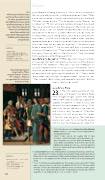
This painting depicts Jesus before Pilate (Angers School, France, 16th century). Pilate is recognizable by the basin held out to him.
CHAPTER 23
a. [23:1–5] Mt 27:1–2, 11–14; Mk 15:1–5; Jn 18:28–38.
b. [23:2] 20:22–25; Acts 17:7; 24:5.
c. [23:3] 22:70; 1 Tm 6:13.
d. [23:5] 23:14, 22, 41; Mt 27:24;
Jn 19:4, 6; Acts 13:28.
176
LUKE -
priest; Peter was following at a distance.j 55They lit a fire in the middle of the courtyard and sat around it, and Peter sat down with them. 56When a maid saw him seated in the light, she looked intently at him and said, “This man too was with him.” 57But he denied it saying, “Woman, I do not know him.” 58A short while later someone else saw him and said, “You too are one of them”; but Peter answered, “My friend, I am not.” 59About an hour later, still another insisted, “Assuredly, this man too was with him, for he also is a Galilean.” 60But Peter said, “My friend, I do not know what you are talking about.” Just as he was saying this, the cock crowed, 61and the Lord turned and looked at Peter;* and Peter remembered the word of the Lord, how he had said to him, “Before the cock crows today, you will deny me three times.”k 62He went out and began to weep bitterly. 63l The men who held Jesus in custody were ridiculing and beating him. 64They blindfolded him and questioned him, saying, “Prophesy! Who is it that struck you?” 65And they reviled him in saying many other things against him.
Jesus Before the Sanhedrin.* 66m When day came the council of elders of the people met, both chief priests and scribes,n and they brought him before their Sanhedrin.* 67They said, “If you are the Messiah, tell us,” but he replied to them, “If I tell you, you will not believe,o 68and if I question, you will not respond. 69But from this time on the Son of Man will be seated at the right hand of the power of God.”p 70They all asked, “Are you then the Son of God?” He replied to them, “You say that I am.” 71Then they said, “What further need have we for testimony? We have
heard it from his own mouth.”
Jesus Before Pilate.
23a 1* Then the whole assembly of them arose and brought him before Pilate. 2They brought charges against him, saying, “We found this man misleading our people; he opposes the payment of taxes to Caesar and maintains that he is the Messiah, a king.”b 3Pilate asked him, “Are you the king of the Jews?” He said to him in reply, “You say so.”c 4Pilate then addressed the chief priests and the crowds, “I find this man not guilty.” 5But they were adamant and said, “He is inciting the people with his teaching throughout all Judea, from
* [22:61] Only Luke recounts that the Lord turned and looked at Peter. This look of Jesus leads to Peter’s weeping bitterly over his denial (Lk 22:62).
* [22:66–71] Luke recounts one daytime trial of Jesus (Lk 22:66–71) and hints at some type of preliminary night- time investigation (Lk 22:54–65). Mark (and Matthew who follows Mark) has transferred incidents of this day into the nighttime interrogation with the result that there appear to be two Sanhedrin trials of Jesus in Mark (and Matthew); see note on Mk 14:53.
* [22:66] Sanhedrin: the word is a Hebraized form of a Greek word meaning a “council,” and refers to the elders, chief priests, and scribes who met under the high priest’s leadership to decide religious and legal questions that did not pertain to Rome’s interests. Jewish sources are not clear on the competence of the Sanhedrin to sentence and to execute during this period.
* [23:1–5, 13–25] Twice Jesus is brought before Pilate in Luke’s account, and each time Pilate explicitly declares Jesus innocent of any wrongdoing (Lk 23:4, 14, 22). This stress on the innocence of Jesus before the Roman authorities is also characteristic of John’s gospel (Jn 18:38; 19:4, 6). Luke presents the Jerusalem Jewish leaders as the ones who force the hand of the Roman authorities (Lk 23:1–2, 5, 10, 13, 18, 21, 23–25).


