


Page 189 - Demo
P. 189
LUKE
Galilee where he began even to here.”d
Jesus Before Herod. 6* On hearing this Pilate asked if
the man was a Galilean; 7and upon learning that he was
under Herod’s jurisdiction, he sent him to Herod who was
in Jerusalem at that time.e 8Herod was very glad to see
Jesus; he had been wanting to see him for a long time, for
he had heard about him and had been hoping to see him
perform some sign.f 9He questioned him at length, but
he gave him no answer.g 10The chief priests and scribes,
meanwhile, stood by accusing him harshly.h 11[Even]
Herod and his soldiers treated him contemptuously and
mocked him, and after clothing him in resplendent garb,
he sent him back to Pilate.i 12Herod and Pilate became
friends that very day, even though they had been enemies
formerly. 13Pilate then summoned the chief priests, the rulers, and the
people 14and said to them, “You brought this man to me and accused
him of inciting the people to revolt. I have conducted my investigation
in your presence and have not found this man guilty of the charges you
have brought against him,j 15nor did Herod, for he sent him back to us.
So no capital crime has been committed by him. 16k Therefore I shall
have him flogged and then release him.” [17]*
The Sentence of Death.l 18But all together they shouted out, “Away
with this man! Release Barabbas to us.” 19(Now Barabbas had been
imprisoned for a rebellion that had taken place in the city and for
murder.) 20Again Pilate addressed them, still wishing to release Jesus,
21but they continued their shouting, “Crucify him! Crucify him!” 22Pilate
addressed them a third time, “What evil has this man done? I found him
guilty of no capital crime. Therefore I shall have him flogged and then
release him.” With loud shouts, however, they persisted in calling for his crucifixion, and their voices prevailed. 24The verdict of Pilate was that their demand should be granted. 25So he released the man who had been imprisoned for rebellion and murder, for whom they asked, and he handed Jesus over to them to deal with as they wished.
The Way of the Cross.* 26m As they led him away they took hold of a certain Simon, a Cyrenian, who was coming in from the country; and after laying the cross on him, they made him carry it behind Jesus. 27A large crowd of people followed Jesus, including many women who mourned and lamented him. 28n Jesus turned to them and said, “Daughters of Jerusalem, do not weep for me; weep instead for
23
* [23:6–12] The appearance of Jesus before Herod is found only in this gospel. Herod has been an important gure in Luke (Lk 9:7–9; 13:31–33) and has been presented as someone who has been curious about Jesus for a long time. His curiosity goes unrewarded. It is faith in Jesus, not curiosity, that is rewarded (Lk 7:50; 8:48, 50; 17:19).
* [23:17] This verse, “He was obliged to release one prisoner for them at the festival,” is not part of the original text of Luke. It is an explanatory gloss from Mk 15:6 (also Mt 27:15) and is not found in many early and important Greek manuscripts. On its historical background, see notes on Mt 27:15–26.
* [23:26–32] An important Lucan theme throughout the gospel has been the need for the Christian disciple to follow in the footsteps of Jesus. Here this theme comes to the fore with the story of Simon of Cyrene who takes up the cross and follows Jesus (see Lk 9:23; 14:27) and with the large crowd who likewise follow Jesus on the way of the cross. See also note on Mk 15:21.
e. [23:7] 3:1; 9:7.
f. [23:8] 9:9; Acts 4:27–28.
g. [23:9] Mk 15:5.
h. [23:10] Mt 27:12; Mk 15:3.
i. [23:11] Mt 27:28–30; Mk 15:17–19; Jn 19:2–3.
j. [23:14] 23:4, 22, 41.
k. [23:16] 23:22; Jn 19:12–14.
l. [23:18–25] Mt 27:20–26; Mk 15:6–7, 11–15;
Jn 18:38b–40; 19:14–16; Acts 3:13–14.
m. [23:26–32] Mt 27:32, 38; Mk 15:21, 27; Jn 19:17. n. [23:28–31] 19:41–44; 21:23–24.
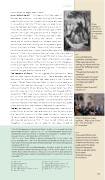
Jesus talking to the crowd, illustration by Gustave Doré (1866)
23:9
In his trial before the Sanhedrin, and then before Pilate, Jesus says almost nothing. His silence recalls the song of the Su ering Servant in Isaiah:
“Though harshly treated, he submitted
and did not open his mouth; Like a lamb led to slaughter or a sheep silent before shearers,
he did not open his mouth.” (Isaiah 53:7)
Many Christians today
walk the “Way of the Cross,” the “Via Dolorosa,”
in Jerusalem.
23:14
A consistent theme in the Passion narratives is Pilate’s assertion of Jesus’ innocence. Pilate knows that Jesus is not guilty, and yet he allows himself to be swayed
by the crowd, who clamor
for his death.
He hands Jesus over
for cruci xion.
177


