


Page 220 - Demo
P. 220
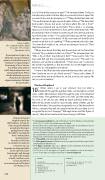
Jesus healing the crippled and the blind by a late 12th-century Byzantine artist
The restoration of sight to the blind man is not just a miracle, given to an individual in need of healing. It is a sign pointing to the meaning of Jesus’ mission. Jesus brings a new order, in which human expectations are turned upside down. Here, a humble blind man sees more clearly than the educated religious authorities. Outsiders become insiders.
Sheep are a frequent image for Israel in the Old Testament. In Psalm 23, God is the good shepherd, providing for his people, guiding them in safety. “The LORD is my shepherd; there is nothing I lack. In green pastures he makes me lie down; to still waters he leads me; he restores my soul. He guides me along right paths for the sake of his name. Even though I walk through the valley of the shadow of death, I will fear no evil, for you are with me; your rod and your sta comfort me” (Psalm 23:1-4).
208
JOHN -
to you? How did he open your eyes?” 27He answered them, “I told you already and you did not listen. Why do you want to hear it again? Do you want to become his disciples, too?” 28They ridiculed him and said, “You are that man’s disciple; we are disciples of Moses! 29We know that God spoke to Moses, but we do not know where this one is from.”n 30The man answered and said to them, “This is what is so amazing, that you do not know where he is from, yet he opened my eyes. 31We know that God does not listen to sinners, but if one is devout and does his will, he listens to him.o 32* It is unheard of that anyone ever opened the eyes of a person born blind. 33If this man were not from God, he would not be able to do anything.”p 34They answered and said to him, “You were born totally in sin, and are you trying to teach us?” Then they threw him out.
35When Jesus heard that they had thrown him out, he found him and said, “Do you believe in the Son of Man?” 36He answered and said, “Who is he, sir, that I may believe in him?” 37Jesus said to him, “You have seen him and the one speaking with you is he.”q 38He said, “I do believe, Lord,” and he worshiped him. 39* Then Jesus said, “I came into this world for judgment, so that those who do not see might see, and those who do see might become blind.”r
40Some of the Pharisees who were with him heard this and said to him, “Surely we are not also blind, are we?”s 41Jesus said to them, “If you were blind, you would have no sin; but now you are saying, ‘We see,’ so your sin remains.t
The Good Shepherd.
101* “Amen, amen, I say to you,a whoever does not enter a * sheepfold through the gate but climbs over elsewhere is a thief and a robber. 2But whoever enters through the gate is the shepherd of the sheep. 3The gatekeeper opens it for him, and the sheep hear his voice, as he calls his own sheep by name and leads them out. 4* When he has driven out all his own, he walks ahead of them, and the sheep follow him,b because they recognize his voice. 5But they will not follow a stranger; they will run away from him, because they do not recognize the voice of strangers.” 6Although Jesus used this gure of speech,* they did not realize what he was trying to tell them.
* [9:32] A person born blind: the only Old Testament cure from blindness is found in Tobit (cf. Tb 7:7; 11:7–13; 14:1–2), but Tobit was not born blind.
* [9:39–41] These verses spell out the symbolic meaning of the cure; the Pharisees are not the innocent blind, willing to accept the testimony of others.
* [10:1–21] The good shepherd discourse continues the theme of attack on the Pharisees that ends Jn 9. The gure is allegorical: the hired hands are the Pharisees who excommunicated the cured blind man. It serves as a commentary on Jn 9. For the shepherd motif, used of Yahweh in the Old Testament, cf. Ex 34; Gn 48:15; 49:24; Mi 7:14; Ps 23:1–4; 80:1.
* [10:1] Sheepfold: a low stone wall open to the sky.
* [10:4] Recognize his voice: the Pharisees do not recognize Jesus, but the people of God,
symbolized by the blind man, do.
* [10:6] Figure of speech: John uses a di erent word for illustrative speech than the
“parable” of the synoptics, but the idea is similar.
* [10:7–10] In Jn 10:7–8, the gure is of a gate for the shepherd to come to the sheep; in
Jn 10:9–10, the gure is of a gate for the sheep to come in and go out.
CHAPTER 9
n. [9:29] Ex 33:11.
o. [9:31] 10:21; Ps 34:16; 66:18; Prv 15:29; Is 1:15.
p. [9:33] 3:2.
q. [9:37] 4:26; Dn 7:13.
r. [9:39] Mt 13:33–35.
s. [9:40] Mt 15:14; 23:26; Rom 2:19.
t. [9:41] 15:22.
CHAPTER 10
a. [10:1–5] Gn 48:15; 49:24; Ps 23:1–4; 80:2; Jer 23:1–4; Ez 34:1–31; Mi 7:14.
b. [10:4] Mi 2:12–13.


