


Page 222 - Demo
P. 222
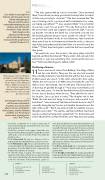
10:34 Jesus alludes to a passage from Psalm 82, which imagines God in debate with pagan gods. The gods neither know nor understand,wandering about in darkness,and all the world’s foundations shake. I declare: “Gods though you be, o spring of the Most High all of you,Yet like any mortal shall you die; like any prince you shall fall” (Psalm 82:5-7).
This passage refers to Bethany in Judea, a small village about two miles east of Jerusalem, on the slopes of the Mount of Olives. Today, it is known as El-‘Azariyeh, named after Lazarus, whose tomb is still said to be here, where he and his sisters lived.
11:1 Even though he knows that he will face arrest and death in Jerusalem, Jesus returns there when he receives word that his friend Lazarus, brother of Martha and Mary, is ill. The raising of Lazarus marks a turning point: Jesus’ “hour” is near.
JOHN -
31The Jews again picked up rocks to stone him.s 32Jesus answered them, “I have shown you many good works from my Father. For which of these are you trying to stone me?” 33The Jews answered him, “We are not stoning you for a good work but for blasphemy. You, a man, are making yourself God.”t 34* Jesus answered them,u “Is it not written in your law, ‘I said, “You are gods”’? 35If it calls them gods to whom the word of God came, and scripture cannot be set aside, 36can you say that the one whom the Father has consecrated* and sent into the world blasphemes because I said, ‘I am the Son of God’?v 37If I do not perform my Father’s works, do not believe me; 38but if I perform them, even if you do not believe me, believe the works, so that you may realize [and understand] that the Father is in me and I am in the Father.”w 39[Then] they tried again to arrest him; but he escaped from their power.
40He went back across the Jordan to the place where John rst baptized, and there he remained.x 41Many came to him and said, “John performed no sign,* but everything John said about this man was true.” 42And many there began to believe in him.y
The Raising of Lazarus.*
111Now a man was ill, Lazarus from Bethany,a the village of Mary
and her sister Martha. Mary was the one who had anointed the Lord with perfumed oil and dried his feet with her hair; it was her brother Lazarus who was ill. 3So the sisters sent word to him, saying, “Master, the one you love is ill.” 4When Jesus heard this he said, “This illness is not to end in death,* but is for the glory of God, that the Son of God may be glori ed through it.”b 5Now Jesus loved Martha and her sister and Lazarus. 6So when he heard that he was ill, he remained for two days in the place where he was. 7Then after this he said to his disciples, “Let us go back to Judea.” 8The disciples said to him, “Rabbi, the Jews were just trying to stone you, and you want to go back there?”c 9Jesus answered, “Are there not twelve hours in a day? If one walks during the day,d he does not stumble, because he sees the light of this world.e 10But if one walks at night, he stumbles, because the light is not in him.”* 11He said this, and then told them, “Our friend Lazarus is asleep, but I am going to awaken him.” 12So the disciples said to him, “Master, if he is asleep, he will be saved.” 13But Jesus was talking
2
* [10:30] This is justi cation for Jn 10:29; it asserts unity of power and reveals that the words and deeds of Jesus are the words and deeds of God.
* [10:34] This is a reference to the judges of Israel who, since they exercised the divine prerogative to judge (Dt 1:17), were called “gods”; cf. Ex 21:6, besides Ps 82:6, from which the quotation comes.
* [10:36] Consecrated: this may be a reference to the re- dedicated altar at the Hanukkah feast; see note on Jn 10:22.
* [10:41] Performed no sign: this is to stress the inferior role
of John the Baptist. The Transjordan topography recalls the great witness of John the Baptist to Jesus, as opposed to the hostility of the authorities in Jerusalem.
* [11:1–44] The raising of Lazarus, the longest continuous narrative in John outside of the passion account, is the climax of the signs. It leads directly to the decision of the Sanhedrin to kill Jesus. The theme of life predominates. Lazarus is a
CHAPTER 10
r. [10:30] 1:1; 12:45; 14:9; 17:21. s. [10:31] 8:59.
t. [10:33] 5:18; 19:7; Lv 24:16. u. [10:34] Ps 82:6.
token of the real life that Jesus dead and raised will give to all who believe in him. Johannine irony is found in the fact that Jesus’ gift of life leads to his own death. The story is not found in the synoptics, but cf. Mk 5:21 and parallels; Lk 7:11–17. There are also parallels between this story and Luke’s parable of the rich man and poor Lazarus (Lk 16:19–31). In both a man named Lazarus dies; in Luke, there is a request that he return to convince his contemporaries of the need for faith and repentance, while in John, Lazarus does return and some believe but others do not.
* [11:4] Not to end in death: this is misunderstood by the disciples as referring to physical death, but it is meant as spiritual death.
* [11:10] The light is not in him: the ancients apparently did not grasp clearly the entry of light through the eye; they seem to have thought of it as being in the eye; cf. Lk 11:34; Mt 6:23.
CHAPTER 11
a. [11:1–2] 12:1–8; Lk 10:38–42; 16:19–31. b. [11:4] 9:3, 24.
c. [11:8] 8:59; 10:31.
d. [11:9–10] 12:35; 1 Jn 2:10.
e. [11:9] 8:12; 9:4.
210
v. [10:36] 5:18.
w. [10:38] 14:10–11, 20. x. [10:40] 1:28.
y. [10:42] 2:23; 7:31; 8:30.


