


Page 224 - Demo
P. 224
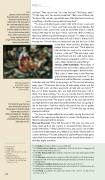
11:44 Lazarus comes forth alive from the tomb. Jesus’ words “Untie him and let him go” refer both to the removal of the customary burial cloths, which cover his face and bind his hands and feet, but also to the freedom which Jesus’ own resurrection will bring: humanity will no longer be bound by the tomb, imprisoned by death.
Martha prepares
a meal for Jesus, by Vincenzo Campi (1536-1591).
11:50 “It is better for you that one man should die instead of the people, so that the whole nation may not perish.” Without realizing it, Caiaphas is a prophet: Jesus will die on behalf of the people, that they may not die.
m. [11:35] Lk 19:41.
n. [11:42] 12:30.
o. [11:45] Lk 16:31.
p. [11:47] 12:19; Mt 26:3–5; Lk 22:2;
Acts 4:16.
q. [11:49–50] 18:13–14.
r. [11:53] 5:18; 7:1; Mt 12:14.
s. [11:55] 2:13; 5:1; 6:4; 18:28; Ex 19:10–
11, 15; Nm 9:6–14; 19:12; Dt 16:6; 2 Chr 30:1–3, 15–18.
212
JOHN
laid him?” They said to him, “Sir, come and see.” 35And Jesus wept.m 36So the Jews said, “See how he loved him.” 37But some of them said, “Could not the one who opened the eyes of the blind man have done something so that this man would not have died?”
38So Jesus, perturbed again, came to the tomb. It was a cave, and a stone lay across it. 39Jesus said, “Take away the stone.” Martha, the dead man’s sister, said to him, “Lord, by now there will be a stench; he has been dead for four days.” 40Jesus said to her, “Did I not tell you that if you believe you will see the glory of God?” 41So they took away the stone. And Jesus raised his eyes and said, “Father,* I thank you for hearing me. 42I know that you always hear me; but because of the
crowd here I have said this, that they may believe that you sent me.”n 43And when he had said this, he cried out in a loud voice,* “Lazarus, come out!” 44The dead man came out, tied hand and foot with burial bands, and his face was wrapped in a cloth. So Jesus said to them, “Untie him and let him go.” Session of the Sanhedrin. 45Now many of the Jews who had come to Mary and seen what he had done began to believe in him.o 46But some of them went to the Pharisees and told them what Jesus had done. 47So the chief priests and the Pharisees convened the
Sanhedrin and said, “What are we going to do? This man is performing many signs.p 48If we leave him alone, all will believe in him, and the Romans will come* and take away both our land and our nation.” 49q But one of them, Caiaphas, who was high priest that year,* said to them, “You know nothing, 50nor do you consider that it is better for you that one man should die instead of the people, so that the whole nation may not perish.” 51He did not say this on his own, but since he was high priest for that year, he prophesied that Jesus was going to die for the nation, 52and not only for the nation, but also to gather into one the dispersed children of God.* 53So from that day on they planned to kill him.r
54So Jesus no longer walked about in public among the Jews, but he left for the region near the desert, to a town called Ephraim,* and there he remained with his disciples.
The Last Passover. 55Now the Passover of the Jews was near, and many went up from the country to Jerusalem before Passover to purify* themselves.s 56They looked for Jesus and said to one another as they were in the temple area, “What do you think? That he will not come to the feast?” 57For the chief priests and the Pharisees had given orders that if anyone knew where he was, he should inform them, so that they might arrest him.
..* [11:41] Father: in Aramaic, ’abbā’. See note on Mk 14:36.
* [11:43] Cried out in a loud voice: a dramatization of Jn 5:28; “the hour is coming when all
who are in the tombs will hear his voice.”
* [11:48] The Romans will come: Johannine irony; this is precisely what happened after
Jesus’ death.
* [11:49] That year: emphasizes the conjunction of the o ce and the year. Actually, Caiaphas
was high priest A.D. 18–36. The Jews attributed a gift of prophecy, sometimes unconscious,
to the high priest.
* [11:52] Dispersed children of God: perhaps the “other sheep” of Jn 10:16.
* [11:54] Ephraim is usually located about twelve miles northeast of Jerusalem, where the
mountains descend into the Jordan valley.
* [11:55] Purify: prescriptions for purity were based on Ex 19:10–11, 15; Nm 9:6–14;
2 Chr 30:1–3, 15–18.


