


Page 237 - Demo
P. 237
JOHN
the father-in-law of Caiaphas, who was high priest that year.f 14It was Caiaphas who had counseled the Jews that it was better that one man should die rather than the people.g
Peter’s First Denial.h 15Simon Peter and another disciple* followed Jesus. Now the other disciple was known to the high priest, and he entered the courtyard of the high priest with Jesus. 16But Peter stood at the gate outside. So the other disciple, the acquaintance of the high priest, went out and spoke to the gatekeeper and brought Peter in. 17Then the maid who was the gatekeeper said to Peter, “You are not one of this man’s disciples, are you?” He said, “I am not.” 18Now the slaves and the guards were standing around a charcoal re that they had made, because it was cold, and were warming themselves. Peter was also standing there keeping warm.
The Inquiry Before Annas.i 19The high priest questioned Jesus about
his disciples and about his doctrine. 20Jesus answered him, “I have
spoken publicly to the world. I have always taught in a synagogue
or in the temple area* where all the Jews gather, and in secret I have
said nothing.j 21Why ask me? Ask those who heard me what I said to 22
them. They know what I said.” When he had said this, one of the temple guards standing there struck Jesus and said, “Is this the way you answer the high priest?”k 23Jesus answered him, “If I have spoken wrongly, testify to the wrong; but if I have spoken rightly, why do you strike me?” 24Then Annas sent him bound to Caiaphas* the high priest.l Peter Denies Jesus Again.m 25Now Simon Peter was standing there keeping warm. And they said to him, “You are not one of his disciples, are you?” He denied it and said, “I am not.” 26One of the slaves of the high priest, a relative of the one whose ear Peter had cut o , said, “Didn’t I see you in the garden with him?” 27Again Peter denied it. And immediately the cock crowed.*
The Trial Before Pilate. 28n Then they brought Jesus from Caiaphas to the praetorium.* It was morning. And they themselves did not enter the praetorium, in order not to be de led so that they could eat the Passover. 29So Pilate came out to them and said, “What charge do you bring [against] this man?” 30They answered and said to him, “If he were not a criminal, we would not have handed him over to you.” 31At this, Pilate said to them, “Take him yourselves, and judge him according to your law.” The Jews answered him, “We do not have the right to
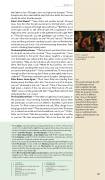
Peter’s denial
by Georges de La Tour (1593-1652)
18:19
The synoptic Gospels describe Jesus being put on trial before Caiaphas, the high priest, before being sent to Pilate, the governor of Judea. John’s version is di erent. Here, Jesus is interrogated
by Annas, Caiaphas’ father- in-law, before being sent to Caiaphas and then to Pilate. However, in all four Gospels, the pattern is the same:
Jesus is condemned by the religious and then by the civil authorities.
225
* [18:13] Annas: only John mentions an inquiry before Annas; cf. Jn 18:16, 19–24; see note on Lk 3:2. It is unlikely that this nighttime interrogation before Annas is the same as the trial before Caiaphas placed by Matthew and Mark at night and by Luke in the morning.
* [18:15–16] Another disciple. . .the other disciple: see note on Jn 13:23.
* [18:20] I have always taught. . .in the temple area: cf. Mk 14:49 for a similar statement. * [18:24] Caiaphas: see Mt 26:3, 57; Lk 3:2; and the notes there. John may leave room here
for the trial before Caiaphas described in the synoptic gospels.
* [18:27] Cockcrow was the third Roman division of the night, lasting from midnight to 3 a.m. * [18:28] Praetorium: see note on Mt 27:27. Morning: literally, “the early hour,” or fourth
Roman division of the night, 3 to 6 a.m. The Passover: the synoptic gospels give the impression that the Thursday night supper was the Passover meal (Mk 14:12); for John that meal is still to be eaten Friday night.
* [18:31] We do not have the right to execute anyone: only John gives this reason for their bringing Jesus to Pilate. Jewish sources are not clear on the competence of the Sanhedrin at this period to sentence and to execute for political crimes.
f. [18:13] Lk 3:2.
g. [18:14] 11:49–50.
h. [18:15–18] Mt 26:58, 69–70; Mk 14:54, 66–68;
Lk 22:54–57.
i. [18:19–24] Mt 26:59–66; Mk 14:55–64;
Lk 22:66–71.
j. [18:20] 6:59; 7:14, 26; Is 48:16; Mt 26:55;
k. [18:22] Acts 23:2.
l. [18:24] Mt 26:57.
m. [18:25–27] Mt 26:71–75; Mk 14:69–72;
Lk 22:58–62.
n. [18:28–38a] Mt 27:1–2, 11–25; Mk 15:1–5;
Lk 23:1–5.
Mk 4:23; Lk 19:47; 22:53.


