


Page 242 - Demo
P. 242
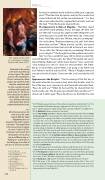
The women at the tomb, by contemporary painter Vasken Azik (born 1927).
20:7 The burial cloths remain in the tomb, but the body of Jesus is gone. This detail points to the completeness of Jesus’ resurrection. When Lazarus was raised from the dead, he came forth with his face covered, his hands and feet still bound by the burial cloths (11:44): he has been raised, but one day he will die again. When Jesus rises, he leaves the burial cloths behind him: he has conquered death decisively.
20:16 After the resurrection, the risen Jesus is the same, and yet di erent. Mary Magdalene does not recognize him until he speaks her name: “The sheep follow him, because they recognize his voice” (John 10:4). This moving account reveals that the disciples need to know him in a di erent way, not “holding on” to him (20:17), but letting go of one kind of presence to welcome another.
d. [20:7] 11:44; 19:40.
e. [20:9] Acts 2:26–27; 1 Cor 15:4.
f. [20:11–18] Mk 16:9–11.
g. [20:14] 21:4; Mk 16:12; Lk 24:16;
1 Cor 15:43–44.
h. [20:15–17] Mt 28:9–10.
i. [20:17] Acts 1:9.
j. [20:19–23] Mt 28:16–20;
Mk 16:14–18; Lk 24:36–44.
k. [20:20] 14:27.
l. [20:21] 17:18; Mt 28:19; Mk 16:15;
Lk 24:47–48.
230
JOHN
his head, not with the burial cloths but rolled up in a separate place.d 8Then the other disciple also went in, the one who had arrived at the tomb rst, and he saw and believed. 9* e For they did not yet understand the scripture that he had to rise from the dead. 10Then the disciples returned home.
The Appearance to Mary of Magdala.* 11But Mary stayed outside the tomb weeping.f And as she wept, she bent over into the tomb 12and saw two angels in white sitting there, one at the head and one at the feet where the body of Jesus had been. 13And they said to her, “Woman, why are you weeping?” She said to them, “They have taken my Lord, and I don’t know where they laid him.” 14When she had said this, she turned around and saw Jesus there, but did not know it was Jesus.g 15Jesus said to her, “Woman, why are you weeping? Whom are you looking for?”h She thought it was the gardener and said to him, “Sir, if you carried him away, tell me where you laid him,
and I will take him.” 16Jesus said to her, “Mary!” She turned and said to him in Hebrew, “Rabbouni,”* which means Teacher. 17Jesus said to her, “Stop holding on to me,* for I have not yet ascended to the Father. But go to my brothers and tell them, ‘I am going to my Father and your Father, to my God and your God.’”i 18Mary of Magdala went and announced to the disciples, “I have seen the Lord,” and what he told her.
Appearance to the Disciples.* 19On the evening of that rst day of the week,j when the doors were locked, where the disciples* were, for fear of the Jews, Jesus came and stood in their midst and said to them, “Peace be with you.” 20When he had said this, he showed them his hands and his side.* The disciples rejoiced when they saw the Lord.k 21* [Jesus] said to them again,l “Peace be with you. As the Father has sent
* [20:9] Probably a general reference to the scriptures is intended, as in Lk 24:26 and 1 Cor 15:4. Some individual Old Testament passages suggested are Ps 16:10; Hos 6:2; Jon 2:1, 2, 10.
* [20:11–18] This appearance to Mary is found only in John, but cf. Mt 28:8–10 and Mk 16:9–11.
* [20:16] Rabbouni: Hebrew or Aramaic for “my master.”
* [20:17] Stop holding on to me: see Mt 28:9, where the women take hold of his feet. I have
not yet ascended: for John and many of the New Testament writers, the ascension in the theological sense of going to the Father to be glori ed took place with the resurrection as one action. This scene in John dramatizes such an understanding, for by Easter night Jesus is glori ed and can give the Spirit. Therefore his ascension takes place immediately after he has talked to Mary. In such a view, the ascension after forty days described in Acts 1:1–11 would be simply a termination of earthly appearances or, perhaps better, an introduction to the conferral of the Spirit upon the early church, modeled on Elisha’s being able to have a (double) share in the spirit of Elijah if he saw him being taken up (same verb as ascending) into heaven (2 Kgs 2:9–12). To my Father and your Father, to my God and your God: this echoes Ru 1:16: “Your people shall be my people, and your God my God.” The Father of Jesus will now become the Father of the disciples because, once ascended, Jesus can give them the Spirit that comes from the Father and they can be reborn as God’s children (Jn 3:5). That is why he calls them my brothers.
* [20:19–29] The appearances to the disciples, without or with Thomas (cf. Jn 11:16; 14:5), have rough parallels in the other gospels only for Jn 20:19–23; cf. Lk 24:36–39; Mk 16:14–18.
* [20:19] The disciples: by implication from Jn 20:24 this means ten of the Twelve, presumably in Jerusalem. Peace be with you: although this could be an ordinary greeting, John intends here to echo Jn 14:27. The theme of rejoicing in Jn 20:20 echoes Jn 16:22.
* [20:20] Hands and. . .side: Lk 24:39–40 mentions “hands and feet,” based on Ps 22:17.
* [20:21] By means of this sending, the Eleven were made apostles, that is, “those sent” (cf. Jn 17:18), though John does not use the noun in reference to them (see note on Jn 13:16). A solemn mission or “sending” is also the subject of the post-resurrection appearances to the
Eleven in Mt 28:19; Lk 24:47; Mk 16:15.


