


Page 266 - Demo
P. 266
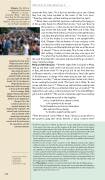
Ethopia: The Hebrew word for the Greek word “Ethopia” is “Cush,” meaning “Black”. This may mean that the African people from that area were dark- skinned. Cush was the name of one of Noah’s grandsons.
8:26 Guided by the Holy Spirit, Philip encounters a high- ranking Ethiopian man, in service to the queen. As he rides along, the man is reading aloud from the prophet Isaiah, a passage associated with the Messiah (Isaiah 53:7-8). He admits to Philip that he does not understand what the passage is about and invites Philip into his carriage. Philip explains the passage and its ful llment in Jesus; the man believes and is baptized on the spot. This is the conversion process in a nutshell: drawn by the reading of the Scriptures, the eunuch seeks to know more from a member of the community; the teacher shares his knowledge; the eunuch asks for and receives the sacraments; and the journey continues.
254
g. [8:17] 2:4; 4:31; 10:44–47; 15:8–9; 19:2, 6.
h. [8:27] Is 56:3–5.
i. [8:31] Jn 16:13.
j. [8:32–33] Is 53:7–8 LXX.
THE ACTS OF THE APOSTLES
receive the holy Spirit, 16for it had not yet fallen upon any of them; they had only been baptized in the name of the Lord Jesus.* 17Then they laid hands on them and they received the holy Spirit.g
18* When Simon saw that the Spirit was conferred by the laying on of the apostles’ hands, he o ered them money 19and said, “Give me this power too, so that anyone upon whom I lay my hands may receive the holy Spirit.” 20But Peter said to him, “May your money perish with you, because you thought that you could buy the gift of God with money. 21You have no share or lot in this matter, for your heart is not upright before God. 22Repent of this wickedness of yours and pray to the Lord that, if possible, your intention may be forgiven. 23For I see that you are lled with bitter gall and are in the bonds of iniquity.” 24Simon said in reply, “Pray for me to the Lord, that nothing of what you have said may come upon me.” 25So when they had testi ed and proclaimed the word of the Lord, they returned to Jerusalem and preached the good news to
many Samaritan villages.
Philip and the Ethiopian.* 26Then the angel of the Lord spoke to Philip, “Get up and head south on the road that goes down from Jerusalem to Gaza, the desert route.” 27So he got up and set out. Now there was an Ethiopian eunuch, a court o cial of the Candace,* that is, the queen of the Ethiopians, in charge of her entire treasury, who had come to Jerusalem to worship,h 28and was returning home. Seated in his chariot, he was reading the prophet Isaiah. 29The Spirit said to Philip, “Go and join up with that chariot.” 30* Philip ran up and heard him reading Isaiah the prophet and said, “Do you understand what you are reading?” 31He replied, “How can I, unless someone instructs me?” So he invited Philip to get in and sit with him.i 32This was the scripture passage he was reading:j
“Like a sheep he was led to the slaughter, and as a lamb before its shearer is silent,
so he opened not his mouth.
33In [his] humiliation justice was denied him.
Who will tell of his posterity?
For his life is taken from the earth.”
34Then the eunuch said to Philip in reply, “I beg you, about whom is the prophet saying this? About himself, or about someone else?”
* [8:16] Here and in Acts 10:44–48 and Acts 19:1–6, Luke distinguishes between baptism in the name of the Lord Jesus and the reception of the Spirit. In each case, the Spirit is conferred through members of the Twelve (Peter and John) or their representative (Paul). This may be Luke’s way of describing the role of the church in the bestowal of the Spirit. Elsewhere in Acts, baptism and the Spirit are more closely related (Acts 1:5; 11:16).
* [8:18–20] Simon attempts to buy the gift of God (Acts 8:20) with money. Peter’s cursing of Simon’s attempt so to use his money expresses a typically Lucan attitude toward material wealth (cf. Lk 6:24; 12:16–21; 16:13).
*[8:26–40] In the account of the conversion of the Ethiopian eunuch, Luke adduces additional evidence to show that the spread of Christianity outside the con nes of Judaism itself was in accord with the plan of God. He does not make clear whether the Ethiopian was originally a convert to Judaism or, as is more probable, a “God-fearer” (Acts 10:1), i.e., one who accepted Jewish monotheism and ethic and attended the synagogue but did not consider himself bound by other regulations such as circumcision and observance of the dietary laws. The story of his conversion to Christianity is given a strong supernatural cast by the introduction of an angel (Acts 8:26), instruction from the holy Spirit (Acts 8:29), and the strange removal of Philip from the scene (8:39).
* [8:27] The Candace: Candace is not a proper name here but the title of a Nubian queen.
* [8:30–34] Philip is brought alongside the carriage at the very moment when the Ethiopian is pondering the meaning of Is 53:7–8, a passage that Christianity, from its earliest origins, has
applied to Jesus; cf. note on Acts 3:13.


