


Page 284 - Demo
P. 284
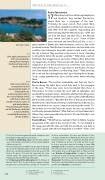
Salonika today
17:4 Once again, the presence of both Jews and Gentiles among those listening to Paul’s preaching results in tension and violence.
17:16 Paul comes to Athens, a cosmopolitan city that represented the heights of Greek culture: art, architecture, philosophy. It was a city of religion as well, with shrines, altars, and temples erected to dozens of gods and goddesses. Principal among the temples was the Parthenon, dedicated in honor of Athena, considered the patroness of the city of Athens.
* [17:6–7] The accusations against Paul and his companions echo the charges brought against Jesus in Lk 23:2.
* [17:7] There is another king, Jesus: a distortion into a political sense of the apostolic proclamation of Jesus and the kingdom of God (see Acts 8:12).
* [17:16–21] Paul’s presence in Athens sets the stage for the great discourse before a Gentile audience in Acts 17:22–31. Although Athens was a politically insigni cant city at this period, it still lived on the glories of its past and represented the center of Greek culture. The setting describes the con ict between Christian preaching and Hellenistic philosophy.
* [17:18] Epicurean and Stoic philosophers: for the followers of Epicurus (342–271 B.C.), the goal of life was happiness attained through sober reasoning and the searching out of motives for
a. [17:1] 1 Thes 2:1–2.
b. [17:3] 3:18; Lk 24:25–26, 46.
272 c. [17:5] Rom 16:21.
all choice and avoidance. The Stoics were followers of Zeno, a younger contemporary of Alexander the Great. Zeno and his followers believed in a type of pantheism that held that the spark of divinity was present in all reality and that, in order to be free, each person must live “according to nature.” This scavenger: literally, “seed-picker,” as of a bird that picks up grain. The word is later used of scrap collectors and of people who take other people’s ideas and propagate them as if they were their own. Promoter of foreign deities: according to Xenophon, Socrates was accused of promoting new deities. The accusation against Paul echoes the charge against Socrates. ‘Jesus’ and ‘Resurrection’: the Athenians are presented as misunderstanding Paul from the outset; they think he is preaching about Jesus and a goddess named Anastasis, i.e., Resurrection.
d. [17:7] Lk 23:2; Jn 19:12–15. e. [17:11] Jn 5:39.
f. [17:14] 1 Thes 3:1–2.
THE ACTS OF THE APOSTLES
Paul in Thessalonica.
171When they took the road through Amphipolis and Apollonia, they reached Thessalonica, where there was a synagogue of the Jews.a 2Following his usual custom, Paul joined them, and for three sabbaths he entered into discussions with them from the scriptures, 3expounding and demonstrating that the Messiah had to su er and rise from the dead, and that “This is the Messiah, Jesus, whom I proclaim to you.”b 4Some of them were convinced and joined Paul and Silas; so, too, a great number of Greeks who were worshipers, and not a few of the prominent women. 5But the Jews became jealous and recruited some worthless men loitering in the public square, formed a mob, and set the city in turmoil. They marched on the house of Jason,c intending to bring them before the people’s assembly. 6* When they could not nd them, they dragged Jason and some of the brothers before the city magistrates, shouting, “These people who have been creating a disturbance all over the world have now come here, 7and Jason has welcomed them.d They all act in opposition to the decrees of Caesar and claim instead that there is another king, Jesus.”* 8They stirred up the crowd and the city magistrates who, upon hearing these charges, 9took a surety payment from Jason and the others before releasing
them.
Paul in Beroea. 10The brothers immediately sent Paul and Silas to Beroea during the night. Upon arrival they went to the synagogue of the Jews. 11These Jews were more fair-minded than those in Thessalonica, for they received the word with all willingness and examined the scriptures daily to determine whether these things were so.e 12Many of them became believers, as did not a few of the in uential Greek women and men. 13But when the Jews of Thessalonica learned that the word of God had now been proclaimed by Paul in Beroea also, they came there too to cause a commotion and stir up the crowds. 14So the brothers at once sent Paul on his way to the seacoast, while Silas and Timothy remained behind.f 15After Paul’s escorts had taken him to Athens, they came away with instructions for Silas and Timothy to join him as soon as possible.
Paul in Athens.* 16While Paul was waiting for them in Athens, he grew exasperated at the sight of the city full of idols. 17So he debated in the synagogue with the Jews and with the worshipers, and daily in the public square with whoever happened to be there. 18Even some


