


Page 285 - Demo
P. 285
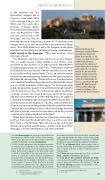
* [17:19] To the Areopagus: the “Areopagus” refers either to the Hill of Ares west of the Acropolis or to the Council of Athens, which at one time met on the hill but which at this time assembled in the Royal Colonnade (Stoa Basileios).
* [17:22–31] In Paul’s appearance at the Areopagus he preaches his climactic speech to Gentiles in the cultural center of the ancient world. The speech is more theological than christo- logical. Paul’s discourse appeals to the Greek world’s belief in divinity as responsible for the origin and existence of the universe. It contests the common belief in a multiplicity of gods supposedly exerting their powers through their images. It acknowledges that the attempt to nd God is a constant human endeavor. It declares, further, that God is the judge of the human race, that the time of the judgment has been determined, and that it will be executed through a man whom
g. [17:19] 1 Cor 1:22.
h. [17:24] 7:48–50; Gn 1:1; 1 Kgs 8:27; Is 42:5. i. [17:27] Jer 23:23; Wis 13:6; Rom 1:19.
God raised from the dead. The speech re ects sympathy with pagan religiosity, handles the subject of idol worship gently, and appeals for a new examination of divinity, not from the standpoint of creation but from the standpoint of judgment.
* [17:23] ‘To an Unknown God’: ancient authors such as Pausanias, Philostratus, and Tertullian speak of Athenian altars with no speci c dedication as altars of “unknown gods” or “nameless altars.”
* [17:26] From one: many manuscripts read “from one blood.” Fixed. . .seasons: or “ xed limits to the epochs.”
* [17:28] ‘In him we live and move and have our being’: some scholars understand this saying to be based on an earlier saying of Epimenides of Knossos (6th century B.C.). ‘For we too are his o spring’: here Paul is quoting Aratus of Soli, a third-century B.C. poet from Cilicia.
j. [17:29] 19:26; Is 40:18–20; 44:10–17; Rom 1:22–23. k. [17:31] 10:42.
273
THE ACTS OF THE APOSTLES
of the Epicurean and Stoic
philosophers* engaged him in
discussion. Some asked, “What
is this scavenger trying to say?”
Others said, “He sounds like a
promoter of foreign deities,”
because he was preaching about
‘Jesus’ and ‘Resurrection.’ 19They
took him and led him to the
Areopagus* and said, “May we
learn what this new teaching is that you speak of?g 20For you bring some strange notions to our ears; we should like to know what these things mean.” 21Now all the Athenians as well as the foreigners residing there used their time for nothing else but telling or hearing something new. Paul’s Speech at the Areopagus. 22Then Paul stood up at the Areopagus and said:*
“You Athenians, I see that in every respect you are very religious. 23For as I walked around looking carefully at your shrines, I even discovered an altar inscribed, ‘To an Unknown God.’* What therefore you unknowingly worship, I proclaim to you. 24The God who made the world and all that is in it, the Lord of heaven and earth, does not dwell in sanctuaries made by human hands,h 25nor is he served by human hands because he needs anything. Rather it is he who gives to everyone life and breath and everything. 26He made from one* the whole human race to dwell on the entire surface of the earth, and he xed the ordered seasons and the boundaries of their regions, 27so that people might seek God, even perhaps grope for him and nd him, though indeed he is not far from any one of us.i 28For ‘In him we live and move and have our being,’* as even some of your poets have said, ‘For we too are his o spring.’ 29Since therefore we are the o spring of God, we ought not to think that the divinity is like an image fashioned from gold, silver, or stone by human art and imagination.j 30God has overlooked the times of ignorance, but now he demands that all people everywhere repent 31because he has established a day on which he will ‘judge the world with justice’ through a man he has appointed, and he has provided con rmation for all by raising him from the dead.”k
32When they heard about resurrection of the dead, some began to sco , but others said, “We should like to hear you on this some other time.” 33And so Paul left them. 34But some did join him, and became believers. Among them were Dionysius, a member of the Court of the Areopagus, a woman named Damaris, and others with them.
17:22
Paul’s preaching to the Athenians is totally di erent from his preaching to his fellow Jews (see Acts 13:16). He does not draw on his own tradition but on theirs, pointing to the evidence of God in their culture and their philosophy. He even quotes their poets: the wonderful phrase “In him we live and move and have our being” comes from Epimenides of Knossos, a writer of the sixth century BC, and the words “We too are his o spring” come from Arataus, a Stoic poet from the third century BC.


