


Page 290 - Demo
P. 290
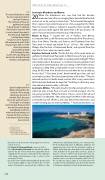
20:7 The story of Eutychus is surely the most comical incident in the New Testament. The Christians of Troas are gathered on Sunday “to break bread,” to celebrate the Eucharist, and since Paul is soon to depart they want to hear him speak. Night falls but Paul keeps talking “on and on” (20:9). Eutychus falls asleep in the midst of this long discourse, falls out of the third-story window, and is taken up dead. But Paul prays for him, touches him, and brings him back to life. And then the talk continues until daybreak!
20:17 Upon his departure from Miletus, Paul gathers the church for this touching valedictory, his words of farewell. Paul’s discourse echoes the words of Jesus to his disciples on the night before he died. He knows that they will encounter danger and di culty, both from within and from without, but he prays for them and trusts in the power of the word they have received.
a. [20:1] 1 Cor 16:1.
b. [20:4] Rom 16:21.
c. [20:5] 21:29; 2 Tm 4:20.
d. [20:10] 1 Kgs 17:17–24; 2 Kgs
4:30–37; Mt 9:24; Mk 5:39; Lk 8:52.
THE ACTS OF THE APOSTLES
Journey to Macedonia and Greece.
201When the disturbance was over, Paul had the disciples summoned and, after encouraging them, he bade them farewell and set out on his journey to Macedonia.a 2As he traveled throughout those regions, he provided many words of encouragement for them. Then he arrived in Greece, 3where he stayed for three months. But when a plot was made against him by the Jews as he was about to set
sail for Syria, he decided to return by way of Macedonia.
Return to Troas. 4b Sopater, the son of Pyrrhus, from Beroea, accompanied him, as did Aristarchus and Secundus from Thessalonica, Gaius from Derbe, Timothy, and Tychicus and Trophimus from Asia 5who went on ahead and waited for us* at Troas.c 6We sailed from Philippi after the feast of Unleavened Bread,* and rejoined them ve days later in Troas, where we spent a week.
Eutychus Restored to Life. 7On the rst day of the week* when we gathered to break bread, Paul spoke to them because he was going to leave on the next day, and he kept on speaking until midnight. 8There were many lamps in the upstairs room where we were gathered, 9and a young man named Eutychus who was sitting on the window sill was sinking into a deep sleep as Paul talked on and on. Once overcome by sleep, he fell down from the third story and when he was picked up, he was dead. 10d Paul went down,* threw himself upon him, and said as he embraced him, “Don’t be alarmed; there is life in him.” 11Then he returned upstairs, broke the bread, and ate; after a long conversation that lasted until daybreak, he departed. 12And they took the boy away alive and were immeasurably comforted.
Journey to Miletus. 13We went ahead to the ship and set sail for Assos where we were to take Paul on board, as he had arranged, since he was going overland. 14When he met us in Assos, we took him aboard and went on to Mitylene. 15We sailed away from there on the next day and reached a point o Chios, and a day later we reached Samos, and on the following day we arrived at Miletus. 16* Paul had decided to sail
278
* [20:5] The second “we-section” of Acts begins here. See note on Acts 16:10–17.
* [20:6] Feast of Unleavened Bread: see note on Lk 22:1.
* [20:7] The rst day of the week: the day after the sabbath and the rst day of the Jewish week, apparently chosen originally by the Jerusalem community for the celebration of the liturgy of the Eucharist in order to relate it to the
resurrection of Christ.
* [20:10] The action of Paul in throwing himself upon the dead
boy recalls that of Elijah in 1 Kgs 17:21 where the son of the widow of Zarephath is revived and that of Elisha in 2 Kgs
4:34 where the Shunammite woman’s son is restored to life. * [20:16–35] Apparently aware of di culties at Ephesus and neighboring areas, Paul calls the presbyters together at Miletus, about thirty miles from Ephesus. He reminds them of his dedication to the gospel (Acts 20:18–21), speaks of what he is about to su er for the gospel (Acts 20:22–27), and admonishes them to guard the community against false prophets, sure to arise upon his departure (Acts 20:28–31). He concludes by citing a saying of Jesus (Acts 20:35) not recorded in the gospel tradition. Luke presents this farewell to the Ephesian presbyters as Paul’s last will and testament.


