


Page 302 - Demo
P. 302
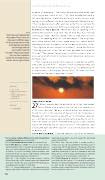
26:24 Both Festus and Agrippa feel the power of Paul’s story, but they react in di erent ways: Festus dismisses Paul as mad, while Agrippa says lightly that he might even be convinced to “play the Christian.” They would release him, but Paul’s appeal to Caesar has set larger forces in motion: he must go to Rome.
CHAPTER 26
l. [26:21] 21:31.
m. [26:22–23] 3:18; Lk 24:26–27,
44–47.
n. [26:23] Is 42:6; 49:6; Lk 2:32;
1 Cor 15:20–23.
o. [26:32] 25:11–12.
CHAPTER 27
a. [27:2] 19:29; 20:4.
THE ACTS OF THE APOSTLES -
evidence of repentance. 21l That is why the Jews seized me [when I was] in the temple and tried to kill me. 22m But I have enjoyed God’s help to this very day, and so I stand here testifying to small and great alike, saying nothing di erent from what the prophets and Moses foretold,* 23that the Messiah must su er* and that, as the rst to rise from the dead, he would proclaim light both to our people and to the Gentiles.”n Reactions to Paul’s Speech. 24While Paul was so speaking in his defense, Festus said in a loud voice, “You are mad, Paul; much learning is driving you mad.” 25But Paul replied, “I am not mad, most excellent Festus; I am speaking words of truth and reason. 26The king knows about these matters and to him I speak boldly, for I cannot believe that [any] of this has escaped his notice; this was not done in a corner.* 27King Agrippa, do you believe the prophets?* I know you believe.” 28Then Agrippa said to Paul, “You will soon persuade me to play the Christian.” 29Paul replied, “I would pray to God that sooner or later not only you but all who listen to me today might become as I am except for these chains.”
30Then the king rose, and with him the governor and Bernice and the others who sat with them. 31* And after they had withdrawn they said to one another, “This man is doing nothing [at all] that deserves death or imprisonment.” 32And Agrippa said to Festus, “This man could have been set free if he had not appealed to Caesar.”o
Departure for Rome.
271* When it was decided that we should sail to Italy, they handed Paul and some other prisoners over to a centurion named Julius of the Cohort Augusta.* 2We went on board a ship from Adramyttium bound for ports in the province of Asia and set sail. Aristarchus, a Macedonian from Thessalonica, was with us.a 3On the following day we put in at Sidon where Julius was kind enough to allow Paul to visit his friends who took care of him. 4From there we put out to sea and sailed around the sheltered side of Cyprus because of the headwinds, 5and crossing the open sea o the coast of Cilicia and Pamphylia we came
to Myra in Lycia.
Storm and Shipwreck. 6There the centurion found an Alexandrian
* [26:22] Saying nothing di erent from what the prophets and Moses foretold: see note on Lk 18:31.
* [26:23] That the Messiah must su er: see note on Lk 24:26.
* [26:26] Not done in a corner: for Luke, this Greek proverb expresses his belief that he is presenting a story about Jesus and the church that is already well known. As such, the entire history of Christianity is public knowledge and incontestable. Luke presents his story in this way to provide “certainty” to his readers
about the instructions they have received (Lk 1:4).
* [26:27–28] If the Christian missionaries proclaim nothing di erent from what the Old Testament prophets had proclaimed (Acts 26:22–23), then the logical outcome for the believing Jew,
according to Luke, is to become a Christian.
* [26:31–32] In recording the episode of Paul’s appearance before
Agrippa, Luke wishes to show that, when Paul’s case was judged
impartially, no grounds for legal action against him were found
(see Acts 23:29; 25:25).
* [27:1–28:16] Here Luke has written a stirring account of
adventure on the high seas, incidental to his main purpose of showing how well Paul got along with his captors and how his prophetic in uence saved the lives of all on board. The recital also establishes the existence of Christian communities in Puteoli and Rome. This account of the voyage and shipwreck also constitutes the nal “we-section” in Acts (see note on Acts 16:10–17).
* [27:1] Cohort Augusta: the presence of a Cohort Augusta in Syria during the rst century A.D. is attested in inscriptions. Whatever the historical background to this information given by Luke may be, the name Augusta serves to increase the prominence and prestige of the prisoner Paul whose custodians bear so important a Roman name.
290


