


Page 337 - Demo
P. 337
ROMANS -
be concerned for what is noble in the sight of all.o 18If possible, on your part, live at peace with all.p 19Beloved, do not look for revenge but leave room for the wrath; for it is written, “Vengeance is mine, I will repay, says the Lord.”q 20Rather, “if your enemy is hungry, feed him; if he is thirsty, give him something to drink; for by so doing you will heap burning coals upon his head.”r 21Do not be conquered by evil but conquer evil with good.
have been established by God.a 2Therefore, whoever resists authority opposes what God has appointed, and those who oppose it will bring judgment upon themselves. 3For rulers are not a cause of fear to good conduct, but to evil.b Do you wish to have no fear of authority? Then do what is good and you will receive approval from it, 4for it is a servant of God for your good. But if you do evil, be afraid, for it does not bear the sword without purpose; it is the servant of God to in ict wrath on the evildoer.c 5Therefore, it is necessary to be subject not only because of the wrath but also because of conscience.d 6This is why you also pay taxes, for the authorities are ministers of God, devoting themselves to this very thing. 7Pay to all their dues, taxes to whom taxes are due, toll to whom toll is due, respect to whom respect is due, honor to whom honor is due.e
Love Ful lls the Law.* 8Owe nothing to anyone, except to love one another; for the one who loves another has ful lled the law.f 9The commandments, “You shall not commit adultery; you shall not kill; you shall not steal; you shall not covet,” and whatever other commandment there may be, are summed up in this saying, [namely] “You shall love your neighbor as yourself.”g 10Love does no evil to the neighbor; hence, love is the ful llment of the law.h
Obedience to Authority.*
1Let every person be subordinate to the higher authorities,
for there is no authority except from God, and those that exist 13
12:9
This passage is frequently read at weddings. The key to life in community, whether a marriage or a family or any of the other communities we are part of, is mutuality, respect for the other. We must love and honor the other, and be sensitive to the needs of the other: giving to those in need, o ering hospitality, mourning with those who weep, rejoicing with those who are glad. In other words, we accommodate ourselves to others, do not exalt ourselves over them by
expecting them to shape themselves to our needs.
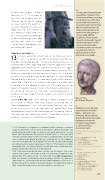
Bust of Nero,
the Roman Emperor
13:1
Obedience is not a word our culture tends to value very highly—we look on it as something we leave behind with childhood. But Paul exalts obedience, and reminds Christians to be obedient
to rightful authority:
to do what is right.
CHAPTER 12
o. [12:17] Prv 3:4; 1 Thes 5:15; 1 Pt 3:9.
p. [12:18] Heb 12:14.
q. [12:19] Lv 19:18; Dt 32:35, 41; Mt 5:39;
1 Cor 6:6–7; Heb 10:30.
r. [12:20] Prv 25:21–22; Mt 5:44.
CHAPTER 13
a. [13:1] Prv 8:15–16; Wis 6:3; Jn 19:11; 1 Pt 2:13–17; Ti 3:1.
b. [13:3] 1 Pt 2:13–14; 3:13.
c. [13:4] 12:19.
d. [13:5] 1 Pt 2:19.
e. [13:7] Mt 22:21; Mk 12:17; Lk 20:25.
f. [13:8] Jn 13:34; Gal 5:14.
g. [13:9] Ex 20:13–17 / Lv 19:18; Dt 5:17–21; Mt 5:43–44; 19:18–19; 22:39; Mk 12:31; Lk 10:27; Gal 5:14; Jas 2:8.
h. [13:10] Mt 22:40; 1 Cor 13:4–7.
325
* [13:1–7] Paul must come to grips with the problem raised by a message that declares people free from the law. How are they to relate to Roman authority? The problem was exacerbated by the fact that imperial protocol was interwoven with devotion to various deities. Paul builds on the traditional instruction exhibited in Wis 6:1–3, according to which kings and magistrates rule by consent of God. From this perspective, then, believers who render obedience to the governing authorities are obeying the one who is highest in command. At the same time, it is recognized that Caesar has the responsibility to make just ordinances and to commend uprightness; cf. Wis 6:4–21. That Caesar is not entitled to obedience when such obedience would nullify God’s prior claim to the believers’ moral decision becomes clear in the light of the following verses.
* [13:8–10] When love directs the Christian’s moral decisions, the interest of law in basic concerns, such as familial relationships, sanctity of life, and security of property, is safe- guarded (Rom 13:9). Indeed, says Paul, the same applies to any other commandment (Rom 13:9), whether one in the Mosaic code or one drawn up by local magistrates under imperial authority. Love anticipates the purpose of public legislation, namely, to secure the best interests of the citizenry. Since Caesar’s obligation is to punish the wrongdoer (Rom 13:4), the Christian who acts in love is free from all legitimate indictment.


