


Page 340 - Demo
P. 340
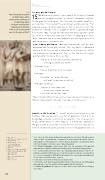
15:7 Paul concludes his advice to the Romans with a prayer and a summary of his teaching about Christian communities: “welcome one another, then, as Christ welcomed you, for the glory of God.”
ROMANS Patience and Self-Denial. 151We who are strong ought to put up with the failings of the weak a2 and not to please ourselves; let each of us please our neighbor for the good, for building up.b 3For Christ did not please himself; but, as it is written,c “The insults of those who insult you fall upon me.”* 4For whatever was written previously was written for our instruction, that by endurance and by the encouragement of the scriptures we might have hope.d 5May the God of endurance and encouragement grant you to think in harmony* with one another, in keeping with Christ Jesus,e 6that with one accord you may with one voice glorify the God
and Father of our Lord Jesus Christ.
God’s Fidelity and Mercy.* 7Welcome one another, then, as Christ welcomed you, for the glory of God.f 8For I say that Christ became a minister of the circumcised to show God’s truthfulness, to con rm the promises to the patriarchs,g 9but so that the Gentiles might glorify God for his mercy. As it is written:
“Therefore, I will praise you among the Gentiles and sing praises to your name.”h
10And again it says:i
“Rejoice, O Gentiles, with his people.”*
11And again:
“Praise the Lord, all you Gentiles,
and let all the peoples praise him.”j 12And again Isaiah says:
“The root of Jesse shall come, raised up to rule the Gentiles;
in him shall the Gentiles hope.”k
13May the God of hope ll you with all joy and peace in believing, so
that you may abound in hope by the power of the holy Spirit.l VII. CONCLUSION
Apostle to the Gentiles. 14* I myself am convinced about you, my brothers, that you yourselves are full of goodness,* lled with all knowledge, and able to admonish one another. 15But I have written to you rather boldly in some respects to remind you, because of the grace given me by Godm 16to be a minister of Christ Jesus to the Gentiles in performing the priestly service of the gospel of God, so
a. [15:1] 14:1–2.
b. [15:2] 14:1, 19; 1 Cor 9:19; 10:24, 33.
c. [15:3] Ps 69:10.
d. [15:4] 4:23–24; 1 Mc 12:9;
1 Cor 10:11; 2 Tm 3:16.
e. [15:5] 12:16; Phil 2:2; 4:2.
f. [15:7] 14:1.
g. [15:8] Mt 15:24 / Mi 7:20; Acts 3:25.
h. [15:9] 11:30 / 2 Sm 22:50; Ps 18:50.
i. [15:10] Dt 32:43.
j. [15:11] Ps 117:1.
k. [15:12] Is 11:10; Rev 5:5; 22:16.
l. [15:13] 5:1–2.
m. [15:15] 1:5; 12:3.
328
* [15:3] Liberation from the law of Moses does not make the scriptures of the old covenant irrelevant. Much consolation and motivation for Christian living can be derived from the Old Testament, as in the citation from Ps 69:10. Because this psalm is quoted several times in the New Testament, it has been called indirectly messianic.
* [15:5] Think in harmony: a Greco-Roman ideal. Not rigid uniformity of thought and expression but thoughtful consideration of other people’s views nds expression here.
* [15:7–13] True oneness of mind is found in pondering the ultimate mission of the church: to bring it about that God’s name be glori ed throughout the world and that Jesus Christ be universally recognized as God’s gift to all humanity. Paul here prepares his addressees for the climactic appeal he is about to make.
* [15:10] Paul’s citation of Dt 32:43 follows the Greek version.
* [15:14–33] Paul sees himself as apostle and benefactor in the priestly service of the gospel
and so sketches plans for a mission in Spain, supported by those in Rome.
* [15:14] Full of goodness: the opposite of what humanity was lled with according to
Rom 1:29–30.


