


Page 355 - Demo
P. 355
CORINTHIANS
6Lawsuits Before Unbelievers.*
1How can any one of you with a case against another dare to bring
it to the unjust for judgment instead of to the holy ones?
not know that the holy ones will judge the world? If the world is to be judged by you, are you unquali ed for the lowest law courts?a 3Do you not know that we will judge angels? Then why not everyday matters? 4If, therefore, you have courts for everyday matters, do you seat as judges people of no standing in the church? 5I say this to shame you. Can it be that there is not one among you wise enough to be able to settle a case between brothers? 6But rather brother goes to court against brother, and that before unbelievers?
7Now indeed [then] it is, in any case, a failure on your part that you have lawsuits against one another. Why not rather put up with injustice? Why not rather let yourselves be cheated?b 8Instead, you in ict injustice and cheat, and this to brothers. 9* Do you not know that the unjust will not inherit the kingdom of God? Do not be deceived; neither fornicators nor idolaters nor
adulterers nor boy prostitutes* nor
sodomitesc 10nor thieves nor the greedy
nor drunkards nor slanderers nor robbers
will inherit the kingdom of God. 11That is
what some of you used to be; but now
you have had yourselves washed, you
were sancti ed, you were justi ed in the
name of the Lord Jesus Christ and in the
Spirit of our God.d
Sexual Immorality.* 12“Everything is
lawful for me,”* but not everything is
bene cial. “Everything is lawful for me,” but I will not let myself be dominated by anything.e 13“Food for the stomach and the stomach for
2*
Do you
6:1
Paul is scandalized to hear that Christians are bringing other Christians before pagan judges in legal disputes. He urges them to let themselves be treated unjustly rather than in ict injustice on other believers, for the unjust
can have no share in God’s kingdom. He follows up
with a catalog of sins that separate people both from the community and from their inheritance in God:
sins against God, self, and community.
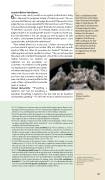
Justitia,
Roman goddess of justice
a. [6:2] Wis 3:8; Mt 19:28; Rev 20:4.
b. [6:7] Mt 5:38–42; Rom 12:17–21; 1 Thes 5:15.
c. [6:9] 15:50; Gal 5:19–21; Eph 5:5.
d. [6:11] Ti 3:3–7.
e. [6:12] 10:23.
343
* [6:1–11] Christians at Corinth are suing one another before pagan judges in Roman courts. A barrage of rhetorical questions (1 Cor 6:1–9) betrays Paul’s indignation over this practice, which he sees as an infringement upon the holiness of the Christian community.
* [6:2–3] The principle to which Paul appeals is an eschatological prerogative promised to Christians: they are to share with Christ the judgment of the world (cf. Dn 7:22, 27). Hence they ought to be able to settle minor disputes within the community.
* [6:9–10] A catalogue of typical vices that exclude from the kingdom of God and that should be excluded from God’s church. Such lists (cf. 1 Cor 5:10) re ect the common moral sensibility of the New Testament period.
* [6:9] The Greek word translated as boy prostitutes may refer to catamites, i.e., boys or young men who were kept for purposes of prostitution, a practice not uncommon in the Greco-Roman world. In Greek mythology this was the function of Ganymede, the “cupbearer of the gods,” whose Latin name was Catamitus. The term translated sodomites refers to adult males who indulged in homosexual practices with such boys. See similar condemnations of such practices in Rom 1:26–27; 1 Tm 1:10.
* [6:12–20] Paul now turns to the opinion of some Corinthians that sexuality is a morally indi erent area (1 Cor 6:12–13). This leads him to explain the mutual relation between the Lord Jesus and our bodies (1 Cor 6:13b) in a densely packed paragraph that contains elements of a profound theology of sexuality (1 Cor 6:15–20).
* [6:12–13] Everything is lawful for me: the Corinthians may have derived this slogan from Paul’s preaching about Christian freedom, but they mean something di erent by it: they consider sexual satisfaction a matter as indi erent as food, and they attribute no lasting signi cance to bodily functions (1 Cor 6:13a). Paul begins to deal with the slogan by two quali cations, which suggest principles for judging sexual activity. Not everything is bene cial: cf. 1 Cor 10:23, and the whole argument of 1 Cor 8–10 on the nality of freedom and moral activity. Not let myself be dominated: certain apparently free actions may involve in fact a secret servitude in con ict with the lordship of Jesus.


