


Page 356 - Demo
P. 356
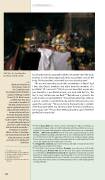
Still life, by Jan Davidsz de Heem (1606-1684)
6:12 What does freedom in Christ mean? Some of the Corinthians were misinterpreting this freedom, saying “everything is lawful for me” (6:12). But it is more complex than that. God has made us members of the Body of Christ, but not only in a spiritual sense. Our physical bodies matter, too, because God raised Jesus from the dead and will raise our bodies to life as well. Our bodies matter—they are holy, vessels holding the Spirit of God. That is why everything that we do with our bodies— including our sexuality— a ects our lives as Christians, our relationship with God. We have the power to sin with our bodies or to “glorify God” with them.
f. [6:14] Rom 8:11; 2 Cor 4:14.
g. [6:15] 12:27; Rom 6:12–13; 12:5; Eph 5:30.
h. [6:16] Gn 2:24; Mt 19:5; Mk 10:8; Eph 5:31.
i. [6:17] Rom 8:9–10; 2 Cor 3:17.
j. [6:19] 3:16–17; Rom 5:5.
k. [6:20] 3:23; 7:23; Acts 20:28 / Rom 12:1;
Phil 1:20.
344
CORINTHIANS
food,” but God will do away with both the one and the other. The body, however, is not for immorality, but for the Lord, and the Lord is for the body; 14God raised the Lord and will also raise us by his power.f
15Do you not know that your bodies are members of Christ? Shall I then take Christ’s members and make them the members of a prostitute?* Of course not!g 16[Or] do you not know that anyone who joins himself to a prostitute becomes one body with her? For “the two,” it says, “will become one esh.”h 17But whoever is joined to the Lord becomes one spirit with him.i 18Avoid immorality. Every other sin a person commits is outside the body, but the immoral person sins against his own body.* 19Do you not know that your body is a temple* of the holy Spirit within you, whom you have from God, and that you are not your own?j 20For you have been purchased at a price. Therefore glorify God in your body.k
* [6:15b–16] A prostitute: the reference may be speci cally to religious prostitution, an accepted part of pagan culture at Corinth and elsewhere; but the prostitute also serves as a symbol for any sexual relationship that con icts with Christ’s claim over us individually. The two. . .will become one esh: the text of Gn 2:24 is applied positively to human marriage in Matthew and Mark, and in Eph 5:29–32: love of husband and wife re ect the love of Christ for his church. The application of the text to union with a prostitute is jarring, for such a union is a parody, an antitype of marriage, which does con ict with Christ’s claim over us. This explains the horror expressed in 1 Cor 6:15b.
* [6:18] Against his own body: expresses the intimacy and depth of sexual disorder, which violates the very orientation of our bodies.
* [6:19–20] Paul’s vision becomes trinitarian. A temple: sacred by reason of God’s gift, his indwelling Spirit. Not your own: but “for the Lord,” who acquires ownership by the act of redemption. Glorify God in your body: the argument concludes with a positive imperative to supplement the negative “avoid immorality” of 1 Cor 6:18. Far from being a terrain that is morally indi erent, the area of sexuality is one in which our relationship with God (and his Christ and his Spirit) is very intimately expressed: he is either highly glori ed or deeply o ended.


