


Page 374 - Demo
P. 374
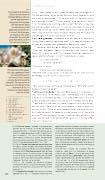
15:35 Paul responds to questions about the resurrection of the dead. When we die, we are like seeds planted in the ground; the tiny seed, the “bare kernel,” bears no resemblance to the wheat that will grow from it. In much the same way, our bodies will be “sown corruptible,” but what will grow from them is a form that will never die again.
CORINTHIANS
Christ;j 24then comes the end,* when he hands over the kingdom to his God and Father, when he has destroyed every sovereignty and every authority and power.k 25For he must reign until he has put all his enemies under his feet.l 26* The last enemym to be destroyed is death, 27* for “he subjected everything under his feet.”n But when it says that everything has been subjected, it is clear that it excludes the one who subjected everything to him. 28When everything is subjected to him, then the Son himself will [also] be subjected to the one who subjected everything to him, so that God may be all in all.o
Practical Arguments.* 29Otherwise, what will people accomplish by having themselves baptized for the dead?* If the dead are not raised at all, then why are they having themselves baptized for them?
30* Moreover, why are we endangering ourselves all the time?p 31Every day I face death; I swear it by the pride in you [brothers] that I have in Christ Jesus our Lord.q 32If at Ephesus I fought with beasts, so to speak, what bene t was it to me? If the dead are not raised:
“Let us eat and drink,
for tomorrow we die.”r
33Do not be led astray:
“Bad company corrupts good morals.”
34Become sober as you ought and stop sinning. For some have no knowledge of God; I say this to your shame.s
C. THE MANNER Of THE RESURRECTION*
35*But someone may say, “How are the dead raised? With what kind of body will they come back?”
The Resurrection Body. 36* You fool! What you sow is not brought to life unless it dies.t 37And what you sow is not the body that is to be but a bare kernel of wheat, perhaps, or of some other kind; 38u but God gives it a body as he chooses, and to each of the seeds its own body. 39* Not all esh is the same, but there is one kind for human beings, another kind of esh for animals, another kind of esh for birds, and another for sh. 40There are both heavenly bodies and earthly bodies, but the brightness of the heavenly is one kind and that of the earthly another. 41The brightness of the sun is one kind, the brightness of the moon another, and the brightness of the stars another. For star di ers from star in brightness.
“We shall not all fall asleep,” Paul says, speaking of those who will still be alive at the time of Christ’s second coming. But all of us will be “changed.” The resurrection of Jesus is not only the key to the mystery of Christ: it is the key to our participation in the life of God.
j. [15:23] 1 Thes 4:15–17.
k. [15:24] Eph 1:22.
l. [15:25] Ps 110:1.
m. [15:26] Rom 6:9; 2 Tm 1:10;
Rev 20:14; 21:4.
n. [15:27] Ps 8:7; Eph 1:22; Phil 3:21.
o. [15:28] Eph 4:6; Col 3:11.
p. [15:30] 2 Cor 4:8–12; 11:23–27.
q. [15:31] Ps 44:23; Rom 8:36.
r. [15:32] 4:9; 2 Cor 4:10–11 / Wis 2:5–7;
Is 22:13.
s. [15:34] Mt 22:29; Mk 12:24.
t. [15:36] Jn 12:24.
u. [15:38] Gn 1:11.
362
* [15:26] The last enemy... is death: a parenthesis that speci es the nal ful llment of the two Old Testament texts just referred to, Ps 110:1 and Ps 8:7. Death is not just one cosmic power among many, but the ultimate e ect of sin in the universe (cf. 1 Cor 15:56; Rom 5:12). Christ defeats death where it prevails, in our bodies. The destruction of the last enemy is concretely the “coming to life” (1 Cor 15:22) of “those who belong to Christ” (1 Cor 15:23).
* [15:27b–28] The one who subjected everything to him: the Father is the ultimate agent in the drama, and the nal end of the process, to whom the Son and everything else is ordered (24, 28). That God may be all in all: his reign is a dynamic exercise of creative power, an outpouring of life and energy through the universe, with no further resistance. This is the supremely positive meaning of “subjection”: that God may fully be God.
* [15:29–34] Paul concludes his treatment of logical inconsistencies with a listing of miscellaneous Christian practices that would be meaningless if the resurrection were not a fact.
* [15:29] Baptized for the dead: this practice is not further explained here, nor is it necessarily mentioned with
approval, but Paul cites it as something in their experience
that attests in one more way to belief in the resurrection. * [15:30–34] A life of sacri ce, such as Paul describes in 1 Cor 4:9–13 and 2 Corinthians, would be pointless without the prospect of resurrection; a life of pleasure, such as that expressed in the Epicurean slogan of 1 Cor 15:32, would be far more consistent. I fought with beasts: since Paul does not elsewhere mention a combat with beasts at Ephesus, he may be speaking guratively about struggles
with adversaries.
* [15:35–58] Paul imagines two objections that the
Corinthians could raise: one concerning the manner of the resurrection (how?), the other pertaining to the qualities of the risen body (what kind?). These questions probably lie behind their denial of the resurrection (1 Cor 15:12), and seem to re ect the presumption that no kind of body other than the one we now possess would be possible. Paul deals with these objections in inverse order, in 1 Cor 15:36–49 and 1 Cor 15:50–58. His argument is fundamentally theological and its appeal is to the understanding.


