


Page 373 - Demo
P. 373
CORINTHIANS
raised.f 14And if Christ has not been raised, then empty [too] is our preaching; empty, too, your faith. 15Then we are also false witnesses to God, because we testi ed against God that he raised Christ, whom he did not raise if in fact the dead are not raised.g 16For if the dead are not raised, neither has Christ been raised, 17and if Christ has not been raised,* your faith is vain; you are still in your sins. 18Then those who have fallen asleep in Christ have perished. 19If for this life only we have hoped in Christ, we are the most pitiable people of all.
Christ the Firstfruits.* 20h But now Christ has been raised from the dead, the rstfruits* of those who have fallen asleep. 21* For since death came through a human being, the resurrection of the dead came also through a human being. 22For just as in Adam all die, so too in Christ shall all be brought to life,i 23but each one in proper order: Christ the rstfruits; then, at his coming, those who belong to
* [15:17–18] The consequences for the Corinthians are grave: both forgiveness of sins and salvation are an illusion, despite their strong convictions about both. Unless Christ is risen, their faith does not save.
* [15:20–28] After a triumphant assertion of the reality of Christ’s resurrection (1 Cor 15:20a), Paul explains its positive implications and consequences. As a soteriological event of both human (1 Cor 15:20–23) and cosmic (1 Cor 15:24– 28) dimensions, Jesus’ resurrection logically and necessarily involves ours as well.
* [15:20] The rstfruits: the portion of the harvest o ered in thanksgiving to God implies the consecration of the entire harvest to come. Christ’s resurrection is not an end in itself; its nality lies in the whole harvest, ourselves.
*
[15:24–28] Paul’s perspective expands to cosmic dimen- sions, as he describes the climax of history, the end. His viewpoint is still christological, as in 1 Cor 15:20–23. 1 Cor 15:24, 28 describe Christ’s nal relations to his enemies and his Father in language that is both royal and military; 1 Cor 15:25–28 insert a proof from scripture (Ps 110:1; 8:6) into this description. But the viewpoint is also theological, for God is the ultimate agent and end, and likewise soteriological, for we are the bene ciaries of all the action.
g. [15:15] Acts 5:32.
h. [15:20] Rom 8:11; Col 1:18; 1 Thes 4:14. i. [15:22] Gn 3:17–19; Rom 5:12–19.
*
[15:21–22] Our human existence, both natural and supernatural, is corporate, involves solidarity. In Adam. . . in Christ: the Hebrew word ’ādām in Genesis is both a common noun for mankind and a proper noun for the rst man. Paul here presents Adam as at least a literary type of Christ; the parallelism and contrast between them will be developed further in 1 Cor 15:45–49 and in Rom 5:12–21.
361
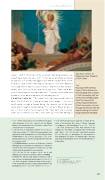
The Risen Christ, by Hippolyte Jean Flandrin (1809-1864)
15:44
Paul says it with startling clarity: if Christ did not rise from the dead, then our faith is “vain” and empty, and “we are the most pitiable people of all.” Our resurrection
and our hope are based on Christ’s resurrection. It is only through him that we have the hope of sharing in his life, of being raised from the dead.


