


Page 384 - Demo
P. 384
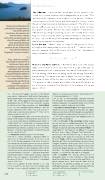
2:8 Paul writes frankly about the su ering he has experienced in this con ict with the Corinthians. He mentions, but does not name, a person within the community who has done him wrong. We do not know anything about the person or the nature of the problem. But we do know that Paul sets the example of forgiveness in a tense situation.
2:14 “God... leads us in triumph.” Paul alludes to the practice of the Roman Empire which rewarded successful military campaigns with a parade, while representatives of the conquered peoples walked in front of the chariots in chains. It is unclear whether Paul is comparing the apostles to the triumphant—or to the conquered. The ambiguity is probably quite intentional.
CORINTHIANS
The O ender.* 5If anyone has caused pain, he has caused it not to me, but in some measure (not to exaggerate) to all of you. 6This punishment by the majority is enough for such a person, 7so that on the contrary you should forgive and encourage him instead, or else the person may be overwhelmed by excessive pain.a 8Therefore, I urge you to rea rm your love for him. 9For this is why I wrote, to know
your proven character, whether you were obedient in everything.b 10Whomever you forgive anything, so do I. For indeed what I have forgiven, if I have forgiven anything, has been for you in the presence of Christ, 11so that we might not be taken advantage of by Satan, for we are not unaware of his purposes.c
Paul’s Anxiety.* 12When I went to Troas for the gospel of Christ, although a door was opened for me in the Lord,d 13* I had no relief in my spirit because I did not nd my brother Titus.e So I took leave of them and went on to Macedonia.
B. PAUl’S MINISTRY*
Ministers of a New Covenant. 14* But thanks be to God,* who always leads us in triumph in Christ* and manifests through us the odor of the knowledge of him* in every place. 15For we are the aroma of Christ for God among those who are being saved and among those who are perishing,f 16to the latter an odor of death that leads to death, to the former an odor of life that leads to life. Who is quali ed* for this? 17For we are not like the many who trade on the word of God; but as out of sincerity, indeed as from God and in the presence of God, we speak in Christ.g
* [2:5–11] The nature of the pain (2 Cor 2:5) is unclear, though some believe an individual at Corinth rejected Paul’s authority, thereby scandalizing many in the community. In any case, action has been taken, and Paul judges the measures adequate to right the situation (2 Cor 2:6). The follow-up directives he now gives are entirely positive: forgive, encourage, love. Overwhelmed (2 Cor 2:7): a vivid metaphor (literally “swallowed”) that Paul employs positively at 2 Cor 5:4 and in 1 Cor 15:54 (2 Cor 2:7). It is often used to describe satanic activity (cf. 1 Pt 5:8); note the reference to Satan here in 2 Cor 2:11.
* [2:12–13] I had no relief: Paul does not explain the reason for his anxiety until he resumes the thread of his narrative at 2 Cor 7:5: he was waiting to hear how the Corinthians would respond to his letter. Since 2 Cor 7:5–16 describes their response in entirely positive terms, we never learn in detail why he found it necessary to defend and justify his change of plans, as in 2 Cor 1:15–24. Was this portion of the letter written before the arrival of Titus with his good news (2 Cor 7:6–7)?
* [2:13] Macedonia: a Roman province in northern Greece.
* [2:14–7:4] This section constitutes a digression within the narrative of the crisis and its resolution (2 Cor 1:12–2:13 and 2 Cor 7:5–16). The main component (2 Cor 2:14–6:10) treats the nature of Paul’s ministry and his quali cations for it; this material bears some similarity to the defense of his ministry in chaps. 10–13, but it may well come from a period close to the crisis. This is followed by a supplementary block of material quite di erent in character and tone (2 Cor 6:14–7:1). These materials may have been brought together into their present position during nal editing of the letter; appeals to the Corinthians link them to one another (2 Cor 6:11–13) and lead back to the interrupted
narrative (2 Cor 7:2–4).
* [2:14–6:10] The question of Paul’s adequacy (2 Cor 2:16;
cf. 2 Cor 3:5) and his credentials (2 Cor 3:1–2) has been raised. Paul responds by an extended treatment of the nature of his
ministry. It is a ministry of glory (2 Cor 3:7–4:6), of life (2 Cor 4:7–
5:10), of reconciliation (2 Cor 5:11–6:10).
* [2:14–16a] The initial statement plunges us abruptly into another
train of thought. Paul describes his personal existence and his function as a preacher in two powerful images (2 Cor 2:14) that constitute a prelude to the development to follow.
* [2:14a] Leads us in triumph in Christ: this metaphor of a festive parade in honor of a conquering military hero can suggest either a positive sharing in Christ’s triumph or an experience of defeat, being led in captivity and submission (cf. 2 Cor 4:8–11; 1 Cor 4:9). Paul is probably aware of the ambiguity, as he is in the case of the next metaphor.
* [2:14b–16a] The odor of the knowledge of him: incense was commonly used in triumphal processions. The metaphor suggests the gradual di usion of the knowledge of God through the apostolic preaching. The aroma of Christ: the image shifts from the fragrance Paul di uses to the aroma that he is. Paul is probably thinking of the “sweet odor” of the sacri ces in the Old Testament (e.g., Gn 8:21; Ex 29:18) and perhaps of the metaphor of wisdom as a sweet odor (Sir 24:15). Death. . .life: the aroma of Christ that comes to them through Paul is perceived di erently by various classes of people. To some his preaching and his life (cf. 1 Cor 1:17–2:6) are perceived as death, and the e ect is death for them; others perceive him, despite appearances, as life, and the e ect is life for them. This fragrance thus produces a separation and a judgment (cf. the function of the “light” in John’s gospel).
* [2:16b–17] Quali ed: Paul may be echoing either the self-satis ed claims of other preachers or their charges about Paul’s de ciencies. No one is really quali ed, but the apostle contrasts himself with those who dilute or falsify the preaching for personal advantage and insists on his totally good conscience: his ministry is from God, and he has exercised it with delity and integrity (cf. 2 Cor 3:5–6).
d. [2:12] Acts 16:8. g. [2:17] 4:2; 1 Cor 5:8.
e. [2:13] 7:6; 1 Tm 1:3.
f. [2:15] 4:3; 1 Cor 1:18.
372
a. [2:7] Col 3:13.
b. [2:9] 7:15.
c. [2:11] Eph 4:27.


