


Page 385 - Demo
P. 385
2:15
Smells are said to be among the most indelible of all memories, even more than sights and sounds. Paul says that Christians are to be “the aroma of Christ for God” in the world. Do we “smell” like Christ?
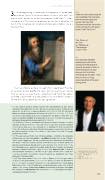
The Tables of the Law,
by Philippe de Champaigne (1602-1674)
3:2
Paul alternates between defending himself and his ministry and checking that impulse. He needs no letter of recommendation, he says, because the Corinthians themselves are his letter—their faith in Christ is a living recommendation of his work among them.
CORINTHIANS
31* a Are we beginning to commend ourselves again? Or do we need, 2
as some do, letters of recommendation to you or from you? You are our letter,* written on our hearts, known and read by all, 3* b shown to be a letter of Christ administered by us, written not in ink but by the Spirit of the living God, not on tablets of stone but on tablets that are hearts of esh.
4* Such con dence we have through Christ toward God. 5Not that of ourselves we are quali ed to take credit for anything as coming from us; rather, our quali cation comes from God,c 6who has indeed quali ed us as ministers of a new covenant, not of letter but of spirit;d for the letter brings death, but the Spirit gives life.*
* [3:1] Paul seems to allude to certain preachers who pride themselves on their written credentials. Presumably they reproach him for not possessing similar credentials and compel him to spell out his own quali cations (2 Cor 4:2; 5:12; 6:4). The Corinthians themselves should have performed this function for Paul (2 Cor 5:12; cf. 2 Cor 12:11). Since he is forced to nd something that can recommend him, he points to them: their very existence constitutes his letter of recommendation (2 Cor 3:1–2). Others who engage in self-commendation will also be mentioned in 2 Cor 10:12–18.
* [3:2–3] Mention of “letters of recommendation” generates a series of metaphors in which Paul plays on the word “letter”: (1) the community is Paul’s letter of recommendation (2 Cor 3:2a); (2) they are a letter engraved on his a ections for all to see and read (2 Cor 3:2b); (3) they are a letter from Christ that Paul merely delivers (2 Cor 3:3a); (4) they are a letter written by the Spirit on the tablets of human hearts (2 Cor 3:3b). One image dissolves into another.
* [3:3] This verse contrasts Paul’s letter with those written. . .in ink (like the credentials of other preachers) and those written. . .on tablets of stone (like the law of Moses). These contrasts suggest that the other preachers may have claimed special relationship with Moses. If they were Judaizers zealous for the Mosaic law, that would explain the detailed contrast between the old and the new covenants (2 Cor 3:6; 4:7–6:10). If they were charismatics who claimed Moses as their model, that would explain the extended treatment of Moses himself and his glory (2 Cor 3:7–4:6). Hearts of esh: cf. Ezekiel’s contrast between the heart of esh that the Spirit gives and the heart of stone that it replaces (Ez 36:26); the context is covenant renewal and puri cation that makes observance of the law possible.
* [3:4–6] These verses resume 2 Cor 2:1–3:3. Paul’s con dence (2 Cor 3:4) is grounded in his sense of God-given mission (2 Cor 2:17), the speci cs of which are described in 2 Cor 3:1–3. 2 Cor 3:5–6 return to the question of his quali cations (2 Cor 2:16), attributing them entirely to God. 2 Cor 3:6 further spells out the situation described in 2 Cor 3:3b and “names” it: Paul is living within a new covenant, characterized by the Spirit, which gives life. The usage of a new covenant is derived from Jer 31:31–33 a passage that also speaks of writing on the heart; cf. 2 Cor 3:2.
a. [3:1] Acts 18:27; Rom 16:1; 1 Cor 16:3.
b. [3:3] Ex 24:12; 31:18; 32:15–19 / Jer
31:33; Ez 11:19; 36:26–27.
c. [3:5] Jn 3:27.
d. [3:6] Eph 3:7 / Jer 31:31–34.
373


