


Page 387 - Demo
P. 387
CORINTHIANS
4Integrity in the Ministry.
1* Therefore, since we have this ministry through the mercy shown us, we are not discouraged. 2Rather, we have renounced shameful, hidden things; not acting deceitfully or falsifying the word of God, but by the open declaration of the truth we commend ourselves to everyone’s conscience in the sight of God.a 3And even though our gospel is veiled,* it is veiled for those who are
perishing,b 4in whose case the god of this age has
blinded the minds of the unbelievers, so that they
may not see the light of the gospel of the glory of
Christ, who is the image of God.c 5For we do not
preach ourselves* but Jesus Christ as Lord, and
ourselves as your slaves for the sake of Jesus. 6* For
God who said, “Let light shine out of darkness,” has
shone in our hearts to bring to light the knowledge
of the glory of God on the face of [Jesus] Christ.d
The Paradox of the Ministry. 7* But we hold this treasure* in earthen vessels, that the surpassing power may be of God and not from us. 8* We are a icted in every way, but not constrained; perplexed, but not driven to despair;e 9persecuted, but not abandoned; struck down, but not destroyed; 10* f always carrying about in the body the dying of Jesus, so that the life of Jesus may also be manifested in our body. 11For we who live are constantly being given up to death for the sake of Jesus, so that the life of Jesus may be manifested in our mortal esh.g
12* So death is at work in us, but life in you. 13* Since, then, we have the same spirit of faith, according to what is written, “I believed, therefore I spoke,” we too believe and therefore speak,h 14knowing that the one who raised the Lord Jesus will raise us also with Jesus and place us with you in his presence.i 15Everything indeed is for you, so that the grace bestowed in abundance on more and more people may cause the thanksgiving to over ow for the glory of God.j
* [4:1–2] A ministry of this sort generates con dence and forthrightness; cf. 2 Cor 1:12–14; 2:17.
* [4:3–4] Though our gospel is veiled: the nal application of the image. Paul has been reproached either for obscurity in his preaching or for his manner of presenting the gospel. But he con dently asserts that there is no veil over his gospel. If some fail to perceive its light, that is because of unbelief. The veil lies over their eyes (2 Cor 3:14), a blindness induced by Satan, and a sign that they are headed for destruction (cf. 2 Cor 2:15).
* [4:5] We do not preach ourselves: the light seen in his gospel is the glory of Christ (2 Cor 4:4). Far from preaching himself, the preacher should be a transparent medium through whom Jesus is perceived (cf. 2 Cor 4:10–11). Your slaves: Paul draws attention away from individuals as such and toward their role in relation to God, Christ, and the community; cf. 1 Cor 3:5; 2 Cor 4:1.
* [4:6] Autobiographical allusion to the episode at Damascus clari es the origin and nature of Paul’s service; cf. Acts 9:1–19; 22:3–16; 26:2–18. “Let light shine out of darkness”: Paul seems to be thinking of Gn 1:3 and presenting his apostolic ministry as a new creation. There may also be an allusion to Is 9:1 suggesting his prophetic calling as servant of the Lord and light to the nations; cf. Is 42:6, 16; 49:6; 60:1–2, and the use of light imagery in Acts 26:13–23. To bring to light the knowledge: Paul’s role in the process of revelation, expressed at the beginning under the image of the odor and aroma (2 Cor 2:14–15), is restated now, at the end of this rst moment of the development, in the imagery of light and glory (2 Cor 4:3–6).
* [4:7–5:10] Paul now confronts the di culty that his present existence does not appear glorious at all; it is marked instead by su ering and death. He deals with this by developing the topic already announced in 2 Cor 3:3, 6, asserting his faith in the presence and ultimate triumph of life, in his own and every Christian existence, despite the experience of death.
* [4:7] This treasure: the glory that he preaches and into which they are being transformed. In earthen vessels: the instruments God uses are human and fragile; some imagine small terracotta lamps in which light is carried.
* [4:8–9] A catalogue of his apostolic trials and a ictions. Yet in these the negative never completely prevails; there is always some experience of rescue, of salvation.
* [4:10–11] Both the negative and the positive sides of the experience are grounded christologically. The logic is similar to that of 2 Cor 1:3– 11. His su erings are connected with Christ’s, and his deliverance is a sign that he is to share in Jesus’ resurrection.
* [4:12–15] His experience does not terminate in himself, but in others (12, 15; cf. 2 Cor 1:4–5). Ultimately, everything is ordered even beyond the community, toward God (2 Cor 4:15; cf. 2 Cor 1:11).
* [4:13–14] Like the psalmist, Paul clearly proclaims his faith, a rming life within himself despite death (2 Cor 4:10–11) and the life-giving e ect of his experience upon the church (2 Cor 4:12, 14–15). And place us with you in his presence: Paul imagines God presenting him and them to Jesus at the parousia and the judgment; cf. 2 Cor 11:2; Rom 14:10.
a. [4:2] 2:17; 1 Thes 2:4–7.
b. [4:3] 2:15–16; 2 Thes 2:10.
c. [4:4] Jn 12:31–36 / 1 Tm 1:11.
d. [4:6] Gn 1:3; Is 9:1; Acts 26:13–23; Gal
1:15–16 / Jn 8:12; Heb 1:3.
e. [4:8] 6:4–10; 1 Cor 4:9–13.
f. [4:10] Col 1:24.
g. [4:11] Rom 8:36; 1 Cor 15:31.
h. [4:13] Ps 116:10.
i. [4:14] Rom 4:24–25; 8:11; 1 Cor 6:14;
1 Thes 4:14. j. [4:15] 1:11.
375
4:6
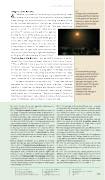
Perhaps Paul is recalling the blinding light that threw him to the ground on the road to Damascus, when the “gospel of the glory of Christ” was revealed to him.
4:7
In this wonderful passage, Paul speaks of the ministry of the apostle, who holds the treasure of the Christian message, the Gospel, in the “earthen vessel,” the clay pot, of his own humanity. The vessel is fragile and breakable; the message it contains is eternal.


