


Page 388 - Demo
P. 388
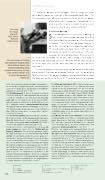
Assisting the Dead, mural by Paul-Albert Besnard (1849-1934)
5:2 Paul uses images of clothing and nakedness to speak about life and death. Death is the ultimate nakedness, being stripped of everything. We long to be “further clothed” (5:4), to put on the garments of eternal life.
* [4:16–18] In a series of contrasts Paul explains the extent of his faith in life. Life is not only already present and revealing itself (2 Cor 4:8–11, 16) but will outlast his experience of a iction and dying: it is eternal (2 Cor 4:17–18).
* [4:16] Not discouraged: i.e., despite the experience of death. Paul is still speaking of himself personally, but he assumes his faith and attitude will be shared by all Christians. Our outer self: the individual subject of ordinary perception and observation, in contrast to the interior and hidden self, which undergoes renewal. Is being renewed day by day: this suggests a process that has already begun; cf. 2 Cor 3:18. The renewal already taking place even in Paul’s dying is a share in the life of Jesus, but this is recognized only by faith (2 Cor 4:13, 18; 2 Cor 5:7).
* [5:1] Our earthly dwelling: the same contrast is restated in the imagery of a dwelling. The language recalls Jesus’ saying about the destruction of the temple and the construction of another building not made with hands (Mk 14:58), a prediction later applied to Jesus’ own body (Jn 2:20).
* [5:2–5] 2 Cor 5:2–3 and 4 are largely parallel in structure. We groan, longing: see note on 2 Cor 5:5. Clothed with our heavenly habitation: Paul mixes his metaphors, adding the image of the garment to that of the building. Further clothed: the verb means strictly “to put one garment on over another.” Paul may desire to put the resurrection body on over his mortal body, without dying; 2 Cor 5:2, 4 permit this meaning but do not impose it. Or perhaps he imagines the resurrection body as a garment put on over the Christ- garment rst received in baptism (Gal 3:27) and preserved by moral behavior (Rom 13:12–14; Col 3:12; cf. Mt 22:11–13). Some support for this interpretation may be found in the context; cf. the references to baptism (2 Cor 5:5), to judgment according to works (2 Cor 5:10), and to present renewal (2 Cor 4:16), an idea elsewhere combined with the image of “putting on” a new nature (Eph 4:22–24; Col 3:1–5, 9–10).
*
[5:3] When we have taken it o : the majority of witnesses read “when we have put it on,” i.e., when we have been clothed (in the resurrection body), then we shall not be without a body (naked). This seems mere tautology, though some understand it to mean: whether we are “found” (by God at the judgment) clothed or naked depends upon whether we have preserved or lost our original investiture in Christ (cf. the previous note). In this case to “put it on” does not refer to the resurrection body, but to keeping intact the Christ- garment of baptism. The translation follows the western reading (Codex Bezae, Tertullian), the sense of which is clear: to“take it o ”is to shed our mortal body in death, after which we shall be clothed in the resurrection body and hence not “naked” (cf. 1 Cor 15:51–53).
[5:4] We do not wish to be unclothed: a clear allusion to physical death (2 Cor 4:16; 5:1). Unlike the Greeks, who found dissolution of the body desirable (cf. Socrates), Paul has a Jewish horror of it. He seems to be thinking of the “intermediate period,” an interval between death and resurrection. Swallowed up by life: cf. 1 Cor 15:54.
[5:5] God has created us for resurrected bodily life and already prepares us for it by the gift of the Spirit in baptism. The Spirit as a rst installment: the striking parallel to 2 Cor 5:1–5 in Rom 8:17–30 describes Christians who have received the “ rstfruits” (cf. “ rst installment” here) of the Spirit as “groaning” (cf. 2 Cor 5:2, 4 here) for the resurrection, the complete redemption of their bodies. In place of clothing and building, Rom 8 uses other images for the resurrection: adoption and conformity to the image of the Son.
[5:6–9] Tension between present and future is expressed by another spatial image, the metaphor of the country and its citizens. At present we are like citizens in exile or far away from home. The Lord is the distant homeland, believed in but unseen (2 Cor 5:7).
CHAPTER 4
k. [4:16] 4:1.
l. [4:17] Mt 5:11–12; Rom 8:18.
m. [4:18] Rom 8:24–25; Heb 11:1.
CHAPTER
*
*
*
5
c. [5:4] Is 25:8; 1 Cor 15:54. d. [5:5] 1:22.
e. [5:8] Phil 1:21–23.
376
a. [5:1] Is
Heb 9:11,
b. [5:2] Rom 8:23 / 1 Cor 15:51–54.
38:12 / Col 3:1–4 / Mk 14:58; Col 2:11; 24.
CORINTHIANS -
16* Therefore, we are not discouraged;* rather, although our outer self is wasting away, our inner self is being renewed day by day.k 17For this momentary light a iction is producing for us an eternal weight
of glory beyond all comparison,l 18as we look not to what is seen but to what is unseen; for what is seen is transitory, but what is unseen is eternal.m
5Our Future Destiny.
1a For we know that if our earthly dwelling,* a tent, should be destroyed, we have a building from God, a dwelling not made with hands, eternal in heaven. 2* For in this tent we groan, longing to be further clothed with our heavenly habitationb 3if indeed, when we have taken it o ,* we shall not be found naked. 4For while we are in this tent we groan and are weighed down, because we do
not wish to be unclothed* but to be further clothed, so that what is mortal may be swallowed up by life.c 5Now the one who has prepared us for this very thing is God,d who has given us the Spirit as a rst installment.*
6* So we are always courageous, although we know that while we are at home in the body we are away from the Lord, 7for we walk by faith, not by sight. 8Yet we are courageous, and we would rather leave the body and go home to the Lord.e 9Therefore, we aspire to please


