


Page 390 - Demo
P. 390
6:1 Each year the Church reads this passage on Ash Wednesday, which marks the beginning of the season of Lent. It is never too late for a new beginning when it comes to our relationship with God.
6:14 God calls for total dedication. We cannot be Christians part- time, dividing our allegiance— sharing our yoke—with what is opposed to Christ.
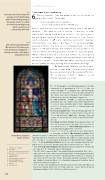
Anonymous stained- glass window
a. [6:1] 1 Cor 3:9; 1 Thes 3:2.
b. [6:2] Is 49:8.
c. [6:3] 1 Cor 9:12; 10:32 / 2 Cor 8:20–21.
d. [6:4] 4:8–11; 11:23–27; 1 Cor 4:9–13.
e. [6:5] Acts 16:23.
f. [6:6] Gal 5:22–23.
g. [6:7] 10:4; Rom 13:12; Eph 6:11–17.
h. [6:9] 4:10–11; Rom 8:36.
i. [6:10] Rom 8:32; 1 Cor 3:21.
j. [6:12] 7:3.
k. [6:13] Gal 4:19.
378
CORINTHIANS 6The Experience of the Ministry. 1* Working together,a then, we appeal to you not to receive the *2 grace of God in vain. For he says:
“In an acceptable time* I heard you,
and on the day of salvation I helped you.”b
Behold, now is a very acceptable time; behold, now is the day of salvation. 3c We cause no one to stumble* in anything, in order that no fault may be found with our ministry; 4* on the contrary, in everything we commend ourselves as ministers of God, through much endurance,* in a ictions, hardships, constraints,d 5beatings, imprisonments, riots, labors, vigils, fasts;e 6* by purity, knowledge, patience, kindness, in a holy spirit, in unfeigned love,f 7in truthful speech, in the power of God; with weapons of righteousness at the right and at the left;g 8through glory and dishonor, insult and praise. We are treated as deceivers and yet are truthful;* 9as unrecognized and yet acknowledged; as dying and behold we live; as chastised and yet not put to death;h 10as sorrowful yet always rejoicing; as poor yet enriching many; as having nothing and yet possessing all things.i
11* We have spoken frankly to you, Corinthians; our heart is open wide. 12You are not constrained by us; you are constrained by your own a ections.j 13As recompense in kind (I speak as to my children), be open yourselves.k
* [6:1–10] This paragraph is a single long sentence in the Greek, interrupted by the parenthesis of 2 Cor 5:2. The one main verb is “we appeal.” In this paragraph Paul both exercises his ministry of reconciliation (cf. 2 Cor 5:20) and describes how his ministry is exercised: the “message of reconciliation” (2 Cor 5:19) is lived existentially in his apostolic experience.
* [6:1] Not to receive. . .in vain: i.e., conform to the gift of justi cation and new creation. The context indicates how this can be done concretely: become God’s righteousness (2 Cor 5:21), not live for oneself (2 Cor 5:15) be reconciled with Paul (2 Cor 6:11–13; 7:2–3).
* [6:2] In an acceptable time: Paul cites the Septuagint text of Is 49:8; the Hebrew reads “in a time of favor”; it is parallel to “on the day of salvation.” Now: God is bestowing favor and salvation at this very moment, as Paul is addressing his letter to them.
* [6:3] Cause no one to stumble: the language echoes that of 1 Cor 8–10 as does the expression “no longer live for themselves” in 2 Cor 5:15. That no fault may be found: i.e., at the eschatological judgment (cf. 1 Cor 4:2–5).
* [6:4a] This is the central assertion, the topic statement for
the catalogue that follows. We commend ourselves: Paul’s self-commendation is ironical (with an eye on the charges mentioned in 2 Cor 3:1–3) and paradoxical (pointing mostly to experiences that would not normally be considered points of pride but are perceived as such by faith). Cf. also the self-commendation in 2 Cor 11:23–29. As ministers of God: the same Greek word, diakonos, means “minister”
and “servant”; cf. 2 Cor 11:23, the central assertion in a similar context, and 1 Cor 3:5.
* [6:4b–5] Through much endurance: this phrase functions as a subtitle; it is followed by
an enumeration of nine speci c types of trials endured.
* [6:6–7a] A list of virtuous qualities in two groups of four, the second fuller than the rst.
* [6:8b–10] A series of seven rhetorically e ective antitheses, contrasting negative external
impressions with positive inner reality. Paul perceives his existence as a re ection of Jesus’ own and a rms an inner reversal that escapes outward observation. The nal two members illustrate two distinct kinds of paradox or apparent contradiction that are characteristic of apostolic experience.
* [6:11–13] Paul’s tone becomes quieter, but his appeal for acceptance and a ection is emotionally charged. References to the heart and their mutual relations bring the development begun in 2 Cor 2:14–3:3 to an e ective conclusion.


