


Page 393 - Demo
P. 393
CORINTHIANS
over owed in a wealth of generosity on their part. 3* For according to their means, I can testify, and beyond their means, spontaneously, 4they begged us insistently for the favor of taking part in the service to the holy ones,b 5and this, not as we expected, but they gave themselves rst to the Lord and to us* through the will of God, 6so that we urged Titus* that, as he had already begun, he should also complete for you this gracious act also.c 7* Now as you excel in every respect, in faith, discourse, knowledge, all earnestness, and in the love we have for you,d may you excel in this gracious act also.
8I say this not by way of command, but to test the
genuineness of your love by your concern for others.
9* e For you know the gracious act of our Lord Jesus
Christ, that for your sake he became poor although
he was rich, so that by his poverty you might become
rich. 10And I am giving counsel in this matter, for it is
appropriate for you who began not only to act but
to act willingly last year:f 11complete it now, so that
your eager* willingness may be matched by your completion of it out of what you have. 12* For if the eagerness is there, it is acceptable according to what one has, not according to what one does not have; 13not that others should have relief while you are burdened, but that as a matter of equality 14your surplus at the present time should supply their needs, so that their surplus may also supply your needs, that there may be equality. 15As it is written:
“Whoever had much did not have more,
and whoever had little did not have less.”g
Titus and His Collaborators.* 16But thanks be to God who put the same concern for you into the heart of Titus, 17for he not only
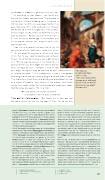
The Nativity,
by Albrecht Dürer (1471-1528).
“For your sake Christ became poor although he was rich, so that by his poverty you might become rich.”
*
* *
*
genuine. Abundance: variations on the same root lie behind “over ow” (2 Cor 8:2; 9:12), “excel” (2 Cor 8:7), “surplus” (2 Cor 8:14), “super uous” (2 Cor 9:1) “make abundant” and “have an abundance” (2 Cor 9:8). These expressions of fullness contrast with references to need (2 Cor 8:14; 9:12). Generosity: the word haplotēs has nuances of both simplicity and sincerity; here and in 2 Cor 9:11, 13 it designates the singleness of purpose that manifests itself in generous giving.
[8:3–4] Paul emphasizes the spontaneity of the Macedonians and the nature of their action. They begged us insistently: the same root is translated as “urge,”“appeal,”“encourage” (2 Cor 8:6, 17; 9:5). Taking part: the same word is translated “contribution” in 2 Cor 9:13 and a related term as “partner” in 2 Cor 8:23. Service (diakonia): this word occurs also in 2 Cor 9:1, 13 as “service”; in 2 Cor 9:12 it is translated “administration,” and in 2 Cor 8:19, 20 the corresponding verb is rendered “administer.” [8:5] They gave themselves. . .to the Lord and to us: on its deepest level their attitude is one of self-giving.
[8:6] Titus: 1 Cor 16 seemed to leave the organization up to the Corinthians, but apparently Paul has sent Titus to initiate the collection as well; 2 Cor 8:16–17 will describe Titus’ attitude as one of shared concern and cooperation.
[8:7] The charitable service Paul is promoting is seen brie y and in passing within the perspective of Paul’s theology of the charisms. Earnestness (spoudē): this or related terms occur
b. [8:4] Acts 24:17; Rom 15:31.
c. [8:6] 2:13; 7:6–7, 13–14; 8:16, 23; 12:18.
d. [8:7] 1 Cor 1:5.
also in 2 Cor 8:22 (“earnest”) and 2 Cor 8:8, 16, 17 (“concern”). * [8:9] The dialectic of Jesus’ experience, expressed earlier in terms of life and death (2 Cor 5:15), sin and righteousness (2 Cor 5:21), is now rephrased in terms of poverty and wealth. Many scholars think this is a reference to Jesus’ preexistence with God (his “wealth”) and to his incarnation and death (his “poverty”), and they point to the similarity between this verse and Phil 2:6–8. Others interpret the wealth and poverty as succeeding phases of Jesus’ earthly existence, e.g., his sense of intimacy with God and then the desolation and the feeling
of abandonment by God in his death (cf. Mk 15:34).
* [8:11] Eager: the word prothymia also occurs in 2 Cor 8:12,
19; 9:2.
* [8:12–15] Paul introduces the principle of equality into the
discussion. The goal is not impoverishment but sharing of resources; balance is achieved at least over the course of time. In 2 Cor 8:15 Paul grounds his argument unexpectedly in the experience of Israel gathering manna in the desert: equality was achieved, independently of personal exertion, by God, who gave with an even hand according to need. Paul touches brie y here on the theme of “living from God.”
* [8:16–24] In recommending Titus and his companions, Paul stresses their personal and apostolic qualities, their good dispositions toward the Corinthians, and their authority as messengers of the churches and representatives of Christ.
e. [8:9] 6:10; Phil 2:6–8.
f. [8:10] 9:2; 1 Cor 16:1–4.
g. [8:15] Ex 16:18. 381


