


Page 407 - Demo
P. 407
GALATIANS
III. PAUL’S DEFENSE OF HIS GOSPEL AND HIS AUTHORITY*
His Call by Christ. 11h Now I want you to know, brothers, that the gospel preached by me is not of human origin. 12For I did not receive it from a human being, nor was I taught it, but it came through a revelation of Jesus Christ.*
13* For you heard of my former way of life in Judaism, how I persecuted the church of God beyond measure and tried to destroy it,i 14and progressed in Judaism beyond many of my contemporaries among my race, since I was even more a zealot for my ancestral traditions.j 15But when [God], who from my mother’s womb had set me apart and called me through his grace, was pleasedk 16to reveal his Son to me,l so that I might proclaim him to the Gentiles, I did not immediately consult esh and blood,* 17nor did I go up to Jerusalem to those who were apostles before me; rather, I went into Arabia* and then returned to Damascus.
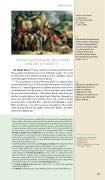
Paul on the Road to Damascus,
by Pieter Brueghel the Young (1564-1636)
1:11
Paul defends the authenticity of the Gospel as he preached it to them, showing that it is of divine, not human origin, since he received it as a revelation from Christ himself; he did not learn it from another human being (see Acts 8:1-3).
1:13
Paul uses his own life story to emphasize his point. He admits to and even emphasizes his own weaknesses because he sees these as signs that God’s grace is at work.
h. [1:11–12] 1 Cor 15:1 / Gal 1:1; Eph 3:3.
i. [1:13] Acts 8:1–3; 9:1–2; 1 Cor 15:9.
j. [1:14] Acts 26:4–5.
k. [1:15] Is 49:1; Jer 1:4.
l. [1:16] 1:11–12; Rom 1:5; 1 Cor 15:10; Acts 9:3–9 / Gal 2:2, 7 / Mt 16:17.
395
* [1:11–2:21] Paul’s presentation on behalf of his message and of his apostleship re ects rhetorical forms of his day: he rst narrates the facts about certain past events (Gal 1:12– 2:14) and then states his contention regarding justi cation by faith as the gospel message (Gal 2:15–21). Further arguments follow from both experience and scripture in Galatians 3; 4 before he draws out the ethical consequences (Gal 5:1–6:10). The speci c facts that he takes up here to show that his gospel is not a human invention (Gal 1:11) but came through a revelation of Jesus Christ (Gal 1:12) deal with his own calling as a Christian missionary (Gal 1:13–17), his initial relations with the apostles in Jerusalem (Gal 1:18–24), a later journey to Jerusalem (Gal 2:1–10), and an incident in Antioch involving Cephas and persons from James (Gal 2:11–14). The content of Paul’s revealed gospel is then set forth in the heart of the letter (Gal 2:15–21).
* [1:12] Although Paul received his gospel through a revelation from Christ, this did not exclude his use of early Christian confessional formulations. See note on Gal 1:4.
* [1:13–17] Along with Phil 3:4–11, which also moves from autobiography to its climax in a discussion on justi cation by faith (cf. Gal 2:15–21), this passage is Paul’s chief account of the change from his former way of life (Gal 1:13) to service as a Christian missionary (Gal 1:16); cf. Acts 9:1–22; 22:4–16; 26:9–18. Paul himself does not use the term“conversion” but stresses revelation (Gal 1:12, 16). In Gal 1:15 his language echoes the Old Testament prophetic call of Jeremiah. Unlike the account in Acts (cf. Acts 22:4–16), the calling of Paul here includes the mission to proclaim Christ to the Gentiles (Gal 1:16).
* [1:16] Flesh and blood: human authorities (cf. Mt 16:17; 1 Cor 15:50). Paul’s apostleship comes from God (Gal 1:1).
* [1:17] Arabia: probably the region of the Nabataean Arabs, east and south of Damascus.


