


Page 408 - Demo
P. 408
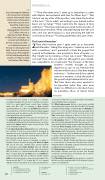
2:11 At issue among the Galatians is the circumcision of Gentile converts. Paul reminds them of the Council of Jerusalem, when this very issue arose. Even Peter (Cephas) was inconsistent, and Paul challenged him “to his face” (2:11). Why is the issue so important to Paul? Because for Paul, God’s covenant—the covenant with Abraham or the new covenant in Christ— is not about observance of the Law; it is about grace and faith. To insist on observance of the Law as the foundation of God’s relationship with his people is, for Paul, to nullify the freedom Christ brings.
*[1:18–24] Paul’s rst journey to Jerusalem as a Christian, according to Galatians (cf. Acts 9:23–31 and the note on Acts 12:25). He is quite explicit about contacts there, testifying under oath (Gal 1:20). On returning to Syria (perhaps speci cally Damascus, cf. Gal 1:17) and Cilicia (including his home town Tarsus, cf. Acts 9:30; 22:3), Paul most likely engaged in missionary work. He underscores the fact that Christians in Judea knew of him only by reputation.
* [1:18] After three years: two years and more, since Paul’s call. To confer with Cephas may mean simply “pay a visit” or more speci cally “get information from” him about Jesus, over a two- week period. Cephas: Aramaic name of Simon (Peter); cf. Mt 16:16–18 and the notes there.
* [1:19] James the brother of the Lord: not one of the Twelve, but a brother of Jesus (see note on Mk 6:3). He played an important role in the Jerusalem church (see note on Gal 2:9), the leadership of which he took over from Peter (Acts 12:17). Paul may have regarded James as an apostle.
* [2:1–10] Paul’s second journey to Jerusalem, according to Galatians, involved a private meeting with those of repute (Gal 2:2). At issue was a Gentile, Titus, and the question of circumcision, which false brothers (Gal 2:4) evidently demanded for him. Paul insists that the gospel he preaches (Gal 2:2; cf. Gal 1:9, 11) remained intact with no addition by those of repute (Gal 2:6); that Titus was not compelled to accept circumcision (Gal 2:3); and that he and the reputed pillars in Jerusalem agreed on how each would advance the missionary task (Gal 1:7–10). Usually, Gal 1:1–10 is equated with the “Council of Jerusalem,” as it is called, described in Acts
15. See notes on Acts 15:6–12, 13–35, the latter concerning the
“decree” that Paul does not mention.
* [2:1] After fourteen years: thirteen or more years, probably
*
*
*
*
reckoned from the return to Syria and Cilicia (Gal 1:21), though possibly from Paul’s calling as a Christian (Gal 1:15). Barnabas: cf. Gal 2:9, 13; 1 Cor 9:6. A Jewish Christian missionary, with whom Paul worked (Acts 4:36–37; 11:22, 25, 30; 12:25; 13:1–3; 15:2). Titus: a missionary companion of Paul (2 Cor 2:13; 7:6, 13–15; 8:6, 16, 23; 12:18), non-Jewish (Gal 2:3), never mentioned in Acts. [2:2] A revelation: cf. Gal 1:1, 12. Paul emphasizes it was God’s will, not Jerusalem authority, that led to the journey. Acts 15:2 states that the church in Antioch appointed Paul and Barnabas for the task. Those of repute: leaders of the Jerusalem church; the term, while positive, may be slightly ironic (cf. Gal 1:6, 9). Run, in vain: while Paul presents a positive picture in what follows, his missionary work in Galatia would have been to no purpose if his opponents were correct that circumcision is needed for complete faith in Christ.
[2:3] Not even a Gentile Christian like Titus was compelled to receive the rite of circumcision. The Greek text could be interpreted that he voluntarily accepted circumcision, but this is unlikely in the overall argument.
[2:4] False brothers: Jewish Christians who took the position that Gentile Christians must rst become Jews through circumcision and observance of the Mosaic law in order to become Christians; cf. Acts 15:1.
[2:5] The truth of the gospel: the true gospel, in contrast to the false one of the opponents (Gal 1:6–9); the gospel of grace, used as a norm (Gal 2:14).
b. [2:2] 1:11–12, 16 / 1:16 / Phil 2:16.
c. [2:3] 2 Cor 2:13; 7:6–7; 8:16–17; 12:18; Ti 1:4 /
Gal 2:14; 6:12.
d. [2:4] 5:1; Acts 15:1, 24. e. [2:5] 2:14; 4:16.
396
CHAPTER 1
m. [1:18] Acts 9:26–30 / Jn 1:42.
n. [1:19] 2:9; Mt 13:55; Acts 12:17. o. [1:20] Rom 9:1; 2 Cor 11:31.
p. [1:21] Acts 9:30. q. [1:23] 1:13.
CHAPTER 2
a. [2:1] Acts 15:2.
GALATIANS -
18* Then after three years* I went up to Jerusalem to confer with Cephas and remained with him for fteen days.m 19But I did not see any other of the apostles,n only James the brother of the Lord.* 20(As to what I am writing to you, behold, before God, I am not lying.)o 21Then I went into the regions of Syria and Cilicia.p 22And I was unknown personally to the churches of Judea that are in Christ; 23they only kept hearing that “the one who once was persecuting us is now preaching the faith he once tried to destroy.”q 24So they glori ed God because of me.
2The Council of Jerusalem.* * a2 1Then after fourteen years I again went up to Jerusalem
with Barnabas, taking Titus along also. I went up in accord with a revelation,* and I presented to them the gospel that I preach to the Gentiles—but privately to those of repute—so that I might not be running, or have run, in vain.b 3Moreover, not even* Titus, who was with me, although he was a Greek, was compelled to be circumcised,c 4but because of the false
brothers* secretly brought in, who slipped in to spy on our freedom that we have in Christ Jesus,d that they might enslave us— 5to them we did not submit even for a moment, so that the truth of the gospel* might remain intact for you.e 6But from those who were reputed to be important (what they once were makes no di erence to me; God shows no partiality)—those of repute made
Jerusalem


