


Page 413 - Demo
P. 413
GALATIANS
proof that you are children,* God sent the spirit of his Son into our hearts, crying out, “Abba, Father!”d 7So you are no longer a slave but a child, and if a child then also an heir, through God.e Do Not Throw This Freedom Away.* 8f At a time when you did not know God, you became slaves to things that by nature are not gods;* 9but now that you have come to know God, or rather to be known by God, how can you turn back again to the weak and destitute elemental powers? Do you want to be slaves to them all over again?g 10You are observing days,h months, seasons, and years.* 11I am afraid on your account that perhaps I have labored for you in vain.*
Appeal to Former Loyalty.* 12I implore you, brothers, be as I am, because I have also become as you are.* You did me no wrong;i 13you know that it was because of a physical illness* that I originally preached the gospel to you, 14and you did not show disdain or contempt because of the trial caused you by my physical condition, but rather you received me as an angel of God, as Christ Jesus. 15Where now is that blessedness of
yours?* Indeed, I can testify to you that, if it had been possible, you would have torn out your eyes and given them to me. 16So now have I become your enemy by telling you the truth? 17They show interest in you, but not in a good way; they want to isolate you,* so that you may
4:4
“Born of a woman”: what does this passage tell us about Mary, the mother of Jesus? “Redeemed by reason of the merits of her Son and united to Him by a close and indissoluble tie, she is endowed with the high o ce and dignity of being the Mother of the Son of God, by which account she is also the beloved daughter of the Father and the temple of the Holy Spirit. Because of this gift of sublime grace she far surpasses all creatures, both in heaven and on earth. At the same time, however, because she belongs to the o spring of Adam she is one with all those who are to be saved” ( Lumen Gentium, 53). Mary is the mother of Jesus, the mother of all believers, the mother of the Church.
d. [4:6] 3:26; Rom 8:15.
e. [4:7] 3:29; Rom 8:16–17.
f. [4:8] 1 Cor 12:2.
g. [4:9] 4:3; Col 2:20.
h. [4:10] Col 2:16–20.
i. [4:12] 1 Cor 11:1.
401
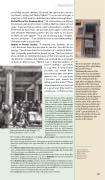
Jesus presented at the Temple, by Albrecht Dürer (1471-1528)
* [4:8–11] On the basis of the arguments advanced from Gal 3:1 through Gal 4:7, Paul now launches his appeal to the Galatians with the question, how can you turn back to the slavery of the law (Gal 4:9)? The question is posed with reference to bondage to the elemental powers (see note on Gal 4:3) because the Galatians had originally been converted to Christianity from paganism, not Judaism (Gal 4:8). The use of the direct question is like Gal 3:3–5.
* [4:8] Things that by nature are not gods: or “gods that by nature do not exist.”
* [4:10] This is likely a reference to ritual observances from the Old Testament, promoted by opponents: sabbaths or Yom Kippur, new moon, Passover or Pentecost, sabbatical years.
* [4:11] Cf. Gal 2:2. If the Galatians become slaves. . .all over again to the law (Gal 4:9), Paul will have worked in vain among them.
* [4:12–20] A strongly personal section. Paul appeals to past ties between the Galatians and himself. He speaks sharply of the opponents (Gal 4:17–18) and pastorally to the Galatians (Gal 4:19–20).
* [4:12] Because I have also become as you are: a terse phrase in Greek, meaning “Be as I, Paul, am,” i.e., living by faith, independent of the law, for, in spite of my background in Judaism (Gal 1:13), I have become as you Galatians are now, a brother in Christ.
* [4:13] Physical illness: because its nature is not described, some assume an eye disease (Gal 4:15); others, epilepsy; some relate it to 2 Cor 12:7–9. Originally: this may also be translated “formerly” or “on the rst (of two) visit(s)”; cf. Acts 16:6; 18:23.
* [4:15] That blessedness of yours: possibly a reference to the Galatians’ initial happy reception of Paul (Gal 4:14) and of his gospel (Gal 1:6; 3:1–4) and their felicitation at such blessedness, but the phrase could also refer ironically to earlier praise by Paul of the Galatians, no longer possible when they turn from the gospel to the claims of the opponents (Gal 4:17–18; 1:7). If the word is a more literal reference to a beatitude, Gal 3:26–28 may be in view.
* [4:17] Isolate you: that is, from the blessings of the gospel and/or from Paul.


