


Page 414 - Demo
P. 414
4:19 Paul uses many startling comparisons in his letters. Here, he describes himself as a mother to the Galatians, “in labor” until they are brought to term—that is, “fully formed” in Christ.
j. [4:17] 1:7; 6:12; Acts 20:30.
k. [4:19] 1 Cor 4:14–15; 2 Cor 6:13;
1 Thes 2:7–8.
l. [4:22] Gn 16:15; 21:2–3.
m. [4:23] Gn 17:16; Rom 4:19–20; 9:7–9.
n. [4:24] 3:17 / Ex 19:20 / Gn 16:1.
o. [4:26] Heb 12:22; Rev 21:2.
p. [4:27] Is 54:1.
q. [4:28] Rom 9:8.
r. [4:30] Gn 21:10.
s. [4:31] 3:29; Jn 8:35.
GALATIANS
show interest in them.j 18Now it is good to be shown interest for good reason at all times, and not only when I am with you. 19My children, for whom I am again in labor until Christ be formed in you!k 20I would like to be with you now and to change my tone, for I am perplexed because of you.
An Allegory on Christian Freedom.* 21Tell me, you who want to be under the law, do you not listen to the law? 22For it is written that Abraham had two sons, one by the slave woman and the other by the freeborn woman.l 23The son of the slave woman was born naturally, the son of the freeborn through a promise.m 24Now this is an allegory. These women represent two covenants. One was from Mount Sinai, bearing children for slavery; this is Hagar.n 25Hagar represents Sinai,* a mountain in Arabia; it corresponds to the present Jerusalem, for she is in slavery along with her children. 26But the Jerusalem above is freeborn, and she is our mother.o 27For it is written:
“Rejoice, you barren one who bore no children;p break forth and shout, you who were not in labor;
for more numerous are the children of the deserted one than of her who has a husband.”*
28Now you, brothers, like Isaac, are children of the promise.q 29But just as then the child of the esh persecuted the child of the spirit, it is the same now. 30But what does the scripture say?
“Drive out the slave woman and her son!
For the son of the slave woman shall not share the
inheritance with the son”r
of the freeborn. 31Therefore, brothers, we are children not of the slave woman but of the freeborn woman.s
402
* [4:21–31] Paul supports his appeal for the gospel (Gal 4:9; 1:6–9; 2:16; 3:2) by a further argument from scripture (cf. Gal 3:6–18). It involves the relationship of Abraham (Gal 3:6–16) to his wife, Sarah, the freeborn woman, and to Hagar, the slave woman, and the contrast between the sons born to each, Isaac, child of promise, and Ishmael, son of Hagar (Gn 16; 21). Only through Isaac is the promise of God preserved. This allegory (Gal 4:24), with its equation of the Sinai covenant and Mosaic law with slavery and of the promise of God with freedom, Paul uses only in light of previous arguments. His quotation of Gn 21:10 at Gal 4:30 suggests on a scriptural basis that the Galatians should expel those who are troubling them (Gal 1:7).
* [4:25] Hagar represents Sinai....: some ma- nuscripts have what seems a geographical note, “For Sinai is a mountain in Arabia.”
* [4:27] Is 54:1 in the Septuagint translation is applied to Sarah as the barren one (in Gn 15) who ultimately becomes the mother not only of Isaac but now of numerous children, i.e., of all those who believe, the children of the promise (Gal 4:28).
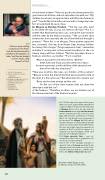
Abraham sends Hagar away, by Horace Vernet (1789-1863)


